Butter is a popular dairy product used in various culinary applications, from cooking and baking to spreading on bread and toast. While most butter needs to be refrigerated to prevent spoilage and maintain freshness. There are some types of butter that can be stored at room temperature without the need for refrigeration. Let’s explore the different types of butter that do not require refrigeration and why.
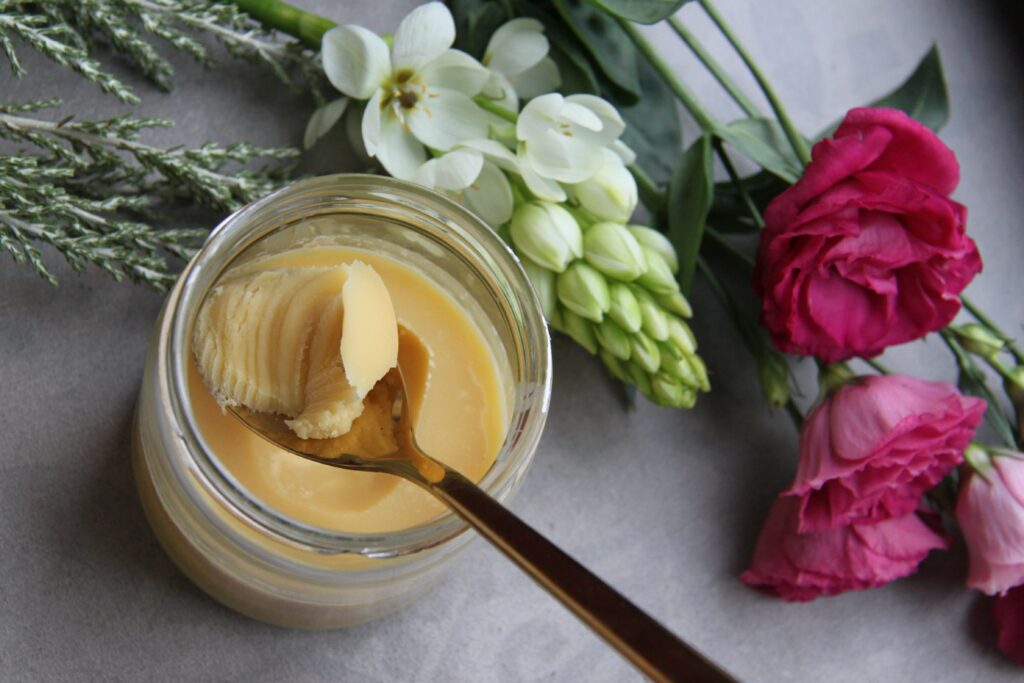
- Clarified Butter/Ghee: Clarified butter, also known as ghee, is a type of butter that has been simmered and strained to remove the water content, milk solids, and impurities, resulting in a clear, golden liquid. Ghee has a rich, nutty flavor and a high smoke point, which makes it ideal for cooking, sautéing, and frying. Since ghee does not contain any moisture or milk solids. It does not spoil easily and can be stored at room temperature for an extended period without refrigeration. In fact, in many cultures such as India, ghee is commonly stored in a cool, dark place. It away from direct sunlight and heat, for everyday use.
- Cultured Butter: Cultured butter is made from cream that has been fermented with lactic acid bacteria, similar to the process of making yogurt or sour cream. The fermentation process gives cultured butter a tangy, slightly sour flavor and a creamier texture compared to regular butter. The higher acidity in cultured butter acts as a natural preservative, inhibiting the growth of harmful bacteria and extending its shelf life. As a result, cultured butter can be kept at room temperature for several days without spoiling. However, if the temperature is warm or if you live in a hot and humid climate, it’s still best to refrigerate cultured butter to maintain its freshness.
- Salted Butter: Salted butter is another type of butter that can be stored at room temperature for short periods of time. The added salt acts as a preservative, inhibiting the growth of bacteria and preventing spoilage. Salted butter is commonly used for spreading on bread or toast. Its higher salt content helps to preserve its freshness even at room temperature. However, it’s important to note that the amount of salt in salted butter can vary. Some brands may have higher salt content than others. If you live in a hot and humid climate or if you plan to store salted butter for an extended period. It’s still best to refrigerate it to ensure its quality.
- Whipped Butter: Whipped butter is regular butter that has been whipped to incorporate air, resulting in a lighter and fluffier texture. Whipped butter is often sold in tubs. It can be used as a spread or in recipes that require softened butter. Since whipped butter has a higher air content. It tends to spoil more slowly compared to regular butter. It can be stored at room temperature for short periods of time without refrigeration. However, it’s still recommended to refrigerate whipped butter. If you live in a warm climate or if you plan to store it for an extended period.
- Vegan Butter: Vegan butter is a non-dairy alternative to traditional butter. It is made from plant-based oils such as coconut, avocado, or soybean oil. Vegan butter is typically fortified with vitamins and minerals to mimic the nutritional profile of regular butter. It is widely used by those who follow a vegan or dairy-free lifestyle. Since vegan butter does not contain any animal products. It does not spoil as quickly as regular butter and can be stored at room temperature for several weeks without refrigeration. However, it’s important to check the packaging for specific storage instructions, as different brands may have different recommendations.
It’s important to note that storing butter at room temperature without refrigeration. It can increase the risk of spoilage and the growth of harmful bacteria.
What kind of butter does not need to be refrigerated?