The language that is closest to ancient Rome is modern Italian. This is because Italian evolved from Latin, the language of the Roman Empire. However, the relationship between Latin and Italian is complex and goes beyond the simple evolution of one language into another. In this answer, we will explore the similarities and differences between Latin and Italian and how they came to be.
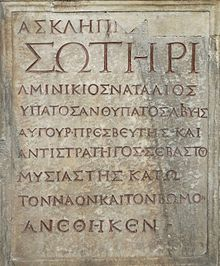
Latin was the language of the Roman Empire, which dominated Europe for centuries. It was the official language of government, law, and education, and it was also the language of the Catholic Church for many centuries. Latin was spoken by people of all social classes, but the way it was spoken varied according to one’s social status. The language was highly inflected, meaning that the endings of words changed depending on their grammatical function in a sentence. This made Latin a very precise language, but also a difficult one to learn.
Over time, the Latin spoken in different regions of the empire began to diverge, leading to the development of different Romance languages, including Italian, French, Spanish, Portuguese, and Romanian. These languages all have a common ancestor in Latin, but they have evolved in different ways, influenced by the languages spoken by the people who lived in those regions.
Italian evolved from Vulgar Latin, the common language spoken by the people of the Roman Empire, rather than the classical Latin that was used in literature and education. Vulgar Latin was a simplified form of Latin that was easier to learn and use in everyday communication. It had fewer inflections than classical Latin and was more influenced by the languages spoken by the people of Italy, such as Etruscan, Oscan, and Greek.
The evolution of Italian from Latin can be traced back to the 3rd century AD, when the Roman Empire began to decline and the language began to change. As the empire disintegrated and various Germanic tribes invaded, Latin became increasingly fragmented and regional dialects began to emerge. These dialects eventually coalesced into distinct regional languages, including Italian.
The Italian language as we know it today emerged in the 13th century, when Dante Alighieri wrote his masterpiece, the Divine Comedy, in Tuscan, a dialect of Italian. Dante’s work became a model for Italian literature and helped to establish Tuscan as the standard language for written Italian.
Despite its origins in Latin, Italian is not simply a modern version of the ancient language. While Italian retains many words and grammatical features from Latin, it has also been influenced by other languages over the centuries, including Greek, German, French, and Spanish. It has also developed its own unique vocabulary and idioms, and has undergone significant changes in pronunciation and grammar.
One of the main differences between Latin and Italian is the way they are pronounced. Latin was pronounced with a different system of vowels and consonants than modern Italian, and its pronunciation varied depending on the region and time period. Italian, on the other hand, has a more standardized pronunciation system that has been influenced by the languages of neighboring countries, as well as regional dialects.
Another difference between Latin and Italian is their grammar. While Italian retains many of the grammatical features of Latin, such as the use of gender and case, it has also undergone significant simplification and regularization. For example, Italian has fewer cases than Latin, and the declension of nouns and adjectives is more regular. Italian also has a simpler system of verb conjugation than Latin, with fewer irregular verbs.
In conclusion, Italian is the language that is closest to ancient Rome, as it evolved from the Vulgar Latin spoken by the people of the Roman Empire. While Italian retains many features of Latin, including vocabulary, grammar, and syntax, it has also undergone significant changes over the centuries, influenced by other languages and regional dialects. Italian is a