Red hair and blue eyes are both relatively rare genetic traits, and their occurrence in the global population is influenced by various factors, including genetic inheritance, ethnic background, and geographical location. Estimating the exact percentage of the world population with red hair and blue eyes is challenging due to the lack of comprehensive and up-to-date data, but we can explore the topic based on available information.
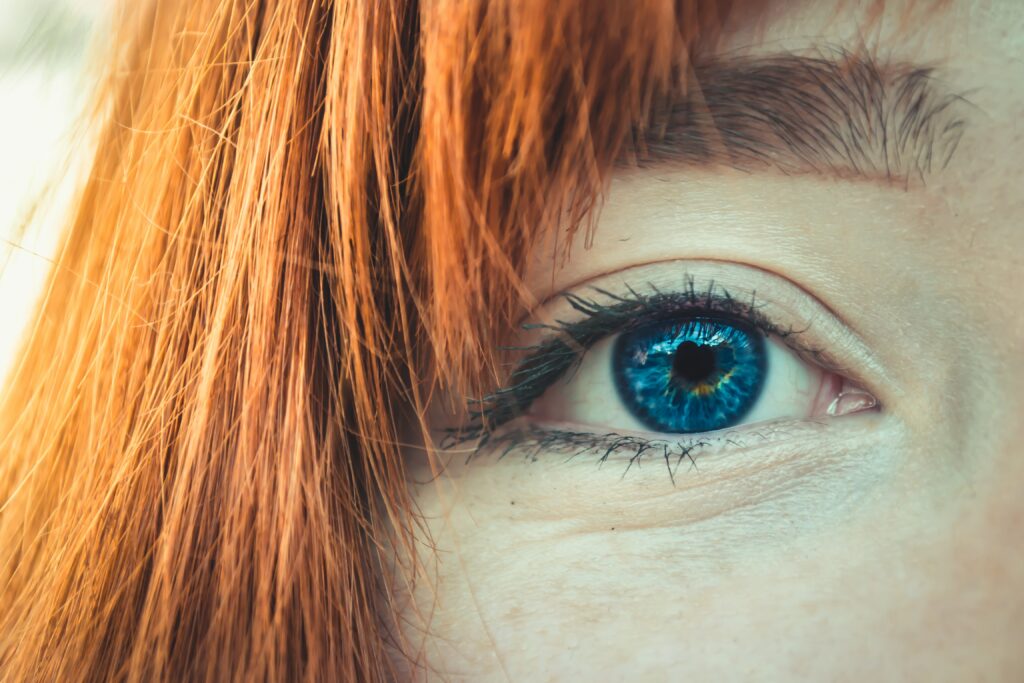
Red hair, or more specifically, having naturally occurring red-colored hair, is relatively uncommon, with only an estimated 1-2% of the global population having this trait. The occurrence of red hair is mainly associated with people of Northern European descent, particularly those of Celtic and Scandinavian origins. Scotland has the highest proportion of red-haired individuals, with approximately 13% of the population having red hair, followed by Ireland with around 10%. Other countries with relatively high proportions of redheads include the Netherlands, Belgium, and the United States, particularly in regions with a high concentration of people of Northern European heritage.
On the other hand, blue eyes are relatively more common than red hair, with an estimated 8-10% of the global population having blue eyes. Blue eyes are found in various populations around the world, including Europe, the Middle East, and Central Asia. However, blue eyes are more prevalent in some populations than others. For example, blue eyes are more common in people of Northern European descent, particularly in countries such as Finland, Estonia, and Sweden, where over 50% of the population is estimated to have blue eyes. Blue eyes are also relatively common in populations of Slavic and Baltic origins.
When it comes to the overlap of red hair and blue eyes, the occurrence of both traits in the same individual is relatively rare. As both red hair and blue eyes are influenced by different genetic factors, their combination is less frequent in the global population. According to some studies, the occurrence of red hair and blue eyes together is estimated to be less than 1% of the global population, making it a unique combination.
It’s important to note that the prevalence of red hair and blue eyes can vary significantly based on ethnic background, geographical location, and other factors. For example, in populations with a higher percentage of people with African, Asian, or Indigenous American heritage, the occurrence of red hair and blue eyes may be much lower compared to populations of European descent. Similarly, within a given population, the prevalence of red hair and blue eyes can also vary based on regional and local differences.
The genetic basis for red hair and blue eyes is complex and involves multiple genes. The MC1R gene, in particular, is known to play a key role in determining red hair, while the OCA2 gene is associated with blue eyes. Mutations in these genes can result in changes in the production of melanin, the pigment responsible for hair, skin, and eye color, leading to the expression of red hair and blue eyes.
In addition to genetic factors, environmental factors such as exposure to sunlight can also influence the expression of red hair and blue eyes. For example, individuals with red hair tend to have fair skin that is more susceptible to sunburn and skin cancer, which may result in a lower prevalence of red hair in regions with high levels of sunlight exposure.
In conclusion, estimating the exact percentage of the global population with red hair and blue eyes is challenging due to various factors, including genetic inheritance, ethnic background, geographical location, and environmental influences. However, based on available information, red hair is estimated to occur in approximately 1-2% of the global population, while blue eyes are estimated to occur in 8-10% of the global population. The occurrence of both red hair and blue eyes together is relatively rare, estimated to be less than 1% of the global population.