Aurora, also known as the Northern Lights or the Aurora Borealis, is a natural light display in the Earth’s atmosphere, predominantly seen in the high-latitude regions. It is caused by the collision of charged particles from the sun with particles in the Earth’s atmosphere.
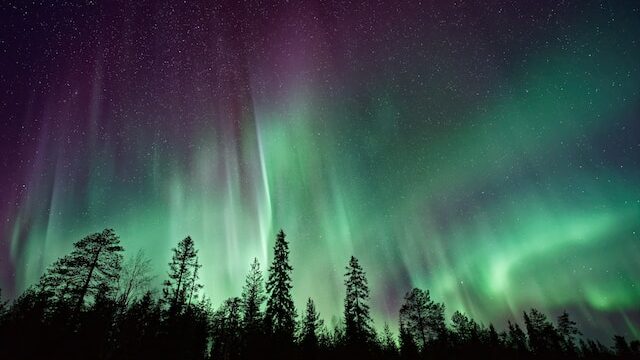
Aurora’s original name comes from the Roman goddess of the dawn, Aurora. In ancient Roman mythology, Aurora was the goddess of the dawn, responsible for bringing light to the world at the beginning of each day. She was often depicted as a beautiful young woman, adorned with a crown of roses and riding a chariot drawn by winged horses. Her arrival signaled the beginning of a new day, and she was considered a symbol of hope and renewal.
The name Aurora has been associated with the Northern Lights since the 17th century, when the French astronomer Pierre Gassendi named the phenomenon “Aurora Borealis” after the Roman goddess. The term “Borealis” comes from the Greek word for “northern,” and refers to the fact that the Northern Lights are typically seen in the northern hemisphere.
In addition to the Northern Lights, there is also a similar phenomenon in the southern hemisphere, known as the Southern Lights or the Aurora Australis. This phenomenon was also named after Aurora, the Roman goddess of the dawn, and is caused by the same process as the Northern Lights.
The Northern Lights have fascinated humans for thousands of years, and have been the subject of countless myths and legends. In many cultures, the Northern Lights were seen as a sign of good luck or a portent of great events. For example, in Norse mythology, the Northern Lights were believed to be a pathway to the afterlife, and were seen as a sign of the gods’ approval.
Today, the Northern Lights continue to be a popular tourist attraction, with thousands of visitors traveling to the high-latitude regions each year to witness this awe-inspiring natural phenomenon. Despite our modern understanding of the science behind the Aurora, it remains a symbol of wonder and mystery, reminding us of the beauty and complexity of the natural world.