Green eyes are a rare and fascinating genetic trait that has captured the attention and admiration of many people throughout history. While it is difficult to pinpoint exactly when green eyes first appeared, there are several theories and historical accounts that shed light on the origins of this captivating eye color.
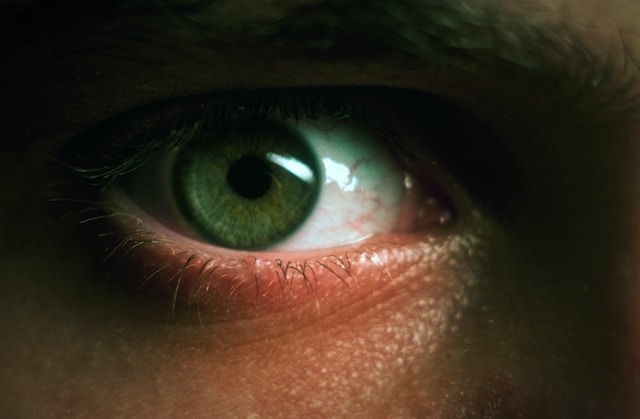
One theory suggests that green eyes may have originated in the Middle East or the Mediterranean region, where the majority of people have brown eyes. According to this theory, the mutation that caused green eyes to appear may have arisen as a result of genetic mixing between different populations in the region.
Another theory suggests that green eyes may have originated in the northwestern part of Europe, where blue and green eyes are more common. This theory is supported by the fact that green eyes are most commonly found in people of European descent, particularly those of Irish or Scottish ancestry.
One of the earliest recorded references to green eyes can be found in ancient literature. In Homer’s epic poem, The Odyssey, the goddess Athena is described as having “bright, gleaming eyes the color of a spear.” This passage suggests that green eyes may have been admired as far back as ancient Greece, which dates back to around 8th century BC.
Similarly, in ancient Rome, green eyes were associated with the goddess Venus, who was often depicted with green eyes in artwork and literature. This suggests that green eyes were considered a symbol of beauty and femininity during this time period.
During the Middle Ages, green eyes were often associated with witchcraft and supernatural powers. This was partly due to the fact that green eyes were relatively rare, and therefore seen as unusual or abnormal. Additionally, the green color was sometimes associated with the “evil eye” in some cultures, which was thought to bring bad luck or misfortune.
However, despite these negative associations, green eyes continued to be admired by many people throughout history. In fact, during the Renaissance period in Europe, green eyes were considered a mark of beauty and intelligence. This was partly due to the fact that green eyes were seen as a rare and exotic trait, and therefore considered more desirable.
As European exploration and colonization spread around the world, the genes for green eyes were carried to other parts of the globe. Today, green eyes can be found in people of many different ethnicities and nationalities, although they remain relatively rare compared to other eye colors such as brown or blue.
From a genetic perspective, green eyes are caused by a combination of factors. The primary determinant of eye color is the amount and type of melanin in the iris, which is controlled by several different genes. However, the specific combination of genes that leads to green eyes is not fully understood.
One theory suggests that green eyes are the result of a combination of genetic mutations that affect the production and distribution of melanin in the iris. Specifically, it is thought that a mutation in the OCA2 gene, which regulates the production of melanin, may cause less melanin to be produced in the iris. This is combined with a second mutation in the HERC2 gene, which controls the distribution of melanin in the iris. Together, these mutations can lead to the unique green coloration seen in people with green eyes.
In conclusion, while it is difficult to pinpoint exactly when green eyes first appeared, it is clear that they have been admired and celebrated by many cultures throughout history. Today, green eyes remain a rare and fascinating trait that continues to capture the imagination of people around the world.