Alaska is a state known for its natural beauty and harsh climate. One of the unique features of Alaska is the phenomenon of the “Midnight Sun” and the “Polar Night,” where the sun remains above or below the horizon for extended periods, leading to continuous daylight or darkness.
The region in Alaska where it is dark for 24 hours is known as the “Alaskan Arctic.” This area is located north of the Arctic Circle, which is an imaginary line that circles the Earth at a latitude of 66.5 degrees north. The Arctic Circle marks the southernmost point where the sun can remain continuously above or below the horizon for at least one day a year.
The Alaskan Arctic encompasses several communities, including Barrow, Prudhoe Bay, and Deadhorse. These places experience polar night, a period when the sun remains below the horizon for 24 hours, starting from late November to late January.
The polar night is a natural phenomenon that occurs due to the tilt of the Earth’s axis. During the winter solstice, which occurs around December 21st, the North Pole is tilted away from the sun, causing the sun’s rays to be blocked by the curvature of the Earth’s surface, leading to 24 hours of darkness in the Alaskan Arctic.
The Alaskan Arctic is also known for the opposite phenomenon of the “Midnight Sun,” where the sun remains above the horizon for 24 hours. This phenomenon occurs during the summer solstice, which occurs around June 21st, when the North Pole is tilted towards the sun, allowing the sun’s rays to hit the Earth’s surface for an extended period, leading to continuous daylight.
The Midnight Sun period lasts from late May to early August and is particularly popular among tourists who visit the region to experience the unique sight of the sun never setting. The Polar Night and Midnight Sun are two of the most unique natural phenomena that can be experienced in the Alaskan Arctic.
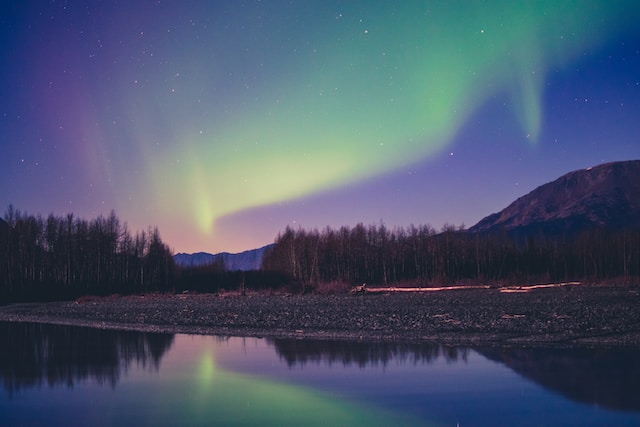
In addition to the Midnight Sun and the Polar Night, the Alaskan Arctic also experiences other unique weather phenomena, including Aurora Borealis, or the Northern Lights. The Northern Lights occur when electrically charged particles from the sun collide with the Earth’s atmosphere, producing a stunning display of colored lights.
The best time to witness the Northern Lights is during the winter months when the polar night occurs. The prolonged darkness and clear skies in the region provide an ideal setting for viewing the Northern Lights.
The Alaskan Arctic is a harsh and unforgiving environment that demands respect from those who inhabit or visit it. The region is home to several indigenous communities who have lived in harmony with the land for centuries. These communities rely on the natural resources provided by the environment for their survival, and they have developed a deep understanding and respect for the rhythms of nature.
The Alaskan Arctic is also an important region for scientific research, particularly in the fields of climate change and ecology. The region’s extreme weather conditions and isolation make it an ideal place to study the effects of climate change on the environment and wildlife.
In conclusion, the Alaskan Arctic is a unique and awe-inspiring region that offers visitors an experience like no other. The Polar Night and Midnight Sun are two of the most unique natural phenomena that can be experienced in this region, and the Northern Lights provide a stunning display of the beauty and power of nature. The Alaskan Arctic is also an important region for scientific research and is home to several indigenous communities who have lived in harmony with the land for centuries. The region demands respect and awe from those who visit it, and it is a testament to the power and majesty of nature.