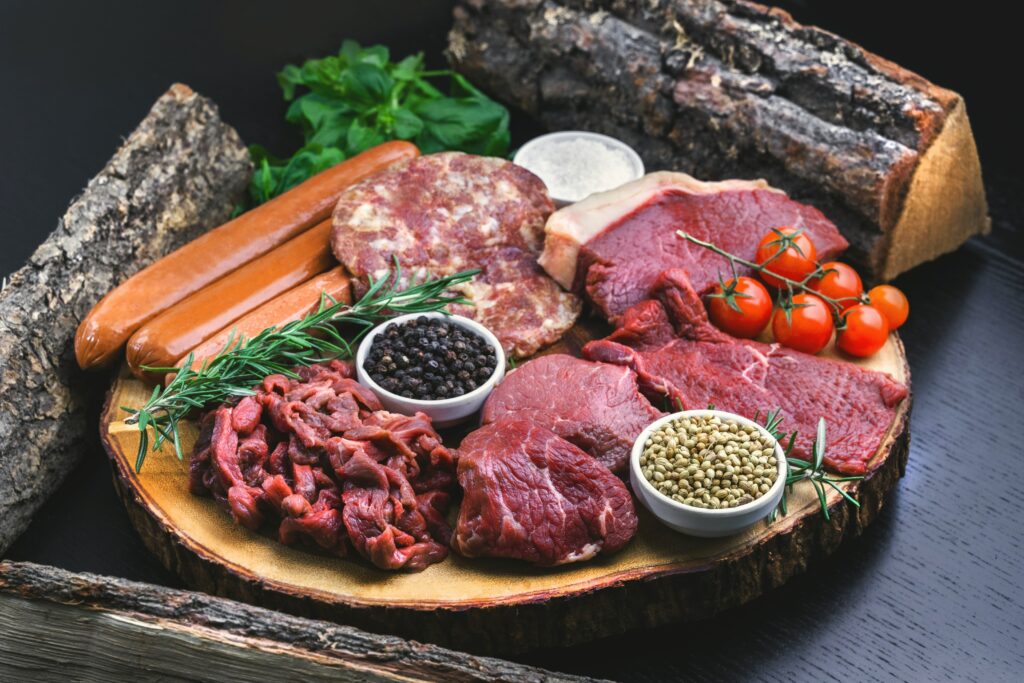
In the realm of culinary classification, red meat typically refers to the meat of mammals that is darker in color when raw and tends to turn brown or red when cooked. This distinction is largely based on the myoglobin content in the muscle fibers, which gives red meat its characteristic color. While the most commonly recognized red meats are beef, pork, and lamb, there are certain types of meat that are not considered red meat.
One example of meat that is not considered red meat is poultry, which includes chicken and turkey. Poultry meat is typically lighter in color when raw and turns white when cooked. This is due to the lower myoglobin content in poultry meat compared to red meat, resulting in a lighter coloration. Poultry is often categorized as white meat, which is a leaner type of meat that is lower in fat compared to red meat.
Fish and seafood are other examples of meats that are not considered red meat. Fish and seafood are distinct from red meat in terms of their color, texture, and flavor profiles. Fish meat is usually lighter in color, has a delicate texture, and a milder flavor compared to red meat. Seafood, which includes various types of shellfish such as shrimp, crab, and lobster, is also not classified as red meat.
In addition, plant-based meat substitutes, such as tofu, tempeh, and seitan, are not considered red meat. These meat alternatives are made from plant-based sources and do not come from mammals, therefore they are not classified as red meat.
It’s important to note that the classification of meat can vary in different culinary and cultural contexts. For example, some cuisines may consider certain types of game meat, such as venison or bison, as red meat due to their darker color and characteristics similar to traditional red meats. However, in general, poultry, fish, seafood, and plant-based meat substitutes are not considered red meat.
In terms of nutritional content, red meat is typically higher in fat, particularly saturated fat, compared to poultry, fish, seafood, and plant-based meat substitutes. Red meat is also a good source of protein, iron, zinc, and vitamin B12. On the other hand, poultry, fish, and seafood are often lower in fat and calories, and are good sources of lean protein, omega-3 fatty acids, and other essential nutrients. Plant-based meat substitutes can vary in their nutritional content, depending on the ingredients used in their production.
In conclusion, red meat is typically classified as the meat of mammals that is darker in color and tends to turn brown or red when cooked. Poultry, fish, seafood, and plant-based meat substitutes are not considered red meat due to their lighter color, different texture, and distinct flavor profiles. Understanding the classification of meats can help individuals make informed choices about their dietary preferences and nutritional needs. It’s always recommended to consult with a healthcare professional or registered dietitian for personalized dietary advice.