In Norse mythology, Loki is the trickster god known for his mischievous and cunning nature. He is also one of the most complex characters in Norse mythology, often portrayed as both a helpful and harmful deity, causing both good and bad things to happen.
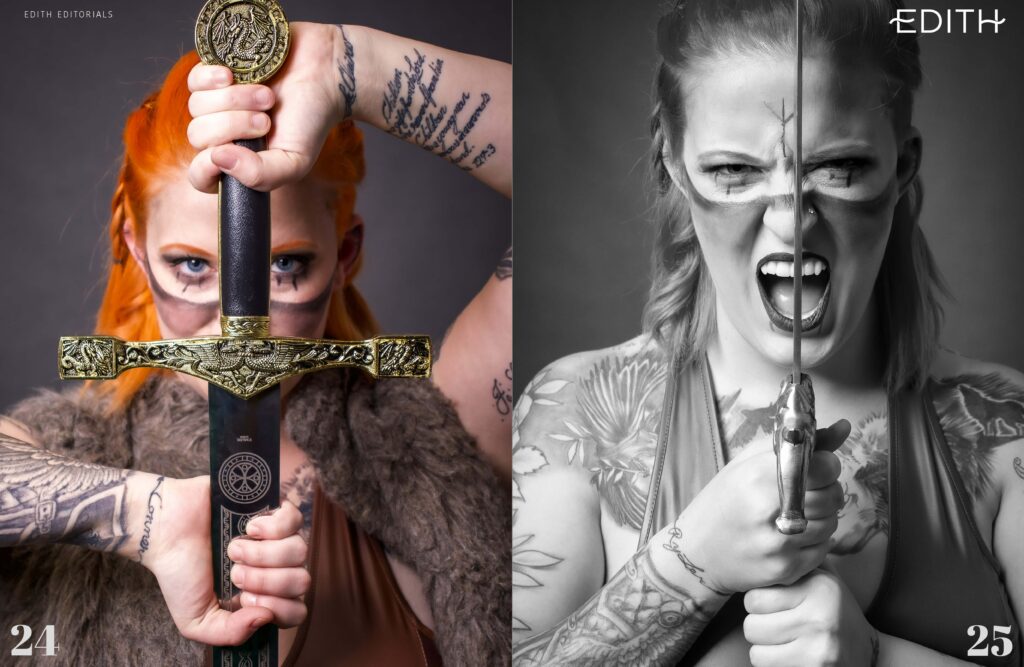
Loki is known to have fathered many children, some of whom were born to him with different goddesses and mortal women. Among these children is a daughter named Hel, who is known as the goddess of death. Hel is often portrayed as half-alive and half-dead, with a body that is divided down the middle.
According to Norse mythology, Hel was born to Loki and the giantess Angrboða, who was known as the “mother of monsters.” Angrboða was a powerful and fearsome figure in Norse mythology, known for her great strength and her ability to give birth to creatures that were both terrifying and awe-inspiring.
Hel’s birth was said to have been foretold by the goddess Frigg, who warned that she would be a source of great trouble and sorrow for the gods. Despite this warning, Loki and Angrboða went ahead with their plans to conceive a child, and Hel was born soon after.
When Hel was born, the gods were taken aback by her appearance, as she was half-black and half-white, and her body was divided in two. The gods quickly realized that Hel was not like any other child they had ever seen and that she had been born with a special destiny.
As Hel grew older, she became known as the goddess of death, ruling over the realm of Niflheim, which was said to be located beneath the roots of the world tree, Yggdrasil. In Niflheim, Hel presided over a kingdom that was populated by the souls of the dead, who had not died in battle and were therefore not taken to the halls of Valhalla.
Hel was often depicted as being both beautiful and terrifying, with a face that was half-beautiful and half-rotting. She was also said to be incredibly powerful, with the ability to control life and death itself.
In Norse mythology, Hel plays an important role in the story of Ragnarok, the apocalyptic battle that is said to signal the end of the world. According to legend, at the end of the world, Hel will lead an army of the dead against the gods, and her presence will be a sign that the end is near.
In addition to Hel, Loki is also known to have fathered other important figures in Norse mythology, including the giant wolf Fenrir and the serpent Jormungandr, both of whom play important roles in the story of Ragnarok.
Overall, while Loki is known for his mischievous nature and his complicated relationships with the other gods, his daughter Hel is perhaps one of his most interesting and complex offspring. As the goddess of death, Hel is both beautiful and terrifying, with a power that is unmatched by any other deity in Norse mythology. Her role in the story of Ragnarok is also important, as it highlights the apocalyptic nature of Norse mythology and the idea that even the gods themselves are subject to the power of death and destruction.