The Catholic Church is a Christian denomination that traces its roots back to the time of Jesus Christ and the establishment of his teachings. The question of who the “real” founder of the Catholic Church is can be a complex and multifaceted one, as the origins of the Church are rooted in historical, theological, and doctrinal aspects.
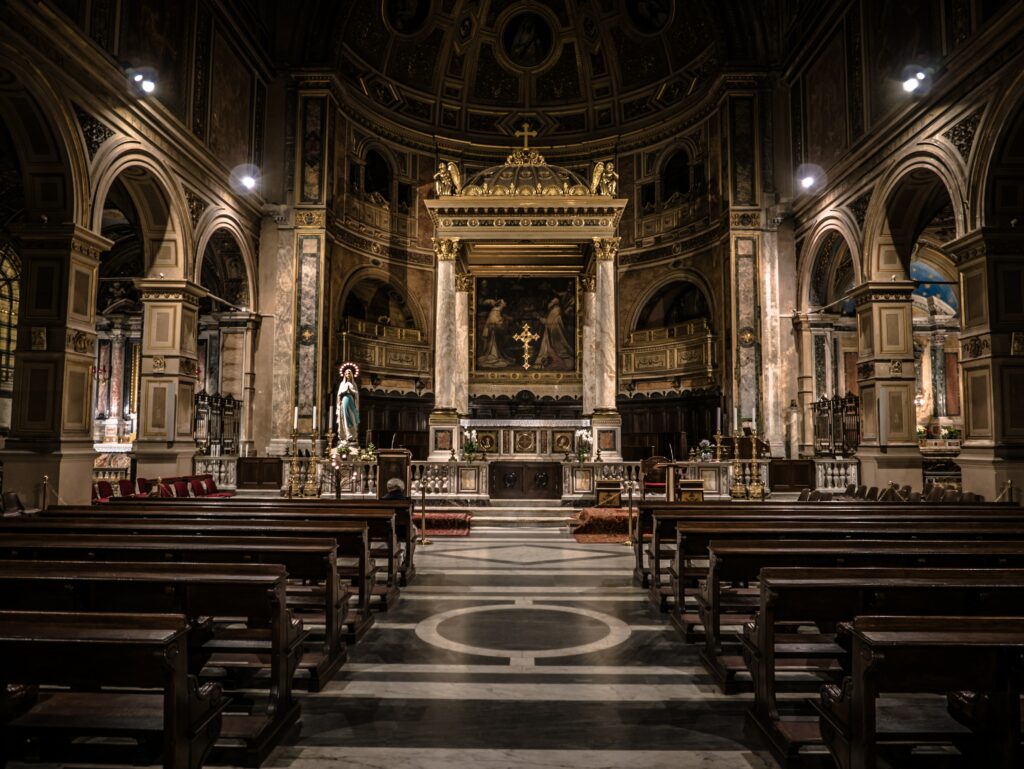
According to Catholic tradition and belief, Jesus Christ himself is considered the founder of the Catholic Church. Jesus, as the Son of God, is seen as the Messiah and the fulfillment of Old Testament prophecies. He is believed to have established his Church during his earthly ministry, selecting his apostles as the foundation of his Church and giving them authority to spread his teachings and establish communities of believers.
The apostle Peter is often referred to as the first bishop of Rome and is considered by the Catholic Church to be the first pope. Catholic tradition holds that Jesus appointed Peter as the leader of his Church, and he is seen as the head of the apostles and the foundation of the Church. The term “Catholic” itself comes from the Greek word “katholikos,” which means “universal,” emphasizing the worldwide nature of the Church that Jesus established.
The early Christian communities that were established by the apostles and their followers are considered the earliest form of the Catholic Church. These communities were centered around the teachings of Jesus, the celebration of the Eucharist (also known as the Mass), and the practice of the sacraments. The apostles and their successors, known as bishops, were responsible for leading and guiding these communities in accordance with the teachings of Jesus.
Over time, the Church grew and evolved, facing challenges and changes throughout its history. The Church played a significant role in the development of Christian theology, doctrine, and practice, as well as in the spread of Christianity to different parts of the world. The early Church Fathers, theologians, and councils played a crucial role in shaping the beliefs and practices of the Catholic Church.
One pivotal event in the history of the Catholic Church was the Edict of Milan in 313 AD, which legalized Christianity in the Roman Empire and ended the persecution of Christians. This led to the establishment of Christianity as the state religion of the Roman Empire under Emperor Constantine the Great, and the Church gained prominence and influence in the Roman world.
As the Catholic Church grew in size and influence, it also faced challenges from within and without. Internal disagreements, theological disputes, and schisms occurred throughout history, resulting in the emergence of different branches of Christianity. One notable example was the Great Schism of 1054, which led to the split between the Roman Catholic Church in the West and the Eastern Orthodox Church in the East.
Despite these challenges, the Catholic Church continued to assert its authority and influence in various spheres of life, including politics, education, and social issues. The pope, as the bishop of Rome and the leader of the Catholic Church, is considered the highest authority in matters of faith and morals, and his teachings and pronouncements carry significant weight among Catholics.
It is important to note that the Catholic Church does not attribute its foundation solely to any individual human founder, but rather to Jesus Christ as the divine founder. The apostles and their successors, along with the early Christian communities, are considered to be the bearers of the teachings and traditions of Jesus, who established the Church through his ministry and sacrifice.
In summary, the Catholic Church considers Jesus Christ as the real founder of the Church, with the apostles, particularly Peter, as the foundation of the Church. The early Christian communities established by the apostles, along with their successors, the bishops, are seen as the earliest form of the Catholic Church.