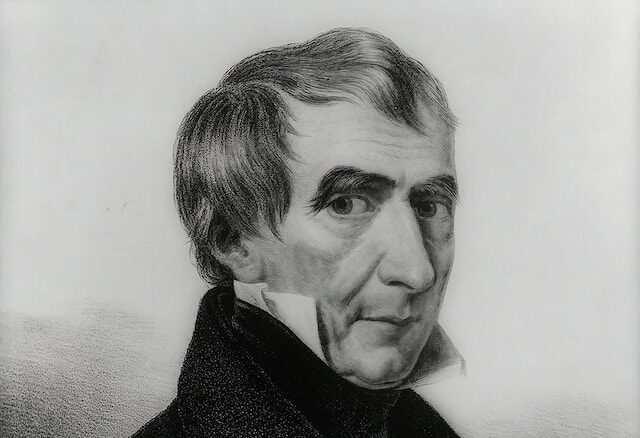
The shortest-term president in the history of the United States was William Henry Harrison, who served as the ninth president of the United States for only 31 days. Harrison was born on February 9, 1773, in Charles City County, Virginia, and he died on April 4, 1841, in Washington, D.C., making him the first U.S. president to die in office. In this essay, we will discuss the life, presidency, and legacy of William Henry Harrison.
Early Life and Career
Harrison was born into a prominent family in Virginia, and he was the youngest of seven children. His father was a plantation owner and a signer of the Declaration of Independence. Harrison received a classical education at Hampden-Sydney College and later attended the University of Pennsylvania to study medicine. However, he decided to drop out of school and pursue a career in the military.
Harrison joined the army in 1791 and quickly rose through the ranks. He served under General “Mad Anthony” Wayne during the Indian Wars and played a key role in the Battle of Fallen Timbers in 1794. Harrison also served as the governor of the Indiana Territory from 1800 to 1812, where he negotiated treaties with Native American tribes and played a key role in the War of 1812.
Presidency
In 1840, Harrison was nominated by the Whig Party as their candidate for president. The Whig Party was formed in opposition to President Andrew Jackson’s policies and was a coalition of anti-Jackson forces, including former National Republicans, anti-Masonic Party members, and some disaffected Democrats. Harrison ran on a platform of economic growth and reform, and his campaign slogan was “Tippecanoe and Tyler Too,” a reference to his military victory at the Battle of Tippecanoe and his running mate, John Tyler.
Harrison won the election by a large margin, receiving 234 electoral votes to Van Buren’s 60. He was inaugurated on March 4, 1841, in a cold and wet ceremony that lasted two hours. Harrison gave a long inaugural address, which he had written himself, despite the advice of his advisors to keep it short. He spoke for over an hour and a half, without wearing a coat or hat, and caught a cold that developed into pneumonia.
Harrison’s presidency lasted only 31 days, the shortest in U.S. history. He fell ill with pneumonia shortly after his inauguration and died on April 4, 1841. Harrison’s death shocked the nation and raised questions about the stability of the government. Vice President John Tyler assumed the presidency and set a precedent for presidential succession that has lasted to this day.
Legacy
Despite his short time in office, Harrison left a lasting legacy on American politics. He was the first president to die in office, and his death raised questions about presidential succession and the stability of the government. The 25th Amendment to the Constitution, which outlines the procedures for presidential succession, was ratified in 1967 in response to these concerns.
Harrison was also a key figure in the history of the Whig Party. His campaign marked the first time a political party had used a catchy slogan to promote their candidate, and his election represented a major victory for the Whig Party. However, Harrison’s death also marked the beginning of the end for the Whigs, as the party struggled to find a cohesive message and platform after his untimely death.
In conclusion, William Henry Harrison was the shortest-serving president in U.S. history, serving only 31 days before his death. Despite his short time in office, Harrison left a lasting legacy on American politics, particularly with regards to presidential succession and the history of the Whig Party.