Bees, like many other insects, have evolved to exhibit various behaviors and responses to changes in their environment, including changes in light conditions. One intriguing phenomenon related to bees and light is the behavior of bees dropping or falling to the ground when there is no light. This behavior, known as “dropping behavior,” has been observed in bees and other flying insects, and it serves several important functions.
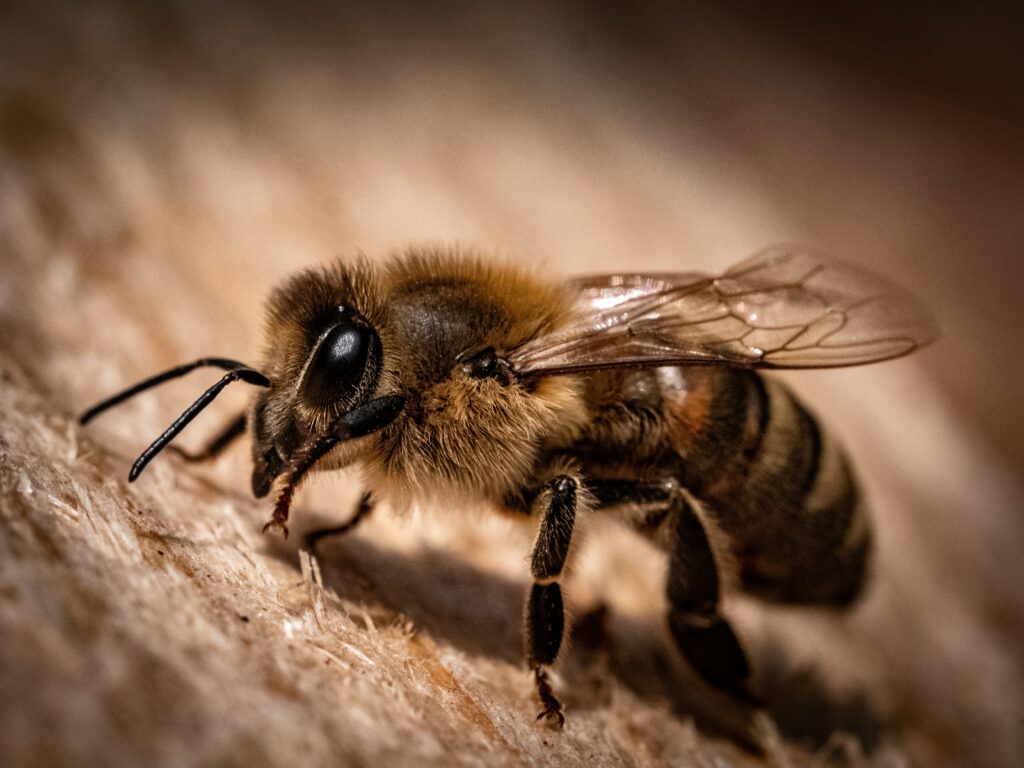
One of the main reasons why bees drop when there is no light is related to their circadian rhythm, which is an internal clock that regulates their daily activities, including foraging, resting, and sleeping. Bees, like many other insects, have a highly developed circadian rhythm that is synchronized with the natural light-dark cycle of their environment. During the day, bees are active and busy foraging for nectar and pollen from flowers to feed their colony. However, when the sun sets and there is no light, bees need to rest and sleep to conserve energy for the next day’s activities.
The dropping behavior of bees at night is thought to be a response to the absence of light, which cues bees to stop flying and rest. When bees perceive darkness, their nervous system sends signals that trigger a decrease in their metabolic rate and a reduction in their muscle activity, causing them to fall or drop to the ground. This helps bees conserve energy during the night when they are not actively foraging or flying. By resting on the ground, bees can reduce their energy expenditure and ensure they have enough energy reserves for the next day’s activities.
Another reason why bees drop when there is no light is related to their visual perception. Bees have complex eyes that are adapted to see and navigate their environment using ultraviolet light, which is invisible to humans. They use polarized light patterns in the sky to navigate and orient themselves during flight. However, in the absence of light, bees may lose their ability to perceive these polarized light cues, which can disorient them and affect their ability to fly accurately. Dropping to the ground during the night may be a strategy for bees to avoid flying in the dark and potentially getting lost or disoriented.
Furthermore, dropping behavior in bees may also be a defensive mechanism against predation. Many predators of bees, such as bats and nocturnal insects, are active during the night when there is no light. By dropping to the ground, bees may be able to reduce their chances of being detected by these predators. Predators that rely on visual cues to locate prey may have a harder time detecting bees on the ground, especially if the bees remain still and adopt a “play dead” strategy to avoid detection. This dropping behavior could be an adaptive response to minimize predation risk during the night when bees are most vulnerable.
It’s important to note that not all bees exhibit dropping behavior in the absence of light. Different species of bees may have different responses to changes in light conditions, and the dropping behavior may also vary depending on factors such as temperature, humidity, and season. For example, some bees may seek shelter in vegetation or other protected areas during the night instead of dropping to the ground. The dropping behavior may also be influenced by other factors such as the availability of food, the presence of predators, and the state of the colony, among others.
In conclusion, the dropping behavior of bees when there is no light is a complex and fascinating phenomenon that serves multiple functions. It is likely a combination of factors, including the bees’ circadian rhythm, visual perception, energy conservation, and predator avoidance, that contribute to this behavior. Further research is needed to better understand the mechanisms and ecological significance of this behavior in different species of bees and under different environmental conditions.