In recent years, there has been a growing movement to use the term “unhoused” instead of “homeless” to describe people who lack stable and permanent housing. The rationale behind this shift in language is to shift the focus away from the individual and instead highlight the systemic factors that contribute to housing insecurity and homelessness.
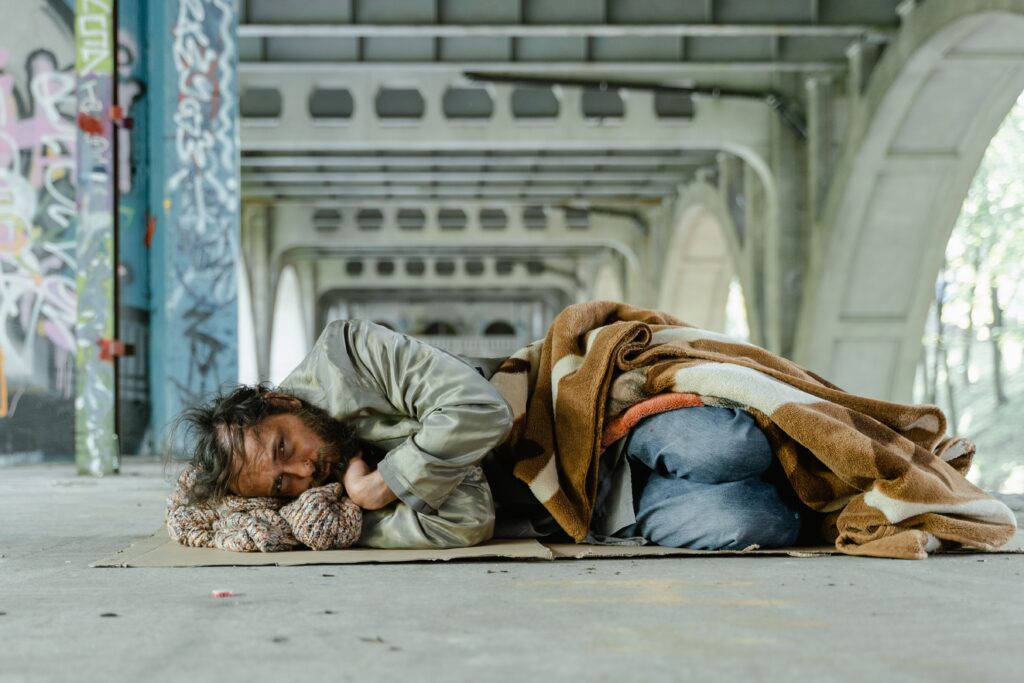
The term “homeless” has historically been used to describe individuals who lack a fixed, regular, and adequate nighttime residence, including those who are living in emergency shelters, transitional housing, or on the streets. However, this term has been criticized for perpetuating negative stereotypes and stigmatizing those who are experiencing housing insecurity.
One of the primary arguments for using the term “unhoused” is that it places the emphasis on the lack of housing rather than the individual. By using this term, advocates argue that it helps to highlight the structural factors that contribute to housing insecurity, such as rising housing costs, income inequality, and systemic discrimination.
Additionally, some advocates argue that the term “homeless” is overly broad and can be misleading. For example, it may imply that all individuals experiencing housing insecurity are living on the streets, when in fact many are living in temporary or unstable housing situations.
Another argument for using the term “unhoused” is that it is more inclusive and respectful of the diverse experiences and backgrounds of those who are experiencing housing insecurity. For example, the term “homeless” may not accurately reflect the experiences of individuals who are living in overcrowded or substandard housing, or who are forced to couch-surf or stay with friends or family members due to a lack of housing options.
Despite the growing use of the term “unhoused,” there is some debate and disagreement within the advocacy community about its effectiveness and appropriateness. Some critics argue that the term is too vague and does not accurately capture the experiences of those who are experiencing housing insecurity, while others argue that it places too much emphasis on the lack of housing and not enough on the broader social and economic factors that contribute to homelessness.
Ultimately, the choice of language used to describe those who are experiencing housing insecurity is a complex and nuanced issue, and there is no one-size-fits-all solution. What is important is that we continue to engage in thoughtful and respectful conversations about how we talk about homelessness and work together to address the root causes of housing insecurity and homelessness.