The Moon, our nearest celestial neighbor, is approximately 384,400 kilometers away from Earth. The journey from Earth to the Moon involves overcoming numerous obstacles, such as the gravitational pull of the Earth and the Moon, the limited speed of the spacecraft, and the need to carry enough fuel and resources for the journey. These factors contribute to the travel time of approximately three days, although the exact duration may vary depending on the mission and the spacecraft’s speed.
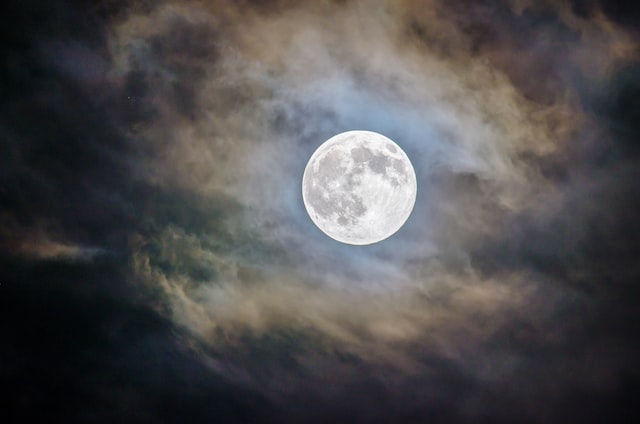
One of the primary factors that affect the travel time to the Moon is the distance between the Earth and the Moon. The Moon is located far enough from Earth that a spacecraft must travel at high speeds to reach it in a reasonable amount of time. However, the spacecraft cannot travel at infinite speeds due to the limitations of its propulsion system and the laws of physics. Therefore, the spacecraft’s speed is limited, and it takes time to cover the vast distance between Earth and the Moon.
Another significant factor that affects the travel time to the Moon is the gravitational pull of the Earth and the Moon. The gravitational pull of the Earth is essential for keeping the spacecraft in orbit and ensuring that it does not drift off into space. However, it also makes it challenging to leave the Earth’s atmosphere and reach the Moon. To overcome this challenge, the spacecraft must achieve a speed of approximately 11.2 kilometers per second (25,000 miles per hour) to break free of the Earth’s gravitational pull and enter into orbit around the Moon. This speed is known as the escape velocity.
The Moon’s gravitational pull also affects the spacecraft’s travel time. Once the spacecraft is in orbit around the Moon, it must slow down to land safely on the Moon’s surface. This process, known as Lunar Orbit Insertion (LOI), takes several hours to complete and requires the spacecraft to burn its engines to reduce its speed. The gravitational pull of the Moon is weaker than that of the Earth, which means that the spacecraft can move at a slower speed while in orbit around the Moon. However, the spacecraft must still carry enough fuel to slow down and land safely on the Moon’s surface.
In addition to the gravitational pull of the Earth and the Moon, the spacecraft’s propulsion system and fuel capacity also play a crucial role in determining the travel time to the Moon. The spacecraft’s propulsion system provides the necessary thrust to overcome the gravitational pull of the Earth and the Moon and maintain a constant speed. However, the spacecraft’s propulsion system is limited by the amount of fuel it can carry. Therefore, the spacecraft must carry enough fuel to travel to the Moon, enter into orbit around the Moon, land on the Moon’s surface, and return to Earth safely.
The amount of fuel required for a mission to the Moon depends on various factors, such as the spacecraft’s weight, its propulsion system’s efficiency, and the mission’s goals. For example, the Apollo spacecraft, which carried astronauts to the Moon during the 1960s and 1970s, weighed approximately 45,000 kilograms (100,000 pounds) at launch and required approximately 20,000 kilograms (44,000 pounds) of fuel to reach the Moon and return to Earth. The amount of fuel required for a mission to the Moon can be reduced by using more efficient propulsion systems, such as ion thrusters, or by refueling the spacecraft in space.
Finally, the travel time to the Moon also depends on the mission’s goals and the spacecraft’s capabilities. For example, a mission to orbit the Moon and collect data can be completed more quickly than a mission to land astronauts on the Moon and conduct experiments. Similarly, a spacecraft with advanced propulsion systems can travel to the Moon faster than a spacecraft with less efficient propulsion systems. Therefore, the travel time to the Moon can vary depending on the mission’s objectives.