Benjamin Franklin is one of the most significant figures in American history. He was a founding father of the United States and played a key role in drafting the Declaration of Independence and the U.S. Constitution. He was also an accomplished author, scientist, inventor, and diplomat, and is widely regarded as one of the most influential thinkers of his time. So why is Benjamin Franklin on the $100 bill?
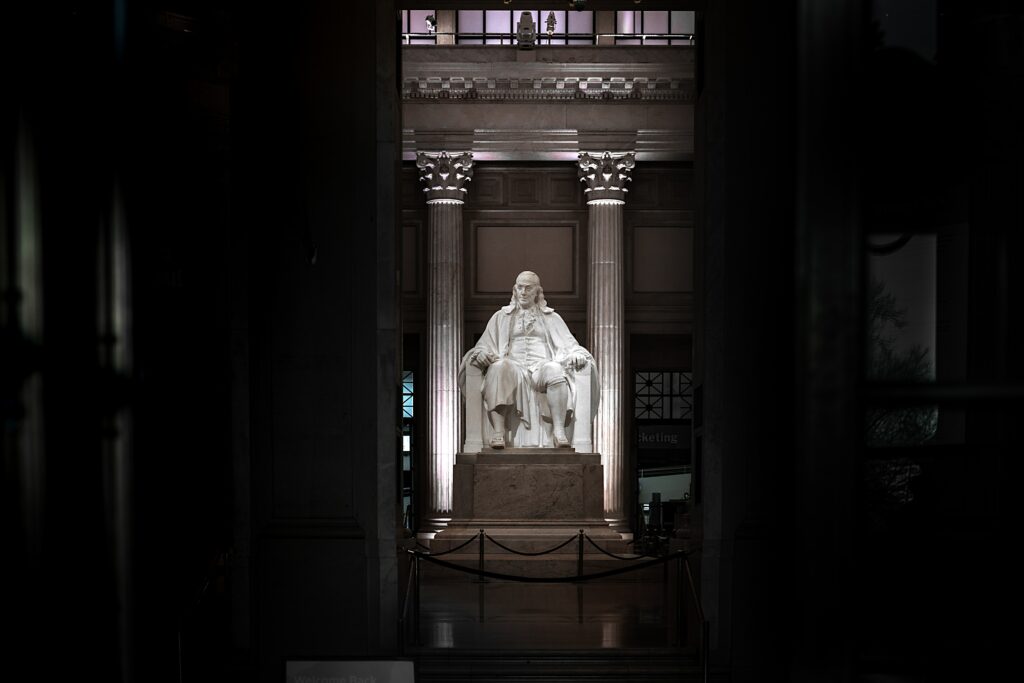
The $100 bill, also known as the “Benjamin,” was first issued in 1928 and has been redesigned several times since then. Benjamin Franklin was not the original choice for the $100 bill. The first $100 bill featured a portrait of Alexander Hamilton, who was the first U.S. Secretary of the Treasury and played a key role in establishing the country’s financial system.
In 1928, the U.S. government decided to update the design of its currency, and the new $100 bill featured a portrait of Benjamin Franklin. The decision to put Franklin on the $100 bill was largely based on his contributions to the United States as a founding father and his status as one of the country’s most respected historical figures.
Franklin was also a well-known figure in his time and was widely respected for his scientific and intellectual achievements. He was a prolific writer, with works such as “Poor Richard’s Almanack” and “The Autobiography of Benjamin Franklin” still studied and revered today. He was also a scientist who made important contributions to the field of electricity and invented a number of useful devices, including bifocal glasses and the lightning rod.
In addition to his intellectual achievements, Franklin was a diplomat who helped to negotiate the Treaty of Paris in 1783, which ended the American Revolutionary War and secured the United States’ independence from Great Britain. He was also a respected member of the Philadelphia community and helped to establish many of the institutions that continue to serve the city today.
Overall, Benjamin Franklin’s contributions to American history, science, and culture make him a fitting choice for the $100 bill. His image serves as a reminder of the country’s rich intellectual and cultural heritage and his legacy continues to inspire generations of Americans.