Wild turkeys are social birds and are known for their flocking behavior. In the wild, they typically form groups called flocks that consist of several hens and their offspring, as well as one or more dominant males called toms. These flocks provide safety in numbers and allow the birds to work together to forage for food, find mates, and defend themselves against predators.
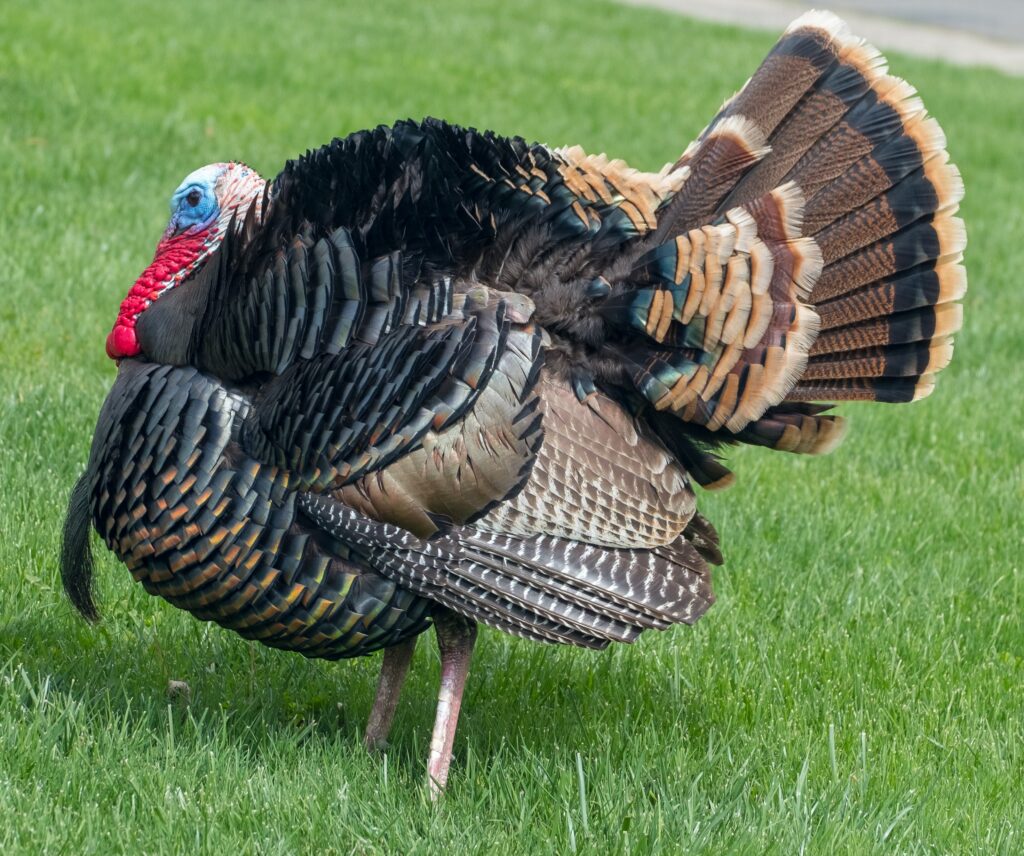
However, there are several reasons why a wild turkey might be by itself. One of the most common reasons is that it is a young male turkey, also known as a jake, who has been pushed out of its flock. Young males typically leave their flock in the fall and winter to establish their own territories and compete for mates. These young males may wander alone for a while until they find other birds to associate with, or they may remain solitary until the breeding season begins in the spring.
Another reason why a wild turkey might be by itself is if it is an older, dominant male turkey that has been ousted from its flock by a younger male. Older males, also known as gobblers, typically dominate their flocks during the breeding season, but as they age, they may lose their strength and vigor, making them vulnerable to younger males. When this happens, the older male may wander off on its own, looking for a new flock to join or waiting for the next breeding season to begin.
In some cases, a wild turkey may be by itself because it is sick or injured. Wild turkeys are susceptible to a variety of diseases and injuries, including avian pox, avian influenza, and predators such as coyotes and foxes. A sick or injured turkey may be separated from its flock in order to reduce the risk of spreading disease or attracting predators. These birds may require medical attention or rehabilitation in order to recover.
Another reason why a wild turkey might be by itself is if it is a female turkey that has lost its brood. Female turkeys, also known as hens, typically raise their young in the spring and summer, and their chicks stay with them for several months until they are old enough to fend for themselves. However, chicks can be vulnerable to predators, and if a hen loses its brood, it may be forced to leave its flock and search for a new one. This can leave the hen alone for a period of time until it finds a new flock or the breeding season begins again.
Finally, a wild turkey may be by itself simply because it is an outlier, or an individual that does not conform to the typical behavior of its species. Outliers can occur in any species, and in the case of wild turkeys, an outlier may prefer to be alone rather than associating with a flock. These birds may be more independent and self-sufficient than other turkeys, and may be able to find food and shelter on their own.
In conclusion, there are several reasons why a wild turkey might be by itself. It could be a young or old male that has been separated from its flock, a sick or injured bird, a female that has lost its brood, or an outlier that prefers to be alone. While wild turkeys are social birds, there are circumstances that can cause them to become solitary. Regardless of the reason, it is important to approach wild turkeys with caution and to respect their space and behavior.