Axolotls are a fascinating and unique species of amphibian that belong to the family Ambystomatidae. They are also known as Mexican salamanders or Mexican walking fish and are native to the canals and lakes of Mexico City. What makes them so popular in the pet trade is their characteristic neoteny, which means they retain their juvenile features into adulthood. However, there is a widespread misconception that axolotls can transform into salamanders. This article will explain why this is not the case and why axolotls remain neotenic throughout their lives.
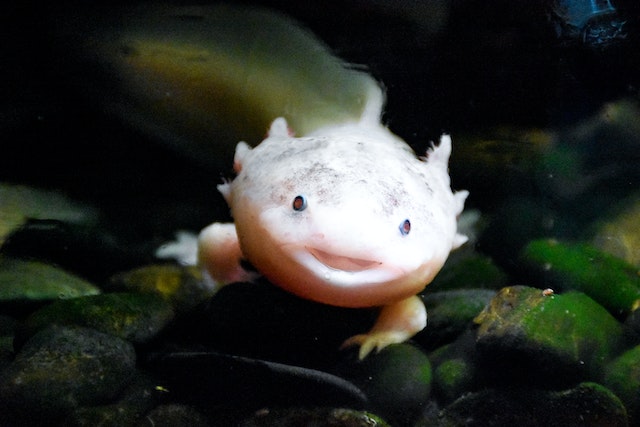
Contrary to popular belief, axolotls are not capable of transforming into salamanders as they are genetically different from other species of salamanders. Although they belong to the same family, they are a separate species known as Ambystoma mexicanum. While other species of salamanders, such as the tiger salamander (Ambystoma tigrinum), undergo metamorphosis, axolotls retain their larval form throughout their lives, including their gills and aquatic lifestyle.
The reason for this unique characteristic of axolotls is due to the lack of thyroid-stimulating hormone (TSH) in their body. TSH is a hormone produced by the pituitary gland that triggers the thyroid gland to produce thyroxine, a hormone essential for metamorphosis. In axolotls, the pituitary gland does not produce TSH, which results in the thyroid gland remaining inactive. Without thyroxine, axolotls cannot undergo metamorphosis and remain in their larval form throughout their lives.
It is essential to note that axolotls are not capable of transforming into salamanders naturally. However, they can undergo neotenic metamorphosis under certain environmental conditions, such as a lack of food or high levels of iodine. Under these conditions, axolotls may exhibit some metamorphosis characteristics such as the loss of gills and the development of lungs. However, they do not fully transform into salamanders and remain in a semi-aquatic state.
It is vital to understand that neotenic metamorphosis is not a natural process for axolotls and can be detrimental to their health. Some pet owners may try to induce neotenic metamorphosis to make their axolotls look more like salamanders, which is an unnatural process and can cause significant harm to the animal. Inducing neotenic metamorphosis can lead to the axolotl becoming weaker and more susceptible to diseases and deformities, ultimately leading to a shorter lifespan.
In conclusion, axolotls are unique species of salamanders that retain their juvenile characteristics into adulthood. Although they belong to the same family as other species of salamanders, they are a separate species, Ambystoma mexicanum, and cannot transform into salamanders naturally. It is also important to note that axolotls should not undergo neotenic metamorphosis as it can be detrimental to their health. Understanding the natural characteristics of axolotls and avoiding unnatural processes or treatments is crucial to ensure the well-being of these fascinating amphibians.