The short answer is that it depends on the size and type of the nuclear bomb, as well as the geographical and geopolitical context of the country in question. However, in general, it is safe to say that a nuclear bomb has the potential to cause catastrophic damage and loss of life on a scale that could have devastating consequences for an entire country.
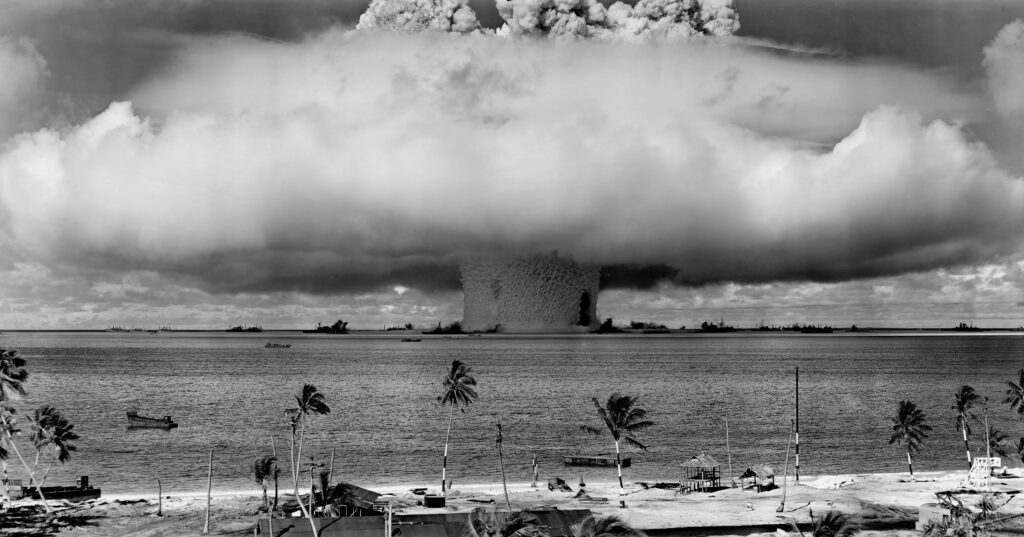
The power of a nuclear bomb is measured in terms of its yield, which is the amount of energy released when the bomb explodes. The yield of a nuclear bomb is measured in kilotons (kt) or megatons (Mt), which refers to the equivalent amount of TNT (a conventional explosive) that would produce the same amount of energy. For example, the bomb dropped on Hiroshima in 1945 had a yield of approximately 15 kt, while the most powerful nuclear bomb ever detonated, the Tsar Bomba, had a yield of 50 Mt.
The effects of a nuclear bomb can be divided into two main categories: blast and radiation. The blast is the initial shockwave created by the explosion, which can cause widespread destruction to buildings and infrastructure within a certain radius. The radiation is the emission of high-energy particles and electromagnetic waves that can cause acute and long-term health effects, including radiation sickness, cancer, and genetic mutations.
The size and yield of a nuclear bomb can determine the extent of the damage it can cause. A smaller bomb, such as the one dropped on Hiroshima, can cause devastating damage to a small area, while a larger bomb, such as the Tsar Bomba, can cause widespread destruction over a larger area. Additionally, the location and topography of a country can affect the extent of the damage caused by a nuclear bomb. For example, a bomb detonated over a densely populated urban area would cause more damage and loss of life than a bomb detonated over a sparsely populated rural area.
In terms of geopolitical context, the use of a nuclear bomb against a country could have far-reaching consequences beyond just the physical damage caused by the bomb itself. It could trigger a wider conflict or escalate an existing one, leading to further destruction and loss of life. It could also have political and economic ramifications, potentially destabilizing the entire region and disrupting global trade and diplomacy.
In summary, a nuclear bomb has the potential to cause catastrophic damage and loss of life on a scale that could have devastating consequences for an entire country. The size and yield of the bomb, as well as the location and geopolitical context of the country, can all affect the extent of the damage caused by a nuclear bomb. However, it is important to remember that the use of a nuclear bomb is a catastrophic event that would have far-reaching consequences beyond just the physical damage caused by the bomb itself.