Finding a suitable yeast substitute can be essential for various baking needs, whether you’re out of yeast or looking for alternatives due to dietary restrictions. This guide provides practical options for replacing yeast in your recipes.
Common substitutes include baking soda combined with an acid, sourdough starter, or even certain types of vinegar. Each option has its unique properties and may alter the final texture and flavor of your baked goods.
Essential Baking Ingredients
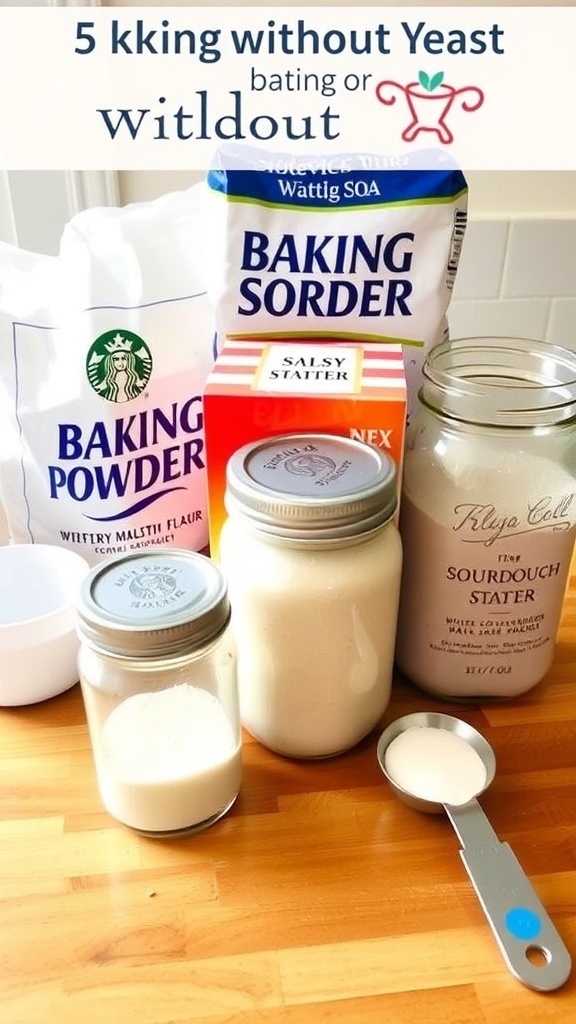
When embarking on a baking project, having the right ingredients at your fingertips is crucial. A well-stocked kitchen should include flour, baking powder, baking soda, and a jar of sourdough starter. These staples form the foundation for countless recipes, especially when yeast is not an option.
The bright and inviting setup of these ingredients on a wooden countertop creates an atmosphere that inspires creativity in the kitchen. The measuring spoon placed nearby signifies readiness, encouraging bakers to dive into their culinary endeavors.
Understanding Yeast Alternatives
For those times when yeast is unavailable or when dietary preferences dictate a different approach, knowing effective substitutes can be a game changer. Baking powder and baking soda are two common alternatives that can provide the necessary leavening without the use of yeast.
Each substitute has its unique characteristics. For instance, baking powder is a complete leavening agent, while baking soda requires an acid to activate its rising properties. Understanding these differences is key to achieving the desired texture and flavor in your baked goods.
Utilizing Sourdough Starter
Sourdough starter is a fantastic option for those looking to replace yeast. It not only provides leavening but also imparts a distinct flavor profile to the final product. A cup of sourdough starter can effectively replace a packet of yeast, making it a versatile ingredient in various recipes.
When using sourdough, adjustments to the overall liquid and flour content in the recipe may be necessary. This ensures that the balance of ingredients remains intact, leading to successful baking outcomes.
Measuring Ingredients Accurately
Precision in measuring ingredients is vital for successful baking. Using a measuring spoon to accurately gauge baking powder or baking soda can make a significant difference in the final result. For instance, one teaspoon of baking powder is typically sufficient for each cup of flour in recipes that call for yeast.
Similarly, when substituting baking soda, combining it with an acid like vinegar or lemon juice is essential. The right proportions will help achieve the desired rise and texture in your baked goods.
Adjusting Recipes for Substitutes
When opting for yeast substitutes, it’s important to adjust other ingredients accordingly. This might involve tweaking the amount of liquid or flour based on the substitute chosen. For example, if using buttermilk or yogurt combined with baking soda, the overall liquid content in the recipe may need to be reduced.
Following these adjustments will help maintain the integrity of the recipe while allowing for a successful bake without yeast. Each substitution can lead to unique flavors and textures, making the baking process an exciting exploration.
Final Thoughts on Baking Without Yeast
Baking without yeast opens up a world of possibilities. With the right ingredients and knowledge of substitutes, anyone can create delicious baked goods that cater to their dietary needs or preferences. Whether using baking powder, baking soda, or sourdough starter, the key lies in understanding how each ingredient interacts within the recipe.
So gather your ingredients, measure accurately, and enjoy the process of baking without yeast. The results can be just as satisfying and delightful, proving that creativity in the kitchen knows no bounds.
Effective Yeast Substitutes
This guide outlines several effective yeast substitutes, including baking powder, baking soda with vinegar, and sourdough starter. The choice of substitute may depend on the specific recipe and desired results.
Ingredients
- 1 teaspoon baking powder for every cup of flour (use in recipes that require yeast)
- 1/4 teaspoon baking soda plus 1/2 teaspoon vinegar or lemon juice for each teaspoon of yeast needed
- 1 cup sourdough starter can replace 1 packet of yeast (adjust flour and liquid in the recipe accordingly)
- 1/4 cup buttermilk or yogurt can replace 1 teaspoon of yeast when combined with baking soda
Instructions
- Determine the amount of yeast needed in your recipe.
- Choose the appropriate substitute based on the options provided.
- Adjust other ingredients in the recipe as necessary to accommodate the substitute.
- Mix the substitute with dry ingredients or liquids as directed in your recipe.
- Proceed with the baking process as usual, keeping in mind that rising times may vary.
Cook and Prep Times
- Prep Time: 5 minutes
- Total Time: Varies depending on the recipe
- Servings: Varies based on recipe
- Calories: Varies based on ingredients used