The zero carb diet is a dietary approach that eliminates all carbohydrates from the diet, focusing instead on protein and fats. This diet is often adopted for weight loss, improved energy levels, and better blood sugar control.
While it can lead to rapid weight loss, it’s important to consider the nutritional balance and potential health implications of such a restrictive diet.
Understanding the Zero Carb Diet
The zero carb diet focuses on eliminating carbohydrates, emphasizing protein and fats instead. This dietary approach is often chosen for its potential benefits, including weight loss and enhanced energy levels.
By avoiding grains, fruits, vegetables, and sugars, individuals can enter a state known as ketosis. In this metabolic state, the body shifts to burning fat for fuel, which can lead to rapid weight loss.
Key Components of a Zero Carb Diet
Essential foods in a zero carb diet include a variety of meats such as beef, pork, lamb, and chicken. Fish and seafood, like salmon and shrimp, are also excellent choices.
Eggs and certain dairy products, particularly hard cheeses like cheddar and mozzarella, provide valuable nutrients and contribute to the diet’s high protein and fat content.
Meal Preparation Tips
Planning meals is crucial for success on a zero carb diet. Focus on high-protein and high-fat foods while steering clear of all carbohydrate sources.
Cooking methods such as grilling, baking, or sautéing meats and fish using healthy fats can enhance flavor and maintain nutritional integrity.
The Role of Dairy and Bone Broth
Dairy products like cheese and butter not only add flavor but also increase the fat content of meals, making them more satisfying.
Bone broth is another staple, offering hydration and nutrients that support overall health. It can be enjoyed on its own or used as a base for soups and sauces.
Staying Hydrated and Monitoring Health
Hydration is vital on a zero carb diet. Drinking plenty of water helps maintain energy levels and overall well-being. Consider electrolyte supplementation to counterbalance the reduction in carbohydrate intake.
It’s important to monitor any changes in energy, mood, and health. Keeping track of how the body responds can help tailor the diet to individual needs.
Creating a Rustic Dining Experience
Setting the stage for meals can enhance the dining experience. A rustic wooden table setting emphasizes simplicity and a natural approach to eating.
Arranging an assortment of grilled meats, cheeses, eggs, and a bowl of bone broth on a wooden table not only looks appealing but also reflects the essence of the zero carb lifestyle.
Understanding the Zero Carb Diet
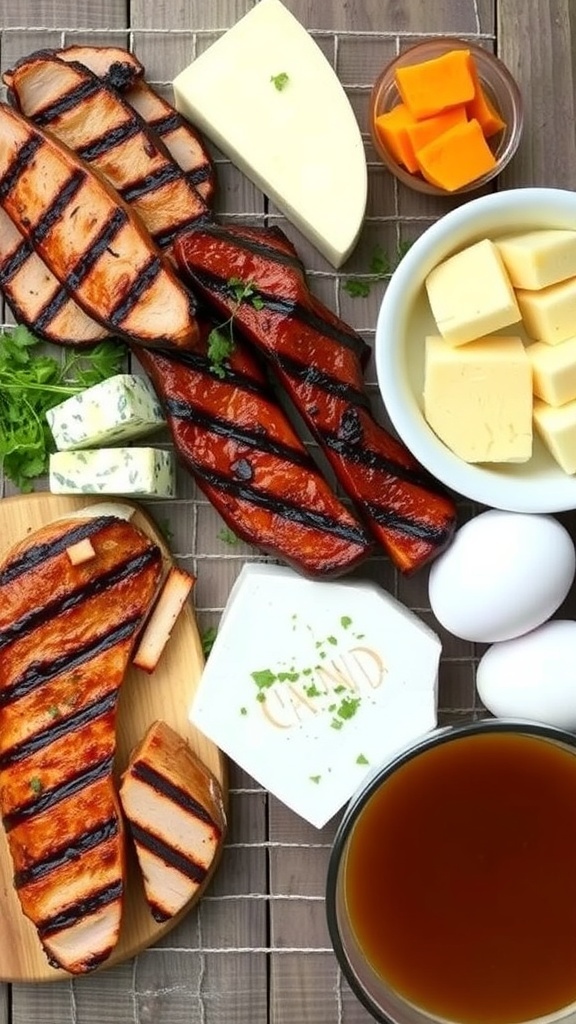
A zero carb diet typically includes foods like meat, fish, eggs, and certain dairy products while excluding grains, fruits, vegetables, and sugars. This approach can lead to ketosis, a metabolic state where the body burns fat for fuel instead of carbohydrates.
Ingredients
- Meat (beef, pork, lamb, chicken)
- Fish and seafood (salmon, shrimp, tuna)
- Eggs
- Cheese (hard cheeses like cheddar, mozzarella)
- Butter and oils (olive oil, coconut oil)
- Bone broth
Instructions
- Plan Meals: Focus on high-protein and high-fat foods while avoiding all carbohydrate sources.
- Cook Proteins: Grill, bake, or sauté meats and fish using healthy fats.
- Incorporate Dairy: Use cheese and butter to add flavor and fat to meals.
- Stay Hydrated: Drink plenty of water and consider electrolyte supplementation due to reduced carb intake.
- Monitor Health: Keep track of any changes in energy levels, mood, and overall health.
Cook and Prep Times
- Prep Time: Varies based on meal preparation
- Cook Time: Varies based on cooking methods
- Total Time: Ongoing dietary approach
- Servings: Varies based on individual meal plans
- Calories: Varies based on food choices
- Fat: High
- Protein: High
- Carbohydrates: 0g
Related
- Zero Carb Diet Meal Plan
- Zero Carb Food List for Ketogenic Diet
- Zero Carb Indian Diet Plan
- Zero Carb Diet Results: What to Expect