Pasta comes in a variety of shapes and sizes, each with its own unique characteristics and uses. From classic spaghetti to intricate farfalle, understanding the different types of pasta shapes can elevate your culinary experience. Whether you’re making a rich sauce or a light salad, the right pasta shape can make all the difference.
Do you ever wonder why certain pasta shapes pair better with specific sauces? Each shape is designed to hold onto flavors and textures in different ways. This guide will explore some of the most popular pasta shapes and how to use them effectively in your cooking.
Explore the World of Pasta Shapes
Pasta is a staple in many cuisines and comes in a delightful array of shapes. Each type has its own unique texture and purpose in the culinary arts. From long, elegant strands to short, hearty tubes, understanding pasta shapes can significantly enhance your cooking.
When choosing pasta, consider how its shape interacts with your ingredients. For example, some shapes hold sauces better than others, making them ideal for specific dishes. This exploration of pasta varieties opens up new possibilities for creativity in the kitchen.
The Charm of Spaghetti
Spaghetti, with its long and slender form, is iconic in many pasta dishes. This versatile noodle pairs beautifully with traditional marinara sauce or rich meat sauces.
Its shape allows it to twirl around a fork, creating a delightful experience with each bite. When enjoying spaghetti, a sprinkle of fresh herbs can elevate its presentation and flavor.
Farfalle: The Bow-Tie Favorite
Farfalle, commonly recognized for its bow-tie shape, adds a playful touch to any dish. It shines in light salads or with delicate sauces, making it a popular choice for summer meals.
Its unique shape traps bits of vegetables and dressing, ensuring every forkful is bursting with flavor. Serve farfalle with cherry tomatoes and a drizzle of olive oil for a fresh, vibrant dish.
Penne: The Perfect Partner for Baked Dishes
Penne, with its short, tubular structure, is ideal for baked pasta dishes and creamy sauces. The angled ends of penne allow for a delightful bite, making it a favorite in hearty recipes.
This pasta shape’s ridges help to cling to sauces, ensuring a flavorful experience. For a comforting meal, pair penne with a rich cheese sauce and bake until golden.
Fusilli: Spirals of Flavor
Fusilli is notable for its spiral shape, making it exceptionally good at holding onto sauces. This quality makes it suitable for both warm dishes and refreshing pasta salads.
When combined with a robust sauce, fusilli becomes a flavor-packed dish that is both satisfying and visually appealing. Toss it with vegetables and herbs for a vibrant salad.
Linguine: Flat and Flavorful
Linguine, being flatter and wider than spaghetti, is a perfect match for seafood and oil-based sauces. Its unique shape allows it to capture flavors while providing a pleasant chew.
For a simple yet elegant meal, serve linguine with fresh clams or a light pesto. Adding fresh herbs can enhance its appeal and brighten the dish.
Rigatoni: Hearty and Ridged
Rigatoni stands out with its large, ridged tubes that are excellent for holding onto thick, hearty sauces. This shape is perfect for baked pasta dishes, allowing for a substantial bite.
When preparing rigatoni, consider pairing it with slow-cooked meats or chunky vegetable sauces. Its robust structure ensures that every mouthful is filled with rich flavors.
Explore the World of Pasta Shapes
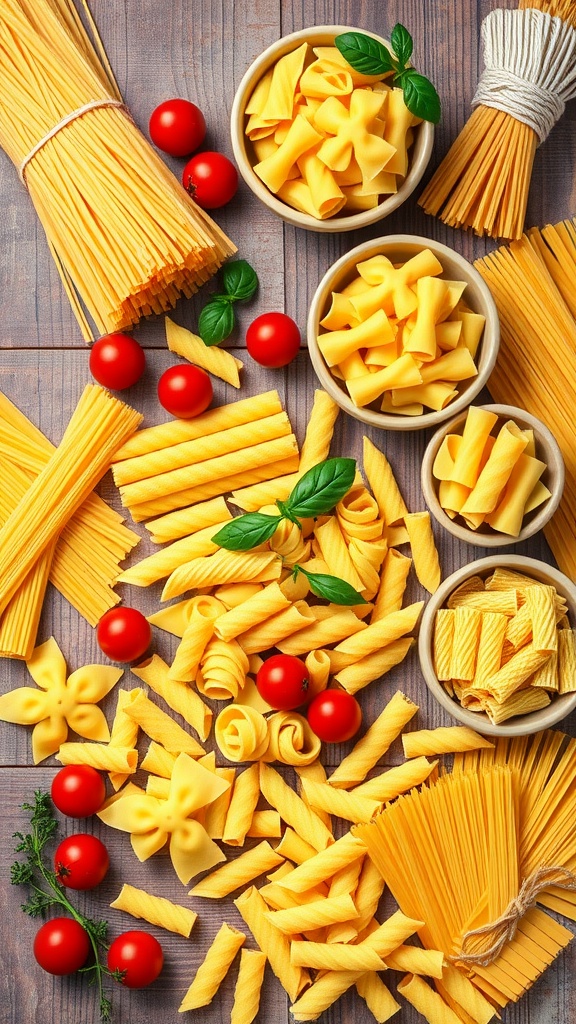
This guide highlights various pasta shapes, showcasing their unique textures and the dishes they complement best. From long strands to short, tubular shapes, each pasta type has its own personality and purpose in the kitchen.
Understanding these shapes allows you to choose the perfect pasta for your favorite recipes, enhancing both the presentation and taste of your meals.
Ingredients
Related
- What are the different types of curves on a graph?
- What are the Different shapes of a graph called?
- What are different types of mirror?
- Exploring the Different Types of Pasta