Bread flour is a high-protein flour specifically designed for making yeast-leavened breads. It typically contains 12-14% protein, which helps create a strong gluten structure, resulting in a chewy texture and good rise in bread.
This flour is ideal for recipes such as artisan breads, bagels, and pizza dough. It can be used in combination with other flours for a variety of baked goods.
Understanding Bread Flour
Bread flour is a high-protein flour that plays a vital role in baking yeast-leavened breads.
With a protein content ranging from 12% to 14%, it creates a robust gluten structure that contributes to the chewy texture and impressive rise of the bread.
This flour is particularly suited for recipes like artisan breads, bagels, and pizza dough, making it a staple in many kitchens.
When used in combination with other flours, bread flour can enhance the overall quality of various baked goods.
Its unique properties make it an essential ingredient for anyone looking to achieve bakery-quality results at home.
The Importance of Gluten Development
The strength of bread flour lies in its ability to absorb more water than all-purpose flour.
This characteristic is crucial for proper hydration and gluten development during the kneading process.
As the dough is worked, the gluten proteins align and strengthen, resulting in a loaf that boasts a delightful crumb and crust.
A well-kneaded dough made with bread flour will yield a chewy texture that is highly sought after in many bread recipes.
This gluten structure not only supports the rise of the bread but also helps maintain its shape during baking.
Essential Ingredients for Bread Making
Creating delicious bread requires a few key ingredients alongside bread flour.
Water is essential for hydration, while yeast acts as the leavening agent that causes the dough to rise.
Salt is also important, as it enhances flavor and strengthens the dough.
When these ingredients are combined, they work together to create a dough that is both flavorful and structurally sound.
The balance of these components can significantly impact the final product, making precise measurements crucial.
The Baking Process
The process of making bread from scratch can be both rewarding and enjoyable.
Start by measuring the bread flour accurately, using either a kitchen scale or measuring cups for precision.
Combine the flour with water, yeast, and salt in a mixing bowl, ensuring all ingredients are well incorporated.
Kneading the dough is a critical step, typically lasting around 10 minutes until it becomes smooth and elastic.
After kneading, allow the dough to rise in a warm environment until it doubles in size, which usually takes 1-2 hours.
Once risen, shape the dough and let it rise again before baking in a preheated oven.
Timing and Patience in Baking
Time management is essential when baking bread.
The preparation time is relatively short, around 15 minutes, but the total time can stretch to 1-2 hours when factoring in the rising periods.
This patience is rewarded with a golden-brown loaf that fills the kitchen with an irresistible aroma.
After baking for 30-40 minutes, allow the bread to cool on a wire rack.
This cooling period is vital for setting the crumb and ensuring the best texture.
The result is a beautifully baked loaf, ready to be sliced and enjoyed.
Nutritional Aspects of Bread Flour
Bread flour not only contributes to the texture and flavor of bread but also offers nutritional benefits.
Typically, a 1/4 cup serving contains approximately 100 calories, along with 4 grams of protein and minimal fat.
This makes it a suitable choice for those looking to enjoy homemade bread without excessive calories.
Incorporating bread flour into your baking repertoire can lead to healthier, homemade alternatives to store-bought options.
With the right ingredients and techniques, anyone can create delicious bread that is both satisfying and nutritious.
Understanding Bread Flour
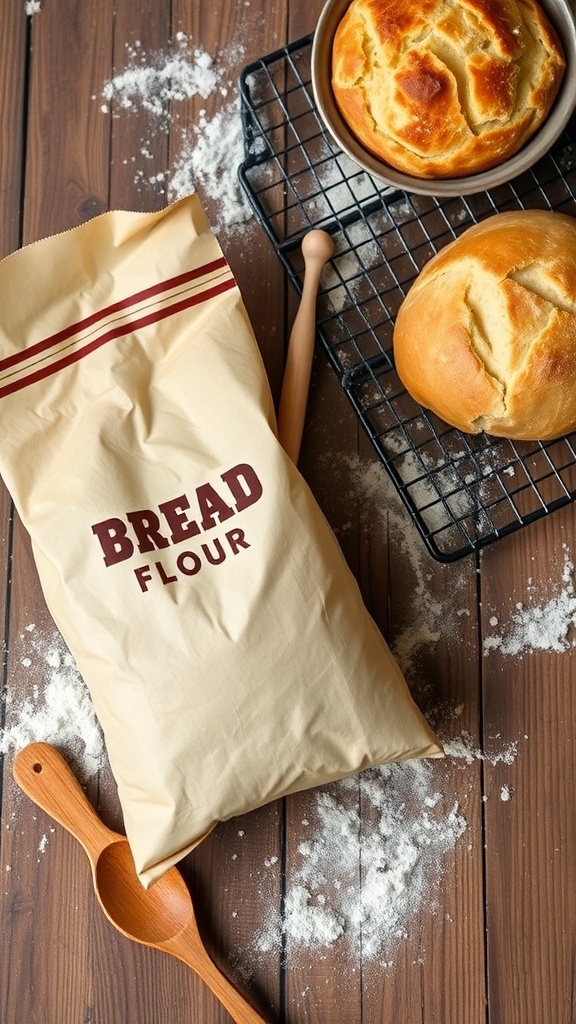
Bread flour is essential for achieving the desired texture and structure in yeast breads. It absorbs more water than all-purpose flour, allowing for better hydration and gluten development during kneading. This results in a loaf with a great crumb and crust.
Ingredients
- Bread flour (high-protein flour)
- Water (for hydration)
- Yeast (for leavening)
- Salt (for flavor and strength)
Instructions
- Measure the bread flour accurately using a kitchen scale or measuring cups.
- Combine the bread flour with water, yeast, and salt in a mixing bowl.
- Knead the dough until it becomes smooth and elastic, typically for about 10 minutes.
- Allow the dough to rise in a warm place until it doubles in size, usually 1-2 hours.
- Shape the dough and let it rise again before baking in a preheated oven.
Cook and Prep Times
- Prep Time: 15 minutes
- Cook Time: 30-40 minutes
- Total Time: 1-2 hours (including rising time)
- Servings: Varies based on recipe
- Calories: Approximately 100 calories per 1/4 cup
- Fat: 0.5g
- Protein: 4g
- Carbohydrates: 22g
Related
- Five Nights at Freddy’s: Tales from the Pizzaplex – Chapter Overview
- Cheese Escape Chapter 2 Map Overview
- Zero Carb Diet Overview
- Jordan 1 Low Carbon Sneaker Overview