Creating a combined duck and chicken coop can be a practical solution for poultry enthusiasts looking to maximize space while providing a safe and comfortable environment for their birds. Ducks and chickens can coexist peacefully with the right design and management.
This guide will provide essential tips on how to build an effective coop that meets the needs of both species, ensuring they have adequate space, shelter, and access to food and water.
Designing Your Duck and Chicken Coop
A well-constructed coop is essential for the well-being of both ducks and chickens.
This structure should feature separate nesting areas tailored to the unique needs of each species.
Chickens thrive in elevated nesting boxes, while ducks prefer ground-level spaces.
Incorporating ample ventilation is vital to maintain a healthy environment.
The coop must also be fortified against predators, ensuring the safety of your poultry.
A secure outdoor run allows the birds to enjoy fresh air and grass while remaining protected.
Materials Needed for Construction
Gathering the right materials is the first step in building your combined coop.
You’ll need sturdy wooden boards for the frame and walls, ensuring durability and stability.
Wire mesh is crucial for ventilation and predator protection, allowing airflow without compromising safety.
Nesting boxes are necessary, with specific designs for chickens and ducks.
Roosting bars are essential for chickens to perch comfortably at night.
Don’t forget roofing materials to shield the coop from harsh weather conditions.
Location and Site Preparation
Choosing the right location for your coop is critical.
Select a dry, well-drained area that is sheltered from strong winds and direct sunlight.
This will help maintain a comfortable environment for your birds.
Before construction, clear the site of debris and level the ground.
This preparation will facilitate a stable foundation for your coop.
Proper site selection contributes to the overall health and happiness of your poultry.
Building the Coop Frame
Start by constructing a sturdy frame using the wooden boards.
Ensure the dimensions are spacious enough to accommodate both ducks and chickens comfortably.
A well-sized coop promotes a harmonious living environment.
After building the frame, add walls using plywood or similar materials.
Cover the roof to protect against rain and snow, ensuring a dry space for your birds.
This structure will serve as a safe haven for your poultry.
Creating Nesting Areas and Roosting Bars
Design separate nesting boxes for chickens and ducks, making them easily accessible.
This distinction helps cater to their individual preferences and behaviors.
Consider placing the chicken nesting boxes at a height that allows for easy access.
Install roosting bars at various heights within the coop.
Chickens enjoy perching, and providing different levels will keep them content.
This setup not only enhances their comfort but also contributes to a more organized coop.
Setting Up the Outdoor Run
Establish a secure outdoor run for your birds to roam freely.
Ensure the area is fenced and covered to protect against aerial predators.
This outdoor space should be spacious enough to allow both ducks and chickens to explore.
Incorporate green grass and other natural elements to enrich their environment.
Access to fresh air and sunlight is beneficial for their overall health.
A well-designed outdoor run enhances the quality of life for your poultry.
Designing Your Duck and Chicken Coop
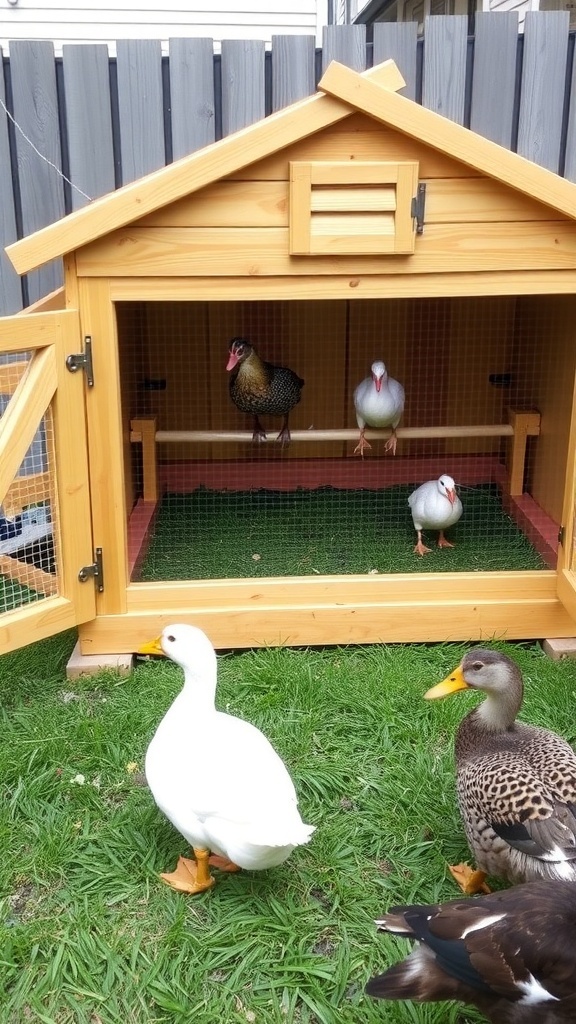
A well-designed coop should include separate nesting areas for chickens and ducks, as their needs differ. Chickens prefer elevated nesting boxes, while ducks need ground-level nesting spaces. The coop should also provide ample ventilation and protection from predators, along with a secure outdoor run.
Ingredients
- Wooden boards for the frame and walls
- Wire mesh for ventilation and predator protection
- Nesting boxes (elevated for chickens, ground-level for ducks)
- Roosting bars for chickens
- Water containers suitable for both ducks and chickens
- Feeders that accommodate both species
- Roofing materials for weather protection
- Hinges and latches for doors
Instructions
- Choose a suitable location: Select a dry, well-drained area for the coop, away from strong winds and direct sunlight.
- Build the frame: Construct a sturdy frame using wooden boards, ensuring it is large enough to accommodate both ducks and chickens comfortably.
- Add walls and roof: Install walls using plywood or similar materials, and cover the roof to protect against rain and snow.
- Create nesting areas: Design separate nesting boxes for chickens and ducks, ensuring they are easily accessible.
- Install roosting bars: Place roosting bars at different heights for chickens to perch on at night.
- Add ventilation: Incorporate wire mesh windows or vents to allow airflow while keeping predators out.
- Set up the outdoor run: Create a secure outdoor space for the birds to roam, ensuring it is fenced and covered to protect against aerial predators.
- Provide food and water: Install feeders and water containers that are easy for both ducks and chickens to access.
Cook and Prep Times
- Prep Time: 1 hour
- Build Time: 1-2 days
- Total Time: 1-2 days
- Space Requirement: Minimum 4 square feet per chicken and 6 square feet per duck in the coop
- Outdoor Run Requirement: Minimum 10 square feet per chicken and 15 square feet per duck
Related
- Building a Duck Coop: Essential Guide
- DIY Chicken Coop: A Simple Guide to Building Your Own
- Building a Functional Chicken Coop: A Step-by-Step Guide
- Building a Cozy Chicken Coop for Happy Hens