Creating a safe and comfortable duck enclosure is essential for the well-being of your ducks. A well-designed enclosure protects them from predators and provides a space for them to roam, forage, and nest.
This guide outlines the key considerations for building a duck enclosure, including size, materials, and design features that cater to the needs of ducks.
Creating a Safe Environment for Ducks
Building a duck enclosure is an important step in ensuring the safety and well-being of your feathered friends. A well-constructed space not only protects them from potential predators but also offers a comfortable area for them to roam and thrive.
The enclosure should be designed with the ducks’ needs in mind, allowing them to forage, nest, and socialize. By incorporating essential features, you can create a haven that promotes their health and happiness.
Essential Features of a Duck Enclosure
A proper duck enclosure must include several key elements to ensure the comfort and safety of the ducks. First and foremost, a secure shelter is vital. This shelter provides a safe place for the ducks to rest and lay eggs, away from the elements and potential threats.
Additionally, the enclosure should offer ample space for movement. Ducks require room to stretch their legs and engage in natural behaviors. A minimum of 10 square feet per duck is recommended to allow for adequate roaming.
Choosing the Right Materials
When constructing a duck enclosure, selecting the right materials is crucial for durability and safety. Wooden posts are ideal for framing the structure, providing a sturdy base for the enclosure.
Wire mesh or fencing serves as the walls, ensuring that the ducks are protected while allowing for ventilation. It’s important to bury the fencing a few inches underground to deter digging predators.
Designing the Layout
Before you begin building, take the time to design the layout of the enclosure. Choose a flat area with good drainage, ensuring that the ducks have access to both sunlight and shade. This balance is essential for their comfort, especially during extreme weather conditions.
Plan the size of the enclosure based on the number of ducks you have. A spacious layout will promote a healthy environment where the ducks can thrive.
Incorporating Water Features
Access to water is a vital aspect of a duck enclosure. Ducks love to swim and bathe, so including a kiddie pool or water trough is a great addition. This feature not only keeps them clean but also provides them with an enjoyable activity.
Make sure the water source is easy to clean and refill regularly to maintain hygiene. Ducks are known for their playful nature, and a water feature will certainly enhance their living experience.
Regular Maintenance and Care
Once your duck enclosure is built, regular maintenance is essential for keeping it safe and secure. Clean the enclosure frequently to prevent the buildup of waste and ensure a healthy environment for your ducks.
Regularly check for any repairs needed, such as fixing holes in the fencing or replacing bedding material in the shelter. Keeping the enclosure in good condition will help protect your ducks and provide them with a comfortable home.
Essential Features of a Duck Enclosure
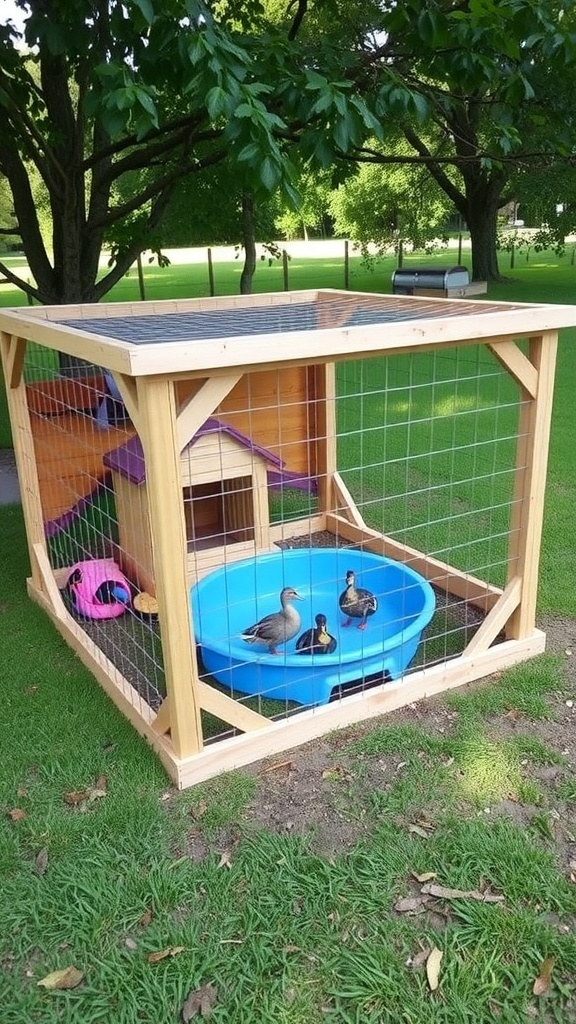
A proper duck enclosure should include a secure shelter, adequate space for movement, and access to water for swimming and bathing. The enclosure should be well-ventilated and provide shade to protect ducks from extreme weather conditions.
Ingredients
Related
- Building a Duck Coop: Essential Guide
- Building a Combined Duck and Chicken Coop
- Creative Duck Enclosure Ideas
- Is it daisy or daphne duck?