Butter is a versatile ingredient used in various recipes, from baking to cooking. An 8 oz portion of butter is equivalent to one cup, making it a common measurement in many culinary applications.
This guide provides practical information on how to use, store, and substitute butter in your cooking and baking endeavors.
Understanding Butter Measurements
Butter is a staple in many kitchens, especially for those who enjoy baking.
An 8 oz block of butter is equivalent to one cup, a common measurement that appears in countless recipes.
This size is particularly useful when preparing baked goods, sauces, or even savory dishes.
When using butter, it’s essential to measure accurately.
Most butter wrappers have markings that indicate tablespoon measurements, making it easier to portion out the desired amount without needing a scale.
Softening Butter for Baking
Before incorporating butter into your recipes, it often needs to be softened.
Allowing the butter to sit at room temperature for about 10-15 minutes will make it easier to mix into your ingredients.
This step is crucial for achieving the right texture in baked goods, especially when creaming with sugar.
Softened butter should be pliable but not melted.
If you’re short on time, you can cut the butter into smaller pieces to speed up the softening process.
Incorporating Butter into Recipes
Once softened, butter can be used in various ways, depending on the recipe.
For cookies and cakes, it is often creamed with sugar to create a light and fluffy texture.
In sauces, melted butter can add richness and depth of flavor.
When greasing pans, butter can also serve as a non-stick agent, ensuring your baked goods release easily.
This versatility makes it an essential ingredient in both sweet and savory dishes.
Storing Butter Properly
To maintain its freshness, butter should be stored properly.
Keep it wrapped in its original paper or in an airtight container to prevent it from absorbing odors from other foods.
Butter can be stored in the refrigerator for several weeks or frozen for longer storage.
If freezing, consider cutting it into smaller portions.
This way, you can easily thaw only what you need for a specific recipe.
Substituting Butter in Recipes
While butter is a beloved ingredient, there are times when substitutions are necessary.
Common alternatives include margarine, shortening, or plant-based spreads.
Each substitute may alter the flavor and texture of the final dish, so it’s worth experimenting to find what works best for your needs.
When substituting, keep in mind that the fat content and moisture levels may vary.
Adjusting the amount used can help achieve similar results in your baking or cooking.
Nutritional Information of Butter
An 8 oz block of butter contains approximately 16 tablespoons, with each tablespoon packing around 102 calories.
Butter is primarily fat, with about 11.5 grams per tablespoon, and minimal protein and carbohydrates.
This nutritional profile is important to consider, especially for those monitoring their dietary intake.
Despite its rich flavor, moderation is key when using butter in your cooking and baking.
Understanding its nutritional aspects can help you make informed choices in your culinary endeavors.
Using 8 oz of Butter in Recipes
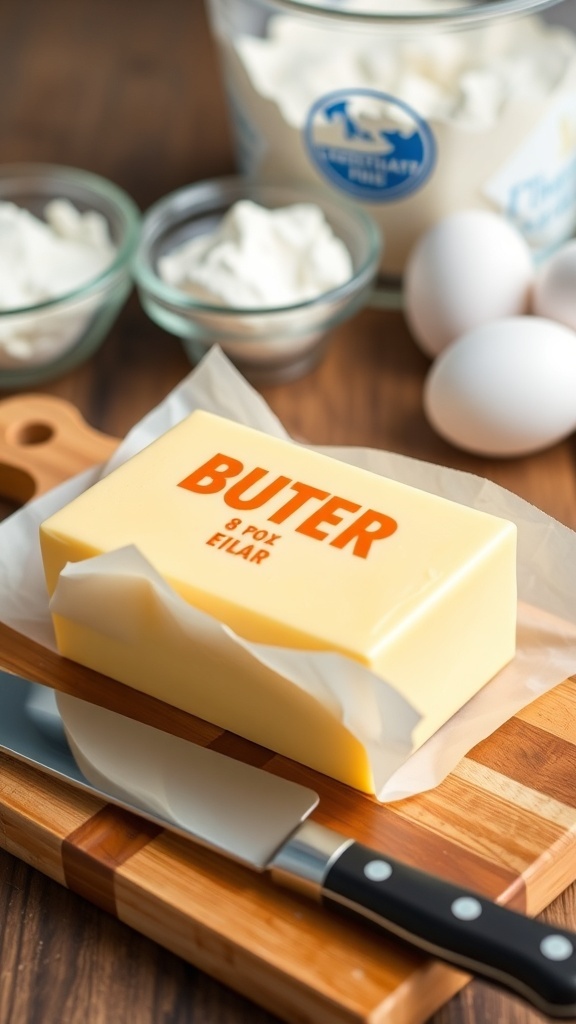
An 8 oz block of butter can be used in numerous recipes, including cookies, cakes, sauces, and sautéing vegetables. It typically takes about 10-15 minutes to soften at room temperature, making it easier to incorporate into your mixtures.
Ingredients
- 8 oz (1 cup) unsalted butter
Instructions
- Measure: Use a kitchen scale or the markings on the butter wrapper to measure 8 oz of butter accurately.
- Soften: Allow the butter to sit at room temperature for about 10-15 minutes until it is soft but not melted.
- Incorporate: Use the softened butter in your recipe as directed, whether for creaming with sugar, melting for sauces, or greasing pans.
Cook and Prep Times
- Prep Time: 15 minutes (for softening)
- Cook Time: Varies by recipe
- Total Time: Varies by recipe
- Servings: 16 tablespoons
- Calories: 102 calories per tablespoon
- Fat: 11.5g
- Protein: 0.1g
- Carbohydrates: 0g
Related
- Yeast Bread Basics: Understanding Yeast in Baking
- Is Salt a Spice? Understanding the Basics of Seasoning
- Understanding Bread Mold: A Diagram for Class 8
- Understanding the 6 Essential Mother Sauces