Butter and margarine are common spreads used in cooking and baking, each with distinct characteristics and health implications. Understanding the differences between them can help you make informed choices for your diet and recipes.
This comparison will cover the ingredients, nutritional profiles, and culinary uses of both butter and margarine, helping you decide which one suits your needs best.
Understanding Butter and Margarine
Butter is a dairy product that comes from churning cream, resulting in a rich and creamy texture. Its flavor is often described as indulgent and satisfying, making it a favorite in many kitchens.
Margarine, on the other hand, is a processed product created from vegetable oils. It aims to replicate the taste and consistency of butter, offering a variety of formulations to meet different dietary needs.
Ingredients Breakdown
The simplicity of butter is one of its appealing features. Typically, it consists of just cream, with optional salt added for flavor. This straightforward ingredient list contributes to its rich taste.
Margarine contains a blend of vegetable oils, such as soybean, palm, or canola, along with water and emulsifiers. Some varieties may include dairy ingredients, while others are entirely plant-based, catering to those with dietary restrictions.
Nutritional Comparison
When comparing the nutritional profiles of butter and margarine, there are notable differences. Butter contains approximately 102 calories per tablespoon, with 11.5 grams of fat, including 7.2 grams of saturated fat and 31 milligrams of cholesterol.
Margarine is slightly lower in calories, with about 100 calories per tablespoon. It has 11 grams of fat, but only 2 grams of saturated fat and no cholesterol, making it a popular choice for those monitoring their cholesterol intake.
Culinary Uses
Butter is often favored in baking and sautéing due to its rich flavor. It enhances the taste of cookies, pastries, and sauces, making it a staple in many recipes.
Margarine serves as a versatile substitute for butter in various dishes. It can be used in baking, frying, and as a spread, often at a lower cost than butter, making it an economical choice for many households.
Flavor and Texture Considerations
The flavor of butter is distinct and often described as creamy and slightly nutty. Its texture is smooth and easy to spread, especially when softened.
Margarine, while designed to mimic butter, may have a slightly different taste depending on the brand and formulation. Some varieties may have added flavors to enhance their appeal, but they often lack the depth of butter’s natural taste.
Making the Right Choice
Choosing between butter and margarine often comes down to personal preference and dietary needs. Those looking for a rich flavor may lean towards butter, while those seeking a lower-cost or plant-based option might prefer margarine.
Ultimately, both spreads have their place in cooking and baking, and understanding their differences can help you make informed decisions in the kitchen.
Understanding Butter and Margarine
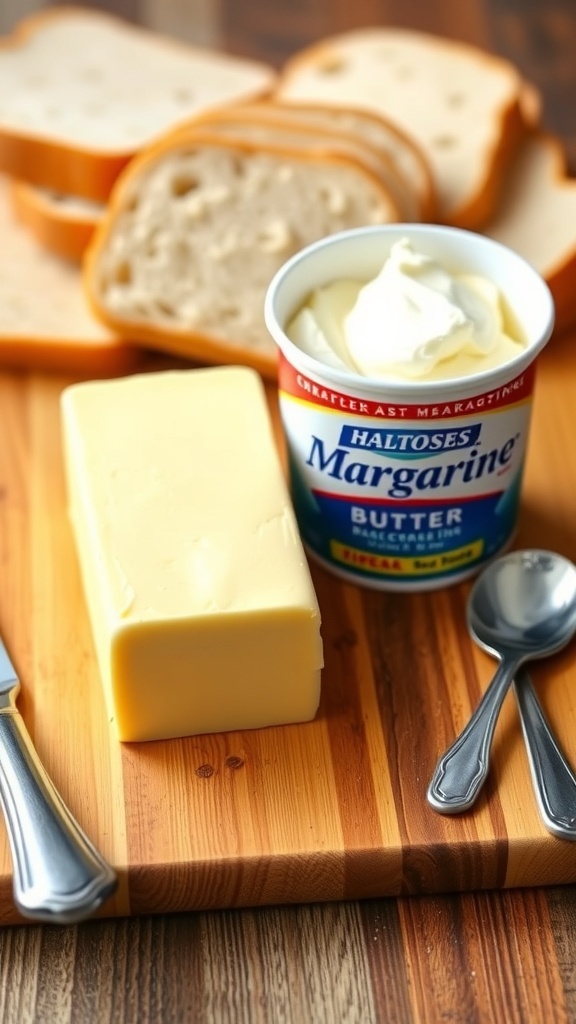
Butter is a dairy product made from churning cream, while margarine is a processed product made from vegetable oils. Butter typically has a rich flavor and creamy texture, whereas margarine is often designed to mimic the taste and consistency of butter, with various formulations available to cater to different dietary preferences.
Ingredients
- Butter: Cream, salt (optional)
- Margarine: Vegetable oils (such as soybean, palm, or canola), water, emulsifiers, and sometimes dairy ingredients
Instructions
Cook and Prep Times
Related
- Carnivore Diet vs Keto Diet: A Comprehensive Comparison
- Healthy Food vs Junk Food: A Comprehensive Comparison Guide
- Pie vs. Cake: A Comprehensive Comparison of Flavors and Textures
- Dolby Atmos vs Dolby Digital (Comparison)