The answer to this question lies in the genetics of eye color inheritance. Eye color is a complex trait that is determined by multiple genes, with the main gene being OCA2, located on chromosome 15. This gene produces a protein that plays a key role in the development of melanin, the pigment that gives color to our hair, skin, and eyes. There are two types of melanin, eumelanin and pheomelanin, with eumelanin being responsible for brown and black colors, and pheomelanin being responsible for red and yellow colors.
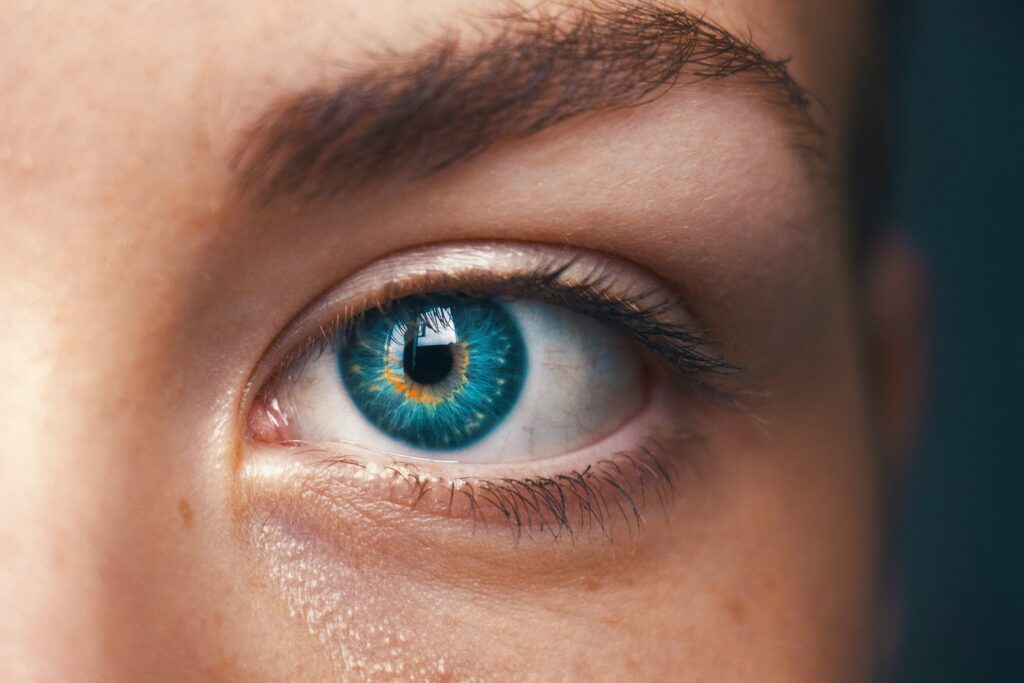
The amount and distribution of melanin in the iris of the eye determine its color. Blue eyes result from a lack of pigment in the iris, while brown eyes result from high levels of pigment. Green eyes and other variations of eye color are the result of intermediate levels of melanin.
The inheritance of eye color is a complex process that involves multiple genes, and there is no straightforward answer to the question of whether two brown-eyed parents can have a blue-eyed child. However, based on current scientific understanding of eye color inheritance, it is possible, though rare, for two brown-eyed parents to have a blue-eyed child.
The reason for this is that eye color inheritance is not a simple dominant-recessive trait, but rather a polygenic trait that is influenced by multiple genes. This means that the expression of eye color is influenced by many different genes, each of which contributes a small amount to the overall expression of the trait.
The OCA2 gene is one of the key genes that determines eye color, and it comes in different variants, or alleles. One of these alleles, known as the “blue eye” allele, reduces the amount of melanin produced in the iris, resulting in blue eyes. This allele is recessive, meaning that it only expresses itself in the presence of another copy of the same allele.
Therefore, if both parents carry a copy of the blue eye allele, even though they have brown eyes, they can potentially have a blue-eyed child. This is because each parent would have one copy of the “blue eye” allele and one copy of the “brown eye” allele, with the “brown eye” allele being dominant over the “blue eye” allele. However, there is a 25% chance that each parent could pass on the “blue eye” allele to their child, resulting in a child with blue eyes.
It is also worth noting that there are other genes that can influence eye color, including genes that control the amount and distribution of melanin in the iris. Therefore, the inheritance of eye color is a complex process that can result in a wide range of variations, even among siblings.
In conclusion, while it is rare, it is possible for two brown-eyed parents to have a blue-eyed child if both parents carry a copy of the “blue eye” allele. However, the inheritance of eye color is a complex process that is influenced by many different genes, and there is no guarantee that any particular combination of genes will result in a particular eye color.