The idea of a human fitting inside a whale is a fascinating concept that has captured the imagination of many people throughout history. Whales are known to be the largest animals on Earth, with some species reaching lengths of up to 100 feet and weighing over 200 tons. Given their immense size, it’s natural to wonder if a human could actually fit inside a whale. In this article, we will explore this question in depth, considering the anatomy of whales, the size of their internal organs, and the limitations of human anatomy.
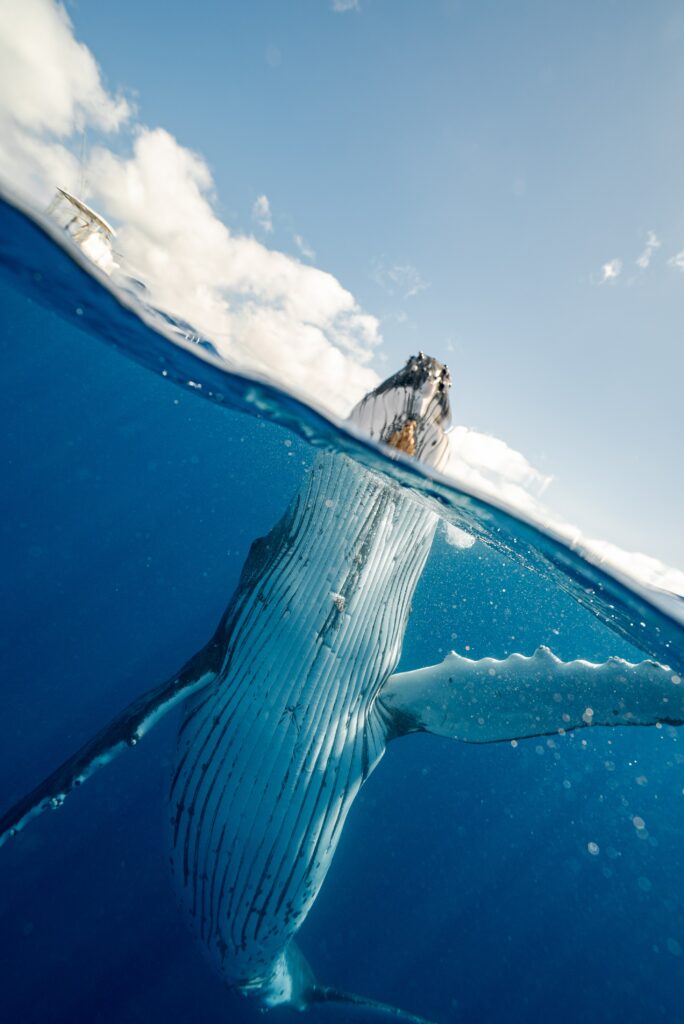
Whales are marine mammals that belong to the order Cetacea, which also includes dolphins and porpoises. They are uniquely adapted to their aquatic environment, with streamlined bodies, powerful tails for propulsion, and specialized feeding mechanisms. Whales have a variety of different species, including the blue whale, humpback whale, sperm whale, and killer whale, among others.
One of the key factors to consider when contemplating whether a human could fit inside a whale is the size of the whale’s mouth and throat. Whales are filter feeders, meaning they consume large amounts of small prey, such as krill or small fish, by filtering them out of the water. Most baleen whales, including the blue whale and humpback whale, have baleen plates in their mouths that act like a sieve, allowing them to filter out prey from the water as they swim.
The baleen plates in a whale’s mouth are made of keratin, the same material found in human hair and nails. While these plates are strong, they are not designed to handle large solid objects, such as a human body. The spacing between the baleen plates is also relatively small, usually ranging from a few centimeters to a few inches, depending on the species of whale. This would make it virtually impossible for a human to fit through the baleen plates and into the whale’s mouth.
Even if a human were somehow able to get past the baleen plates and into the whale’s mouth, the next challenge would be the throat. Whales have relatively narrow throats compared to their overall size, as their throats are adapted for swallowing small prey. The size of a whale’s throat varies depending on the species, but in general, it would not be large enough to accommodate a human body.
Another factor to consider is the size of a whale’s internal organs. Whales have massive organs, such as their heart, lungs, and digestive system, which are proportionate to their overall size. For example, a blue whale’s heart can weigh over 1,000 pounds and is about the size of a small car. These organs take up a significant amount of space inside the whale’s body, leaving little room for a human to fit.
Furthermore, the anatomy of a human body presents limitations when it comes to fitting inside a whale. Humans have a rigid skeletal structure, with a spine that cannot bend and flex like the flexible cartilage structure of a whale’s body. Whales are able to compress and expand their bodies to navigate through water and to swallow prey, which is not possible for a human. The sheer size and weight of a human body would make it physically impossible to fit inside a whale’s body, considering the structural differences between humans and whales.
In addition to the anatomical limitations, attempting to fit inside a whale would be extremely dangerous and life-threatening. Whales are wild animals that are not accustomed to having humans inside their bodies. They have powerful muscles and sharp teeth that are adapted for capturing and consuming prey, and any attempt by a human to enter a whale’s body would likely result in serious injury or death for both the human and the whale.
In conclusion, while the idea of a human fitting inside a whale may be intriguing, it is not