Blue snow is a phenomenon that has been observed in various parts of the world, particularly in high-altitude regions such as the Alps, the Himalayas, and the Rocky Mountains. The blue coloration of snow can be caused by a variety of factors, including the scattering of light, the presence of algae, and the reflection of blue light from the sky.
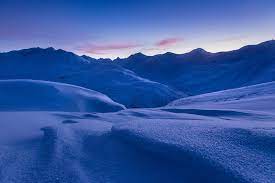
One of the most common causes of blue snow is the scattering of light. When light enters a snowflake, it is scattered in all directions, with some of the blue light being scattered more strongly than other colors. This is because blue light has a shorter wavelength than other colors and is therefore more likely to be scattered in the atmosphere. As a result, when light enters a snowflake, it is scattered in all directions, but the blue light is scattered more strongly, giving the snow a blue hue.
Another factor that can contribute to blue snow is the presence of algae. Algae are microscopic organisms that can grow on snow and ice, particularly in areas where the temperature is slightly above freezing. When algae grow on snow, they can give it a greenish-blue coloration, which can be mistaken for blue snow.
In addition to scattering and algae, the reflection of blue light from the sky can also contribute to the blue coloration of snow. When sunlight enters the atmosphere, it is scattered by air molecules, with blue light being scattered more strongly than other colors. As a result, the sky appears blue to the human eye. When snow is illuminated by sunlight, it reflects some of the blue light from the sky, which can contribute to its blue coloration.
One example of blue snow that is caused by the reflection of light is called “glacier milk.” Glacier milk is a milky blue color and is found in glacial rivers and streams. It is caused by the reflection of blue light from the sky off of suspended particles in the water, such as clay, silt, and rock flour. These particles are ground up by glaciers and suspended in the water, giving it a milky appearance.
It is also possible for snow to appear blue due to pollution. In areas where there is a high concentration of pollutants in the atmosphere, such as near industrial areas or highways, the snow can absorb these pollutants and take on a blue or grayish coloration.
In summary, blue snow can be caused by a variety of factors, including the scattering of light, the presence of algae, the reflection of blue light from the sky, and pollution. While blue snow is a natural phenomenon in some cases, it can also be an indicator of environmental problems such as pollution.