Penguins are a unique and captivating group of flightless birds that inhabit the frigid waters surrounding Antarctica and other regions of the southern hemisphere. These fascinating creatures are renowned for their distinctive black and white plumage, waddling gait, and remarkable adaptations to life in some of the harshest and most unforgiving environments on the planet.
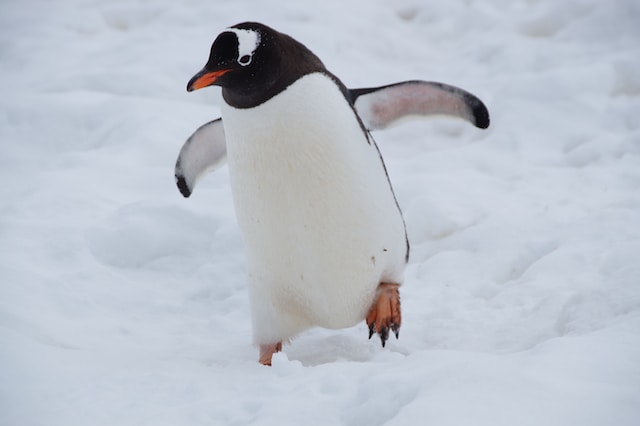
One of the intriguing questions that many people have about penguins is whether or not they possess teeth. To answer this query, we must delve into the anatomy of these incredible birds and grasp how they have evolved to thrive in their unique and challenging habitats.
To begin with, it’s crucial to acknowledge that penguins are birds, belonging to the class Aves. Birds are characterized by a range of unique features, including feathers, wings, beaks, and a lightweight skeleton. Additionally, birds are recognized for their exceptional digestive system, which comprises a specialized stomach that grinds food using small stones or grit.
With this in mind, we can explore whether penguins have teeth or not. In short, penguins do not have teeth. Instead, they have evolved a unique and highly specialized beak that is perfectly adapted to their aquatic lifestyle.
A penguin’s beak is composed of two layers of keratin, which is the same protein that makes up human hair and nails. This beak is much harder and stronger than the beak of most other birds, which helps penguins to catch and hold onto slippery fish and other prey. In addition, a penguin’s beak is also highly sensitive, enabling these birds to detect even the slightest vibrations and movements in the water.
While penguins do not have teeth in the traditional sense, they do have papillae or spines on the roof of their mouth and tongue. These papillae are not genuine teeth, but rather sharp projections that help penguins to grip onto slippery prey and guide food to the back of their throat for swallowing. In some species of penguins, these papillae are quite prominent and can be easily observed when the bird opens its mouth.
Another intriguing feature of penguin anatomy that is frequently mistaken for teeth are their bony projections known as uncinate processes. These are small, hook-like structures that extend from the ribs and aid in breathing by supporting the chest. Although these structures may appear to be teeth at first glance, they are not used for feeding and are not part of the bird’s mouth or digestive system.
Therefore, while penguins may not have traditional teeth, they have evolved several unique and specialized adaptations that allow them to thrive in their harsh and challenging environments. Their strong and sensitive beaks, along with their papillae and other anatomical features, are perfectly suited to catching and consuming their preferred prey of fish, squid, and krill.
In conclusion, penguins are exceptional birds that have captured the imaginations of people worldwide. While they do not have teeth in the traditional sense, they possess several unique and specialized adaptations that allow them to survive and thrive in their harsh and challenging environments. Their strong and sensitive beaks, along with their papillae and other anatomical features, are perfectly suited to their aquatic lifestyle, making them one of the most fascinating and beloved groups of birds in the world. The study of penguin anatomy provides an excellent example of how animals can evolve to fit their specific ecological niches, and serves as a reminder of the incredible diversity and complexity of life on Earth.