This duck painting recipe guides you through creating a beautiful artwork featuring a duck. Using acrylic paints, you can capture the vibrant colors and unique features of these charming birds.
The process is straightforward and suitable for artists of all skill levels. Gather your materials, and let your creativity flow as you bring your duck painting to life.
Materials Needed for Your Duck Painting
To embark on this artistic journey, gather all necessary materials to ensure a smooth painting experience.
Acrylic paints are essential, particularly vibrant shades like yellow, green, blue, and white. These colors will help you capture the lively essence of the duck’s feathers.
You’ll also need a canvas or watercolor paper as your painting surface.
Various sizes of paintbrushes will allow for detailed work and broader strokes. A palette for mixing colors, a water container for rinsing brushes, and paper towels or rags for cleanup are also important.
Lastly, a pencil will be handy for sketching the initial outline of your duck.
Sketching the Duck
Begin your painting by lightly sketching the outline of the duck on your canvas or paper.
This initial step is crucial, as it sets the foundation for your artwork.
Focus on capturing the duck’s unique features, such as its body shape and the positioning of its head and beak.
Don’t worry about perfection; this is just a guide for your painting.
Applying the Base Layer
Once your sketch is complete, it’s time to apply the base layer.
Use a bright yellow paint for the duck’s body, covering the outlined area thoroughly.
Allow this layer to dry before moving on to the next steps.
This drying time is essential, as it prevents colors from blending unintentionally.
Adding Details to Your Duck
After the base layer has dried, switch to a smaller brush to add intricate details.
Focus on the eyes, beak, and the texture of the feathers, using a variety of colors to bring your duck to life.
Experiment with different brush techniques to achieve depth and dimension in your painting.
Layering colors can create a more realistic effect, so take your time with this step.
Creating the Serene Background
The background of your painting plays a significant role in setting the overall mood.
Choose soft colors that complement the duck, such as shades of blue for the water and green for the grass.
Use gentle brush strokes to create a peaceful atmosphere, allowing the duck to stand out against this serene backdrop.
Consider blending colors to achieve a smooth transition between the elements.
Final Touches for Depth and Dimension
Once the background is complete, it’s time to add the final touches.
Incorporate highlights and shadows to give your painting depth and dimension.
These details can enhance the realism of your duck and make it pop against the background.
Allow your painting to dry completely before displaying it proudly on an easel or wall.
Step-by-Step Duck Painting Guide
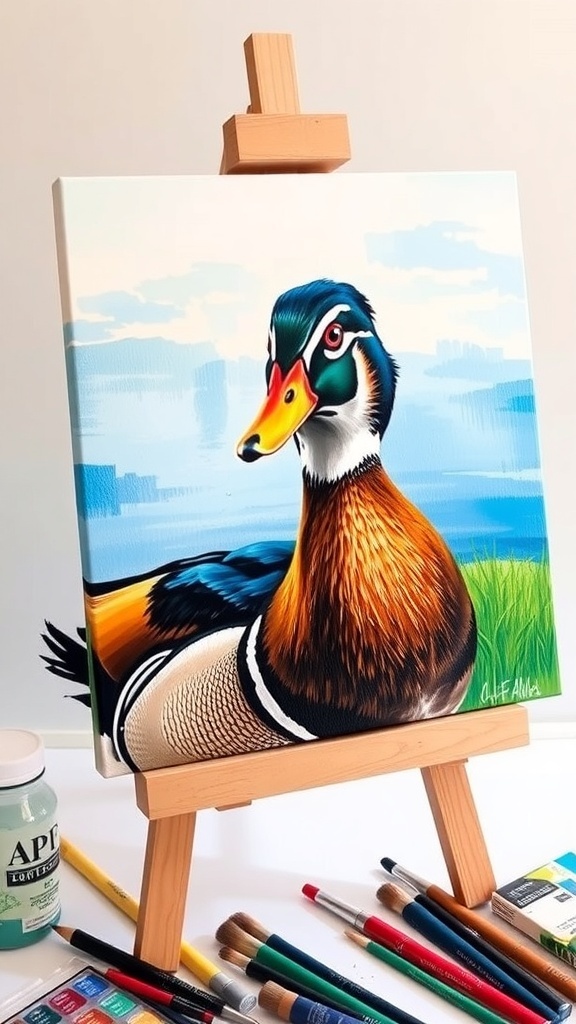
This painting features a detailed representation of a duck, showcasing its feathers and colors. The project typically takes about 2 hours to complete and is perfect for both beginners and experienced artists.
Ingredients
Related
- Duck Painting Techniques for Beginners
- Duck Oil Painting Techniques
- Easy Duck Painting Tutorial
- Duck Rock Painting Recipe