This recipe guides you through creating a stunning underwater illustration featuring a duck. The process involves using various art techniques to capture the essence of a duck swimming gracefully beneath the water’s surface.
You will need basic drawing supplies and a clear understanding of water and animal anatomy to achieve a realistic effect.
Materials Needed for Your Underwater Duck Illustration
To create a captivating underwater scene featuring a duck, gather your materials beforehand. You’ll need sketch paper or a digital drawing tablet as your canvas. Choose quality pencils for sketching, ensuring you can create fine details.
Watercolor paints or digital painting software will help bring your illustration to life with vibrant colors. Fine-tipped pens are essential for outlining and adding intricate details. Don’t forget an eraser for corrections and reference images of ducks and underwater environments to guide your work.
Sketching the Outline
Start your illustration by lightly sketching the duck’s shape and position in the water. Using reference images will help you achieve accuracy in proportions and posture.
Focus on the duck’s unique features, such as its body shape, head, and tail. Position the duck in a way that suggests movement, capturing the essence of swimming. This initial outline serves as the foundation for your artwork.
Add Details to Your Duck
Once the outline is complete, refine your sketch by adding details. Pay attention to the duck’s feathers, eyes, and the ripples of water surrounding it. These elements will enhance the realism of your illustration.
Consider the direction of light and how it interacts with the duck’s feathers. This will help you determine where to place shadows and highlights, adding depth to your drawing.
Coloring the Background
Next, it’s time to paint the underwater scene. Use shades of blue and green to create a gradient that simulates depth and movement in the water. Layering colors will help achieve a more dynamic look.
Incorporate lighter tones near the surface to represent light filtering through the water. This technique will add a sense of realism and help set the mood of your illustration.
Painting the Duck
Now, focus on the duck itself. Use natural colors that reflect the duck’s true appearance, blending shades to create a realistic look. Pay special attention to the reflections of light on the feathers, as this detail will bring your duck to life.
Take your time to ensure that the colors blend smoothly, enhancing the overall aesthetic of the piece. This step is crucial for achieving a polished and professional look.
Final Touches and Details
To complete your illustration, add bubbles and colorful aquatic plants around the duck. These elements will enrich the underwater scene and provide context for the duck’s environment.
Use fine-tipped pens to outline important features, enhancing details and making your illustration pop. This final step will give your artwork a finished and refined appearance, showcasing your artistic skills.
Step-by-Step Guide to Illustrating a Duck Underwater
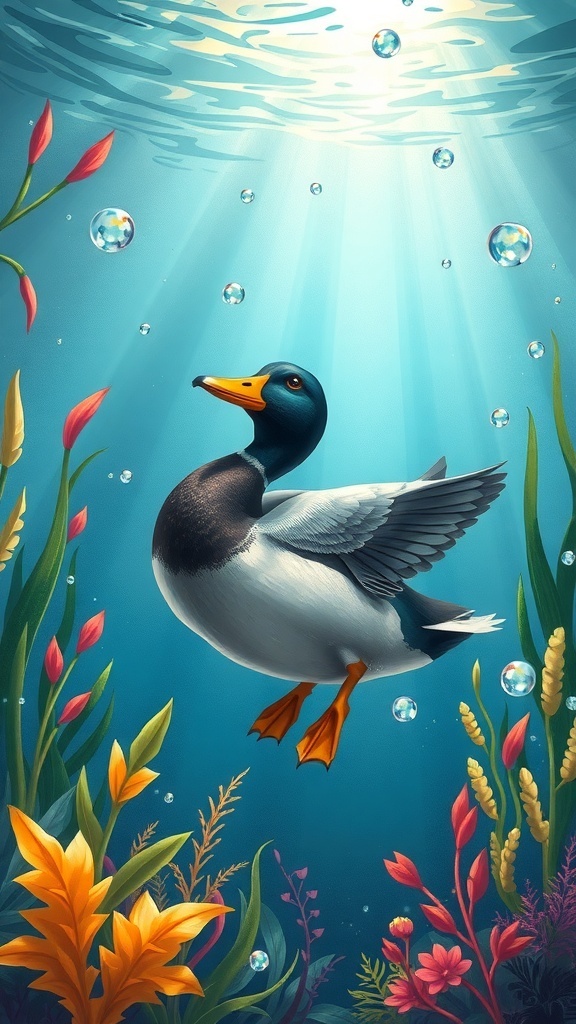
This illustration showcases a duck gliding through a serene underwater environment, surrounded by aquatic plants and bubbles. The artwork emphasizes the play of light and shadow, creating a dynamic and engaging scene.
Ingredients
Related
- Duck Underwater Drawing Recipe
- Duck Illustration Recipe
- Cute Duck Illustration Recipe
- Duck Illustration Design