Caring for ducklings is a rewarding experience that requires attention to their specific needs. Ducklings are lively and require proper care to thrive, including a suitable environment, nutrition, and social interaction.
This guide provides essential information on how to raise healthy ducklings, covering their habitat, feeding, and general care.
Creating the Perfect Brooder
Setting up a cozy brooder is the first step in ensuring your ducklings thrive.
This space should be warm, safe, and inviting, allowing the ducklings to feel secure.
Start with a sturdy container or a designated area in your barn, ensuring it is free from drafts and predators.
Use soft bedding material like straw or wood shavings to provide comfort.
This not only keeps the ducklings cozy but also helps absorb moisture and waste, maintaining a clean environment.
Maintaining Ideal Temperature
Temperature control is vital for the health of your ducklings.
For the first week, keep the brooder temperature around 90°F (32°C).
This warmth mimics the natural heat they would receive from their mother.
As the ducklings grow, gradually reduce the temperature by about 5°F each week until they are fully feathered.
Monitoring their behavior can help you adjust the heat; if they huddle together, they may be too cold, while spreading out indicates they might be too warm.
Providing Nutrition and Hydration
A balanced diet is essential for the growth and development of ducklings.
Offer a high-protein duckling starter feed to meet their nutritional needs.
This specialized feed ensures they receive the right nutrients for healthy growth.
Always provide fresh, clean water in a shallow dish.
Ducklings love to swim and play in water, which is important for their development.
Ensure the water is shallow enough to prevent drowning but deep enough for them to enjoy.
Social Interaction and Health Monitoring
Ducklings are social creatures and thrive on interaction.
Spend time with them daily to build trust and help them become friendly and well-adjusted.
This interaction is crucial for their emotional well-being.
Regularly observe your ducklings for signs of illness or distress.
Healthy ducklings are active and curious, so any lethargy or lack of appetite should be addressed promptly.
Keeping a close eye on their behavior will help you catch any issues early.
Outdoor Access and Space
As your ducklings grow, providing access to outdoor space is important for their development.
A fenced area allows them to explore safely while enjoying the fresh air and sunshine.
This outdoor time is essential for their physical and mental health.
Ensure the outdoor space is secure and free from potential predators.
Allowing them to forage and interact with their environment will help them develop naturally and happily.
Creating a Nurturing Environment
The overall atmosphere of the brooder plays a significant role in the well-being of your ducklings.
A rustic barn setting can enhance the nurturing environment, providing a sense of safety and comfort.
Incorporating natural elements can also stimulate their curiosity and encourage exploration.
By focusing on these essential aspects of duckling care, you can create a thriving habitat that promotes health and happiness.
With proper attention and care, your ducklings will grow into strong and lively ducks.
Essential Duckling Care Tips
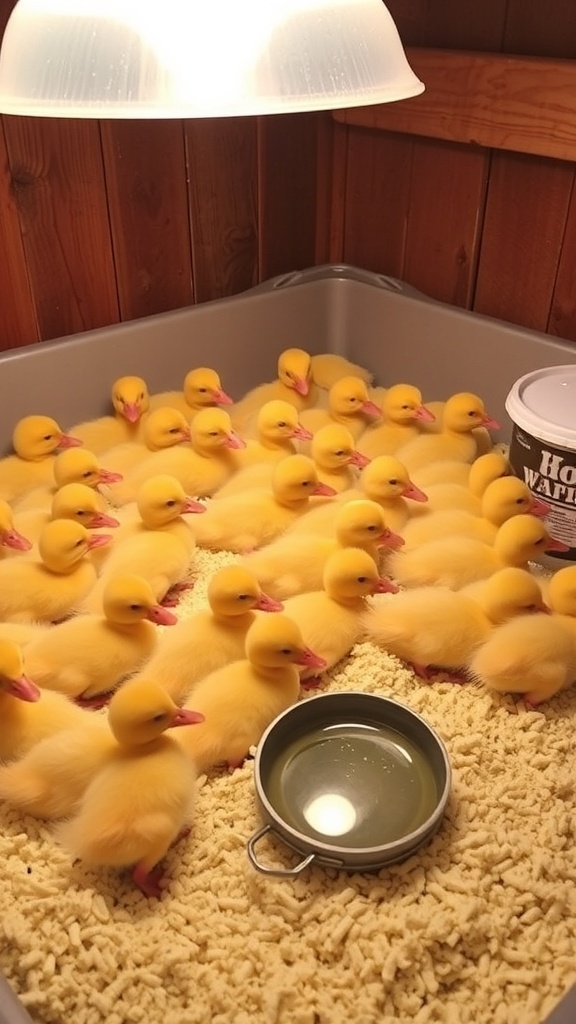
Ducklings need a warm, safe environment with access to water for swimming and drinking. They should be fed a balanced diet formulated for waterfowl to ensure proper growth and development. Regular social interaction is also crucial for their well-being.
Ingredients
- Duckling starter feed (high in protein)
- Fresh water for drinking and swimming
- Bedding material (straw or wood shavings)
- Heat source (heat lamp or brooder)
- Space for outdoor access (fenced area)
Instructions
- Set Up a Brooder: Prepare a brooder with bedding, a heat source, and space for the ducklings to move around comfortably.
- Provide Food and Water: Fill a shallow dish with fresh water and provide duckling starter feed in a separate container.
- Maintain Temperature: Keep the brooder temperature around 90°F (32°C) for the first week, reducing it gradually as they grow.
- Monitor Health: Observe ducklings for signs of illness or distress, ensuring they are active and eating well.
- Socialize: Spend time with the ducklings daily to help them become friendly and well-adjusted.
Cook and Prep Times
- Prep Time: 30 minutes
- Total Time: Ongoing care
- Diet: Duckling starter feed
- Water: Fresh and clean
Related
- Duckling Soup Recipe
- What is a word for someone who doesn’t care what others think?
- Did walt ever care about jessie?
- Should i go to urgent care for painful hemorrhoid?