Yeast is a crucial ingredient in baking, responsible for fermentation and leavening in bread and other baked goods. Understanding yeast types, their functions, and how to properly use them can significantly improve your baking results.
This guide covers essential information about yeast, including active dry yeast, instant yeast, and fresh yeast, along with tips for storage and activation.
Understanding Yeast in Baking
Yeast plays a vital role in the baking process, acting as a leavening agent that helps dough rise. This living organism ferments sugars, producing carbon dioxide and alcohol, which contribute to the texture and flavor of baked goods.
There are various types of yeast, each with distinct characteristics and applications. Choosing the right yeast for your recipe can greatly influence the outcome of your baking endeavors.
Types of Yeast
Active dry yeast is one of the most commonly used types. It requires activation before use, typically by dissolving it in warm water with a bit of sugar. This process helps to awaken the dormant yeast cells, allowing them to start fermenting.
Instant yeast, on the other hand, can be mixed directly with dry ingredients without prior activation. This type of yeast is known for its quick action, making it a convenient option for many bakers.
Fresh yeast, also known as cake yeast, is less common but offers a unique flavor profile. It must be kept refrigerated and has a shorter shelf life compared to dry yeast varieties.
Activating Yeast
Activating yeast is a crucial step, especially for active dry yeast. To do this, dissolve the yeast in warm water (around 110°F) along with a pinch of sugar. Allow it to sit for 5-10 minutes until it becomes foamy, indicating that the yeast is alive and ready to work.
For instant yeast, simply incorporate it with your dry ingredients. This method saves time and simplifies the baking process, making it a favorite among many home bakers.
Storing Yeast
Proper storage of yeast is essential for maintaining its potency. Keep unopened packets in a cool, dry place. Once opened, store the yeast in the refrigerator or freezer to extend its shelf life.
Always check the expiration date before using yeast, as expired yeast may not perform effectively, leading to disappointing results in your baking.
Using Yeast in Recipes
When incorporating yeast into your recipes, follow the specific instructions provided. Pay attention to rising times and temperatures, as these factors can significantly affect the final product.
Different recipes may require varying amounts of yeast, so it’s important to measure accurately. A well-risen dough is often the key to achieving light and fluffy baked goods.
Creating a Cozy Baking Atmosphere
Setting the scene for baking can enhance the experience. A rustic kitchen filled with baking tools, flour, and warm water creates an inviting atmosphere that encourages creativity and experimentation.
Gathering all your ingredients, including different types of yeast, can inspire confidence as you embark on your baking projects. The right environment can make the process enjoyable and rewarding.
Understanding Yeast in Baking
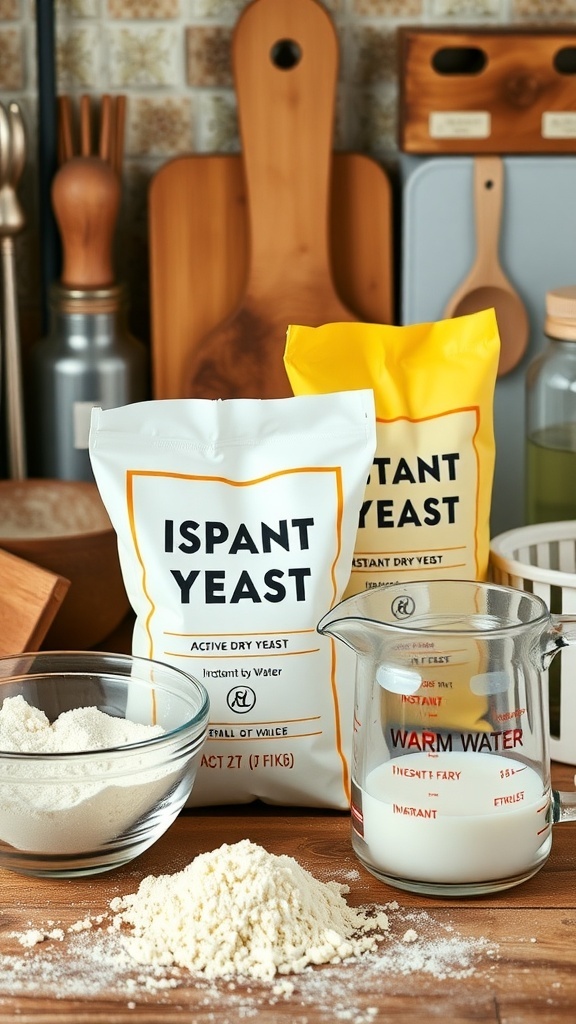
Yeast is a living organism that ferments sugars, producing carbon dioxide and alcohol, which causes dough to rise. Different types of yeast have unique properties and usage, making it important to choose the right one for your recipe.
Ingredients
- Active Dry Yeast
- Instant Yeast
- Fresh Yeast
- Sugar (for activation)
- Warm Water (for activation)
- Flour (for baking)
Instructions
- Choose the Right Yeast: Select between active dry yeast, instant yeast, or fresh yeast based on your recipe requirements.
- Activate Yeast: For active dry yeast, dissolve it in warm water (about 110°F) with a pinch of sugar and let it sit for 5-10 minutes until foamy. Instant yeast can be mixed directly with dry ingredients.
- Store Yeast Properly: Keep yeast in a cool, dry place. Once opened, store in the refrigerator or freezer to extend its shelf life.
- Use Yeast in Recipes: Follow your recipe’s instructions for incorporating yeast into your dough, ensuring proper rising times and temperatures.
Cook and Prep Times
- Prep Time: 5 minutes
- Total Time: Varies based on recipe
- Servings: Varies based on recipe
- Calories: Varies based on recipe
- Fat: Varies based on recipe
- Protein: Varies based on recipe
- Carbohydrates: Varies based on recipe