A PC case that doesn’t require fans to cool its internal components is called a fanless PC case. In this article, we will discuss the advantages and disadvantages of using a fanless PC case, as well as important factors to consider before buying one.
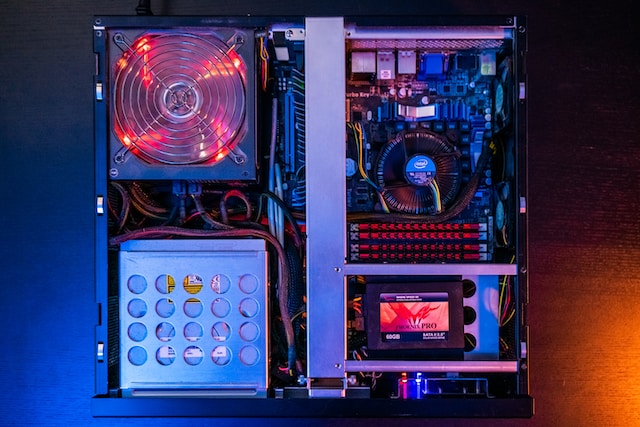
One of the main benefits of a fanless PC case is its noiseless operation. Without fans, there is no sound generated by the case, making it perfect for noise-sensitive environments such as offices, libraries, or recording studios. Another advantage is improved reliability since fans are susceptible to failure, removing them from the equation can improve the system’s reliability, especially for mission-critical applications where downtime can result in significant losses. Dust resistance is also a plus as a fanless PC case can reduce the risk of dust accumulation inside the case, improving the longevity of the computer components.
However, the biggest downside of a fanless PC case is its limited cooling capacity. Without fans, the case relies on passive cooling techniques such as heat sinks or heat pipes to dissipate heat from the components. This can limit the system’s maximum power consumption and may result in reduced performance. Also, fanless PC cases tend to be more expensive than traditional PC cases due to the use of specialized cooling techniques and materials, which can make them less accessible to budget-conscious consumers.
Before purchasing a fanless PC case, it is important to consider the system’s performance requirements, form factor, cooling techniques, and noise tolerance. High-performance applications that require a lot of power consumption and generate a lot of heat may not be suitable for a fanless PC case. It is important to choose a case that is compatible with the motherboard and components that will be used, and the right cooling technique for the environment where the computer will be used. For noise-sensitive environments, such as recording studios, a fanless PC case may be the best option. However, for noisy environments, such as server rooms, a fanless PC case may not be necessary.
In conclusion, a fanless PC case is a good option for those who prioritize silent operation and improved reliability. While there are some drawbacks, the benefits may outweigh the concerns for some users. By carefully considering the performance requirements, form factor, cooling techniques, and noise tolerance of the system, users can choose a fanless PC case that meets their needs and provides an optimal computing experience.