This homemade Parmesan cheese jar recipe allows you to create a flavorful and versatile cheese that can elevate a variety of dishes. Parmesan is a hard cheese known for its rich, nutty flavor, making it a popular choice for grating over pasta, salads, and soups.
The process is simple and requires just a few ingredients. You can store the cheese in a jar for easy access whenever you need a sprinkle of umami goodness.
Creating Your Own Parmesan Cheese
Making homemade Parmesan cheese is a rewarding experience that brings the rich, nutty flavor of this beloved cheese right to your kitchen.
With just a few simple ingredients, you can create a delightful cheese that enhances a variety of dishes.
Imagine grating fresh Parmesan over pasta, salads, or soups, adding a touch of umami to every bite.
Essential Ingredients for Parmesan
The key to crafting your own Parmesan lies in the ingredients.
You’ll need a gallon of whole milk, which serves as the base for your cheese.
A small amount of liquid rennet or a rennet tablet helps in curd formation, while mesophilic starter culture kickstarts the fermentation process.
Don’t forget the salt, which enhances flavor and aids in preservation.
The Process of Making Parmesan
Start by heating the milk gently to the right temperature, ensuring it doesn’t scorch.
Once the milk reaches 85°F, sprinkle the mesophilic starter culture and allow it to rehydrate.
The addition of rennet is crucial; it transforms the milk into curds and whey, setting the stage for your cheese.
After letting the mixture sit undisturbed, cut the curd into small cubes and gradually heat them to achieve the desired texture.
This step requires patience, as the curds need to be cooked slowly to develop the right consistency.
Draining and Pressing the Curd
Once the curds are ready, it’s time to drain them.
Using cheesecloth, pour the curds into a colander and allow the whey to drain off.
This is a critical step in achieving the right texture for your Parmesan.
After draining, gather the cheesecloth and press the curds to remove excess whey.
Shaping the curds into a round form and applying weight helps solidify the cheese.
Salting and Aging Your Cheese
After pressing, rub the surface of your cheese with salt and let it rest at room temperature for a day.
This step is essential for flavor and preservation.
The aging process follows, where the cheese needs to be kept in a cool, humid environment for at least six months.
Regularly flipping the cheese during this time ensures even aging.
Storing and Using Your Parmesan
Once the aging process is complete, your homemade Parmesan is ready to be grated or shaved.
Store it in a rustic jar, making it easily accessible for your culinary creations.
Whether you’re sprinkling it over a fresh salad or stirring it into a hearty soup, the depth of flavor from your homemade cheese will elevate any dish.
Enjoy the satisfaction of knowing you’ve crafted a delicious, versatile cheese right in your own kitchen!
Easy Parmesan Cheese Recipe
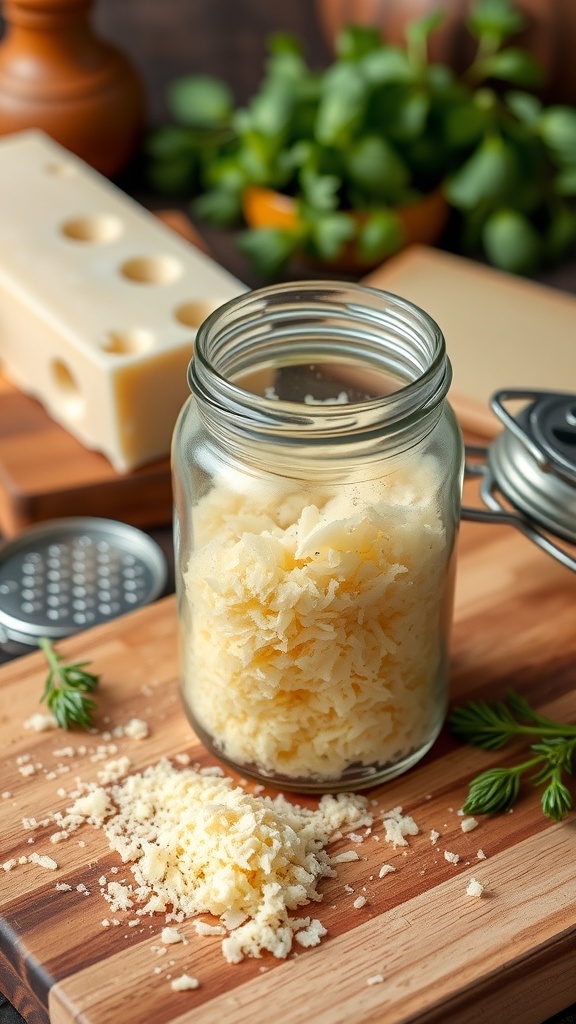
This recipe yields a delicious homemade Parmesan cheese that can be used in numerous culinary applications. It takes about 30 minutes to prepare and can be stored in the refrigerator for several weeks.
Ingredients
- 1 gallon whole milk
- 1/4 teaspoon liquid rennet or 1/4 rennet tablet
- 1/4 teaspoon mesophilic starter culture
- 1 teaspoon salt
- Cheesecloth for draining
Instructions
- Heat the Milk: In a large pot, heat the milk over medium heat until it reaches 85°F (29°C). Stir gently to prevent scorching.
- Add Culture: Sprinkle the mesophilic starter culture over the milk and let it sit for 5 minutes to rehydrate. Stir gently to combine.
- Add Rennet: Dilute the rennet in a small amount of cool, non-chlorinated water. Stir it into the milk using an up-and-down motion for about 30 seconds. Stop stirring and let the milk sit undisturbed for 30-45 minutes until it sets and forms a gel-like consistency.
- Cut the Curd: Once set, cut the curd into small cubes (about 1/2 inch) using a long knife. Let it rest for 5-10 minutes.
- Cook the Curd: Slowly heat the curds to 130°F (54°C) over 30 minutes, stirring gently to prevent clumping. Once at temperature, maintain for an additional 30 minutes.
- Drain the Curd: Line a colander with cheesecloth and pour the curds into it. Allow the whey to drain for about 5-10 minutes.
- Press the Curd: Gather the cheesecloth around the curds and press to remove excess whey. Shape the curds into a round cheese and place it in a cheese mold. Apply weight to help form the cheese.
- Salting: After pressing for 1-2 hours, remove the cheese from the mold and rub the surface with salt. Let it sit at room temperature for 24 hours.
- Aging: Place the cheese in a cool, humid environment to age for at least 6 months, flipping it regularly. Once aged, grate or shave the cheese and store it in a jar.
Cook and Prep Times
- Prep Time: 30 minutes
- Cook Time: 2 hours
- Total Time: 6 months (aging time not included)
- Servings: Approximately 2 cups
- Calories: 431kcal per 1 oz
- Fat: 29g
- Protein: 38g
- Carbohydrates: 0g
Related
- Delicious Chicken Parmesan Casserole Recipe
- Classic Eggplant Parmesan Recipe
- Savory Garlic Parmesan Sauce Bowl Recipe
- Cheesy Parmesan Cookies Recipe