The RMS Titanic, a British passenger liner, famously sank in the North Atlantic Ocean on April 15, 1912, after hitting an iceberg during its maiden voyage from Southampton, England, to New York City. The ship sank approximately 375 miles (600 kilometers) south of Newfoundland, Canada, and about 1,200 miles (1,900 kilometers) east of Boston, Massachusetts.
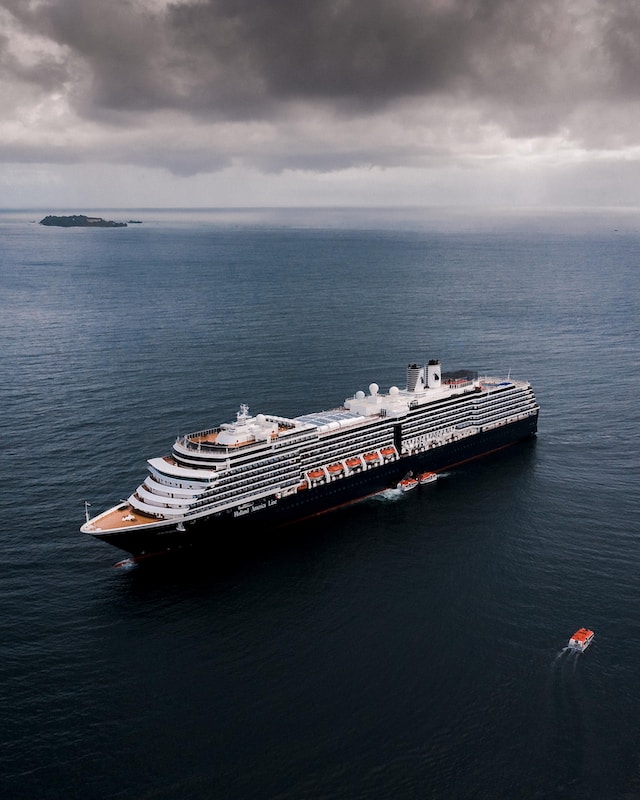
The exact location of the Titanic’s sinking is known as the Titanic wreck site and was discovered in 1985 by an expedition led by Dr. Robert Ballard. The wreck lies at a depth of about 12,500 feet (3,800 meters) on the seafloor, roughly 370 miles (600 kilometers) southeast of Newfoundland.
At the time of the disaster, the Titanic was sailing in the North Atlantic, which is an area of the ocean known for its rough waters and treacherous ice conditions. The ship had received several warnings about the presence of ice in the area from other ships, but despite these warnings, the Titanic maintained its course at high speed.
The iceberg that the Titanic hit was estimated to be around 100 feet (30 meters) high and 200 to 400 feet (60 to 120 meters) long. The collision caused a series of holes along the starboard side of the ship, causing it to take on water rapidly and ultimately leading to its sinking.
Despite the efforts of the crew and passengers to save the ship, the Titanic sank in the early hours of April 15, 1912. More than 1,500 people lost their lives in the disaster, making it one of the deadliest maritime disasters in history.
In the aftermath of the sinking, an international investigation was launched to determine the causes of the disaster and to make recommendations for improving safety measures for ships at sea. As a result of the investigation, new regulations were put in place regarding ship design, safety equipment, and crew training, all of which have helped to improve safety at sea in the decades since the Titanic disaster.
Today, the Titanic wreck site remains a popular destination for ocean explorers and historians, who continue to study the site and its artifacts in order to gain a better understanding of the events that led to the ship’s sinking and the lives of those who were on board. The story of the Titanic has become a symbol of the dangers of human hubris and the power of nature, and its legacy continues to inspire fascination and interest more than a century after the disaster.