Baking soda, or sodium bicarbonate, is a versatile substance that has many practical applications. One of its most common uses is as a dehumidifier or moisture absorber. Baking soda is an effective moisture absorber due to its ability to neutralize and eliminate excess moisture in the air, preventing mold and mildew growth and other harmful effects of high humidity. The time it takes for baking soda to absorb moisture depends on several factors, including the amount of baking soda used, the humidity level in the environment, and the surface area of the container used to hold the baking soda.
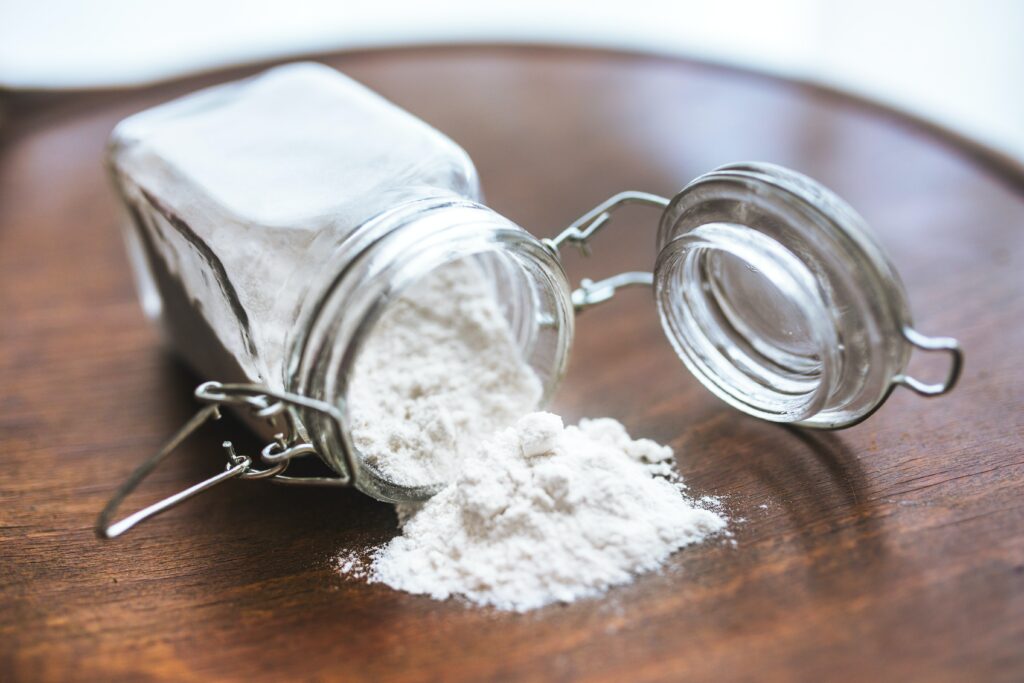
In general, baking soda is a slow-acting moisture absorber, meaning it can take some time to fully absorb moisture from an environment. The absorption process can be sped up by increasing the surface area of the baking soda or by using multiple containers of baking soda in the same space. For example, placing several small bowls of baking soda around a room will absorb moisture more quickly than placing one large container of baking soda in the same space.
The amount of baking soda used is also a factor in the absorption time. A small amount of baking soda will take longer to absorb moisture than a larger amount. Additionally, the humidity level in the environment will affect the absorption time of baking soda. In very humid environments, baking soda may take longer to absorb moisture than in drier environments.
Another factor that can affect the absorption time of baking soda is the type of container used. A container with a larger surface area will allow the baking soda to absorb moisture more quickly than a container with a smaller surface area. Additionally, containers with perforations or openings will allow air to circulate more freely, which can speed up the absorption process.
Overall, the time it takes for baking soda to absorb moisture can vary greatly depending on the factors outlined above. In general, baking soda can take anywhere from several hours to several days to fully absorb moisture from an environment.
It is important to note that while baking soda is an effective moisture absorber, it is not a substitute for proper ventilation or a dehumidifier in areas with high humidity levels. Baking soda can help reduce moisture levels in a small space, but it is not a long-term solution for controlling humidity.
To use baking soda as a moisture absorber, simply place it in a container and place the container in the area where moisture is present. For example, placing a bowl of baking soda in a damp basement or closet can help absorb excess moisture and prevent mold growth. Baking soda can also be used to absorb moisture in other areas, such as refrigerators, cars, and shoes.
In addition to its moisture-absorbing properties, baking soda has many other practical applications. It is commonly used as a leavening agent in baking, as a cleaning agent for household surfaces, and as a natural deodorizer for carpets and upholstery. Baking soda is a versatile and inexpensive substance that can be used in a wide range of applications.
In conclusion, the time it takes for baking soda to absorb moisture depends on several factors, including the amount of baking soda used, the humidity level in the environment, and the surface area of the container used to hold the baking soda. In general, baking soda is a slow-acting moisture absorber that can take anywhere from several hours to several days to fully absorb moisture from an environment. While baking soda is an effective moisture absorber, it is not a substitute for proper ventilation or a dehumidifier in areas with high humidity levels. Baking soda is a versatile substance that has many practical applications and can be used in a wide range of applications.