The time it would take for a nuclear missile launched from Russia to reach the United States would depend on a variety of factors, including the type of missile, its speed, the distance between the two countries, and the trajectory of the missile.
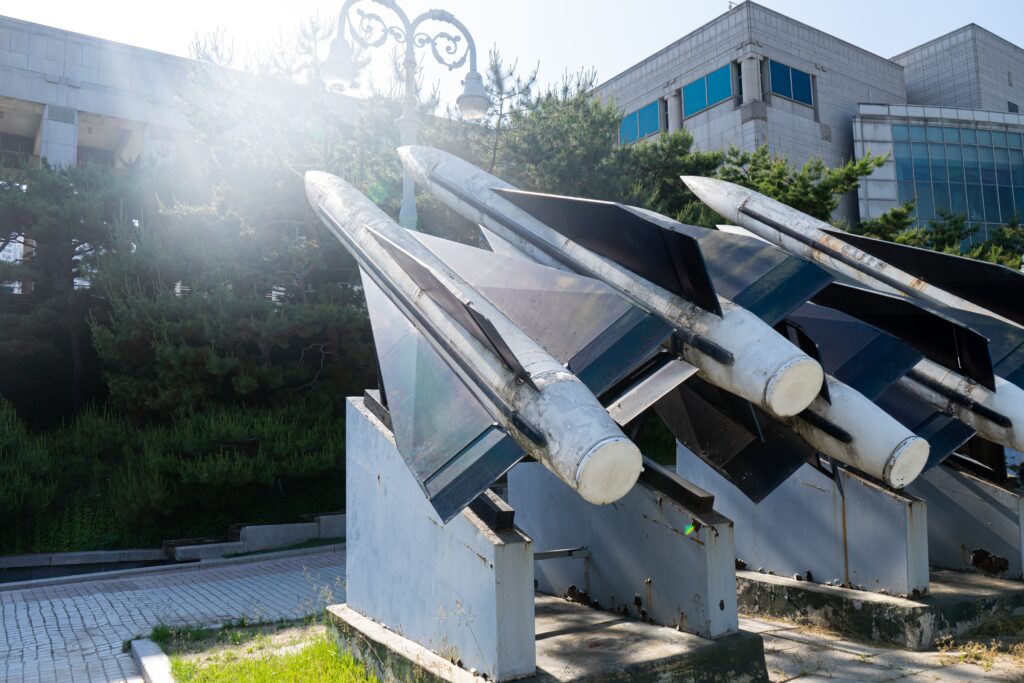
In general, the time it would take for a missile to travel from Russia to the United States is known as the flight time, and this can vary depending on the type of missile and the distance between the two countries. Intercontinental ballistic missiles (ICBMs), which are the most common type of nuclear missile, can travel at speeds of up to 7 kilometers per second, which is roughly 25,000 kilometers per hour. However, the flight time can still vary depending on the specifics of the missile and the trajectory it takes.
Assuming a missile is launched from central Russia towards a major US city on the east coast, such as New York City, the flight time could be approximately 30 minutes. This is because the distance between central Russia and the east coast of the United States is roughly 7,000 kilometers, and an ICBM can travel this distance in about 25-30 minutes.
However, it is important to note that there are several factors that could affect the actual flight time of a missile. For example, the missile’s trajectory would play a significant role in determining how long it takes to reach its target. A direct, over-the-pole trajectory would be the fastest route, but this would also be the most easily detectable and could be intercepted by anti-ballistic missile systems. As a result, it is more likely that a missile would take a suborbital or lower altitude trajectory, which would make it more difficult to detect and intercept but would also take longer to reach its target.
Another factor that could affect the flight time is the presence of mid-course guidance systems, which could adjust the trajectory of the missile during flight. These guidance systems could potentially make the missile’s path more unpredictable and increase the likelihood of it reaching its intended target.
In addition, the speed and accuracy of the missile would also be important factors. Faster missiles would obviously reach their targets more quickly, while more accurate missiles would be able to hit their targets with greater precision, potentially reducing the amount of time needed to launch additional missiles.
It is also important to note that the flight time of a missile is only one part of the equation when considering the impact of a nuclear attack. Even if a missile takes only 30 minutes to reach its target, the damage caused by the explosion and resulting fallout could have catastrophic consequences for years or even decades to come.
In conclusion, the time it would take for a nuclear missile launched from Russia to reach the United States would depend on a variety of factors, including the type of missile, its speed, the distance between the two countries, and the trajectory of the missile. While the flight time for an ICBM traveling from central Russia to the east coast of the United States is roughly 25-30 minutes, there are many factors that could affect the actual flight time and the impact of a nuclear attack.