The question of how many religions exist in the world is a complex and multifaceted one, as different people and organizations may define and categorize religions in different ways. It is also worth noting that the number of religions can be constantly changing as new religions emerge and older religions evolve or fade away over time. However, we can provide an overview of the current state of religious diversity and some of the challenges involved in attempting to quantify it.
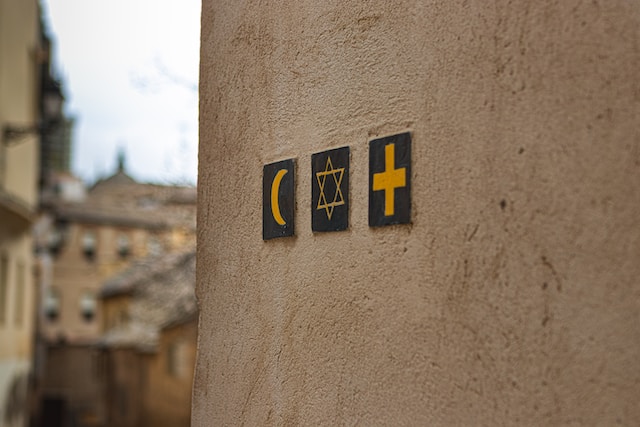
The most commonly cited estimate of the number of religions in the world is around 4,200, based on a count of different recognized faith traditions by the World Christian Database, an online resource that collects data on religious demographics worldwide. This number includes not only major world religions such as Christianity, Islam, Hinduism, Buddhism, and Sikhism, but also many smaller, lesser-known religions and spiritual practices.
However, it is worth noting that the criteria for what counts as a separate religion can be somewhat subjective, and some scholars and religious organizations may have different opinions on which beliefs and practices should be considered distinct enough to be classified as separate religions. For example, some may consider different sects or branches of a religion to be separate religions, while others may classify them as subgroups of the same religion. Additionally, there are many belief systems that may not fit neatly into traditional categories of religion, such as indigenous or animist spiritual practices, new religious movements, and secular humanism or atheism.
Another complicating factor in attempting to count the number of religions is the diversity of religious beliefs and practices within any given religion. For example, Christianity includes a wide range of denominations, each with their own distinct beliefs and practices, from Roman Catholicism to Protestantism to Eastern Orthodoxy, and so on. Similarly, Islam includes many different sects and interpretations, such as Sunni, Shia, and Sufi traditions. Thus, even if two people identify as belonging to the same religion, their specific beliefs and practices may differ widely.
In addition to the challenges of defining and categorizing religions, there are also difficulties in obtaining accurate data on religious demographics worldwide. Many countries do not collect or report detailed statistics on religious affiliation, and in some cases, people may be hesitant to identify with a particular religion due to social or political pressures. Furthermore, religious affiliation can be fluid and subject to change over time, making it difficult to track changes in religious demographics.
Despite these challenges, there are many organizations and scholars that attempt to collect data on religious diversity and categorize different belief systems. For example, the Pew Research Center regularly conducts surveys on global religious demographics and produces reports on trends and patterns in religious affiliation and practice. Other organizations, such as the Association of Religion Data Archives and the Encyclopedia of World Religions, compile information on different religions and provide resources for researchers and practitioners.
In conclusion, while the exact number of religions in the world is difficult to pin down, it is clear that there is a great deal of religious diversity and complexity worldwide. Different people and organizations may have different criteria for defining and categorizing religions, and religious affiliation and beliefs can be fluid and subject to change over time. However, efforts to track and understand religious diversity can provide valuable insights into the ways that religion shapes individual and collective identity, culture, and social norms.