The term “blue moon” refers to the occurrence of a full moon twice in a single calendar month. This phenomenon is relatively rare, occurring only once every few years on average. However, the exact frequency of blue moons can vary depending on the specific definition and method of calculation used.
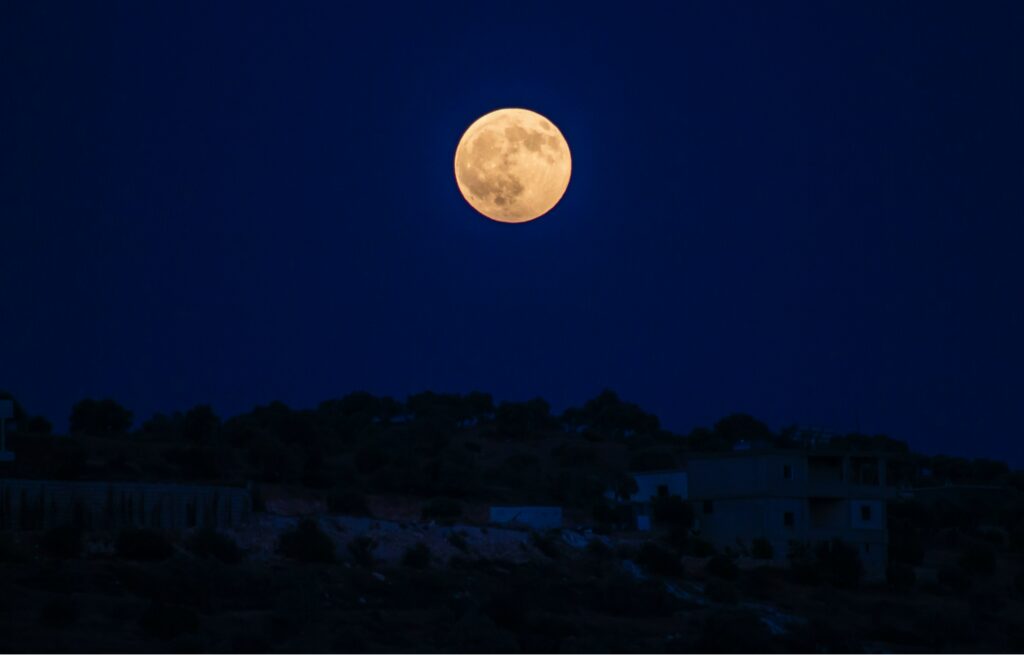
The modern definition of a blue moon as the second full moon in a calendar month dates back to the early 20th century. This definition originated from a misinterpretation of an article in the Maine Farmer’s Almanac in 1937, which used the term “blue moon” to refer to the third full moon in a season that had four full moons. The phrase “once in a blue moon” had been used colloquially for centuries to describe rare events, but the modern definition of a blue moon as the second full moon in a calendar month has become the most widely recognized and accepted meaning of the term.
According to this definition, blue moons occur approximately once every 2.7 years, or about 7 times every 19 years. This frequency is calculated based on the fact that the average length of a lunar cycle is 29.53 days, while the length of a calendar month is either 30 or 31 days. This means that it is possible for two full moons to occur within the same calendar month, but only if the first full moon takes place on the first or second day of the month.
However, there are other definitions of a blue moon that can produce different frequencies of occurrence. One such definition is the seasonal blue moon, which refers to the third full moon in a season that has four full moons. This definition is based on the fact that there are usually three full moons in a season, but occasionally a fourth full moon will occur. Seasonal blue moons occur approximately once every 2.72 years, or about 7 times every 19 years.
Another definition of a blue moon is the calendrical blue moon, which refers to the second full moon in a month that has 13 full moons in a year. This definition is used in the Hebrew calendar to determine when to add an extra month to the calendar in order to keep it in sync with the lunar cycle. Calendrical blue moons occur approximately once every 2.88 years, or about 6 times every 19 years.
In addition to these definitions, there are also rare instances when the moon may appear blue in color. This can occur when the atmosphere contains a large amount of particles, such as during a volcanic eruption or wildfire. The particles scatter blue light more effectively than other colors, giving the moon a blue tint. However, this phenomenon is not related to the occurrence of a blue moon as defined by the calendar.
Overall, the frequency of blue moons varies depending on the definition used. The most common definition of a blue moon as the second full moon in a calendar month occurs approximately once every 2.7 years, or about 7 times every 19 years. However, other definitions, such as the seasonal blue moon and the calendrical blue moon, can produce slightly different frequencies of occurrence. Regardless of the definition, blue moons are relatively rare and special occurrences that are often celebrated and enjoyed by skywatchers and astronomy enthusiasts around the world.