Godzilla, the giant monster from Japan, is often depicted as male in popular culture. However, there is no official canon stating that Godzilla is male, and some versions of the character have been portrayed as female or genderless. In this essay, we will explore the various depictions of Godzilla’s gender and the reasons behind them.
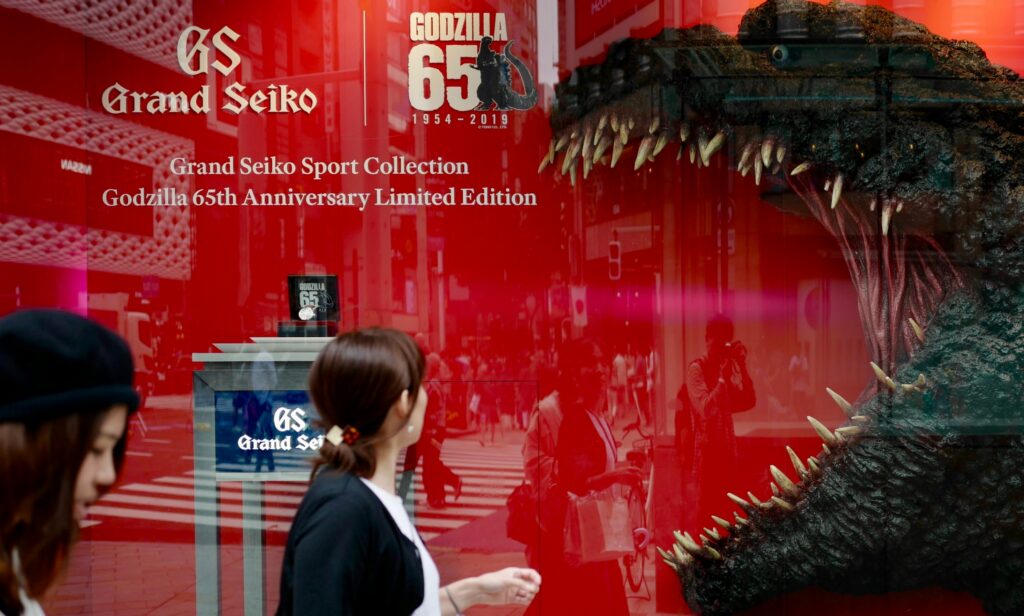
Firstly, it is important to note that Godzilla was originally conceived as a male character in the 1954 Japanese film “Godzilla” directed by Ishirō Honda. This was confirmed in later films and media, including the 1962 film “King Kong vs. Godzilla” and the American 1998 film “Godzilla.” In these versions, Godzilla is referred to with male pronouns and is depicted with typically masculine traits such as aggression and physical strength.
However, there have been instances where Godzilla has been portrayed as female or genderless. In the 1991 film “Godzilla vs. King Ghidorah,” it is revealed that Godzilla is a mutated Godzillasaurus, a species of dinosaur that reproduces asexually. This implies that Godzilla could be a female or genderless, as it is not necessary for the character to have a gender to reproduce.
Additionally, in the 2014 American film “Godzilla,” the filmmakers deliberately made the character gender-neutral. Director Gareth Edwards stated in an interview that he wanted the audience to “project onto Godzilla whatever gender they wanted” and that the character’s gender was “irrelevant” to the story. This decision was praised by some as a step towards gender inclusivity in media.
It is also worth noting that the concept of gender in giant monsters like Godzilla can be difficult to define. As fictional creatures, they do not have biological sex organs and do not conform to human gender norms. Some argue that gendering monsters like Godzilla is unnecessary and can limit their creative potential.
In conclusion, while Godzilla is most commonly depicted as a male character in popular culture, there have been instances where the character has been portrayed as female or genderless. The decision to assign a gender or not to Godzilla is ultimately up to the creators of each iteration of the character. Some argue that gendering monsters like Godzilla is irrelevant or limiting, while others see it as an important aspect of character development. Regardless of Godzilla’s gender, the character remains an iconic figure in popular culture and continues to captivate audiences worldwide.