Yeast and mold are both types of fungi, but they have distinct characteristics and roles in nature. Yeast is typically unicellular and is known for its role in fermentation, while mold is multicellular and often associated with decomposition and spoilage.
This article will explore the differences between yeast and mold, their uses, and their impact on food and health.
Understanding Yeast and Mold
Yeast and mold are both fascinating types of fungi that play significant roles in our environment.
While they share some similarities, their characteristics and functions are quite different.
Yeast is primarily unicellular, appearing as small, round organisms, whereas mold is multicellular, often presenting as fuzzy structures.
This article will highlight the key differences between these two fungi, their uses in various industries, and their impact on food and health.
Key Differences Between Yeast and Mold
The most notable difference lies in their cellular structure.
Yeast consists of single cells that can reproduce quickly, making them ideal for fermentation processes.
In contrast, mold forms complex multicellular structures, which can be seen growing on food items like bread.
These structural differences lead to varied applications in food production and preservation.
While yeast is celebrated for its role in baking and brewing, mold can be both beneficial and detrimental, depending on the context.
Uses of Yeast
Yeast is widely utilized in the baking industry, where it ferments sugars to produce carbon dioxide, causing dough to rise.
This process is essential for creating fluffy bread and other baked goods.
Moreover, yeast is a key ingredient in brewing beer and producing wine, contributing to the development of flavors and alcohol content.
Its safety for consumption makes yeast a staple in many kitchens around the world.
The versatility of yeast in various culinary applications showcases its importance in food science.
Uses of Mold
Mold also has its place in food production, particularly in the making of certain cheeses, such as blue cheese, where it contributes to flavor and texture.
However, mold can also lead to food spoilage, causing significant waste and health concerns if consumed.
Some molds produce mycotoxins, which can be harmful to health, highlighting the need for careful handling and storage of food items.
Understanding the dual nature of mold is crucial for food safety and quality.
Health Implications
When it comes to health, yeast is generally considered safe for most people, with its benefits outweighing any potential risks.
In contrast, mold can pose serious health risks, particularly for individuals with allergies or compromised immune systems.
The presence of harmful molds in food can lead to foodborne illnesses, emphasizing the importance of proper food storage and inspection.
Awareness of these health implications is vital for maintaining a safe and healthy diet.
Conclusion
In summary, yeast and mold are two distinct types of fungi with unique characteristics and roles.
Yeast, with its unicellular structure, is primarily used in baking and brewing, while mold, as a multicellular organism, can be both beneficial and harmful in food production.
Understanding these differences helps us appreciate the complexities of fungi and their impact on our food and health.
By recognizing the roles of yeast and mold, we can make informed choices in our culinary practices.
Key Differences Between Yeast and Mold
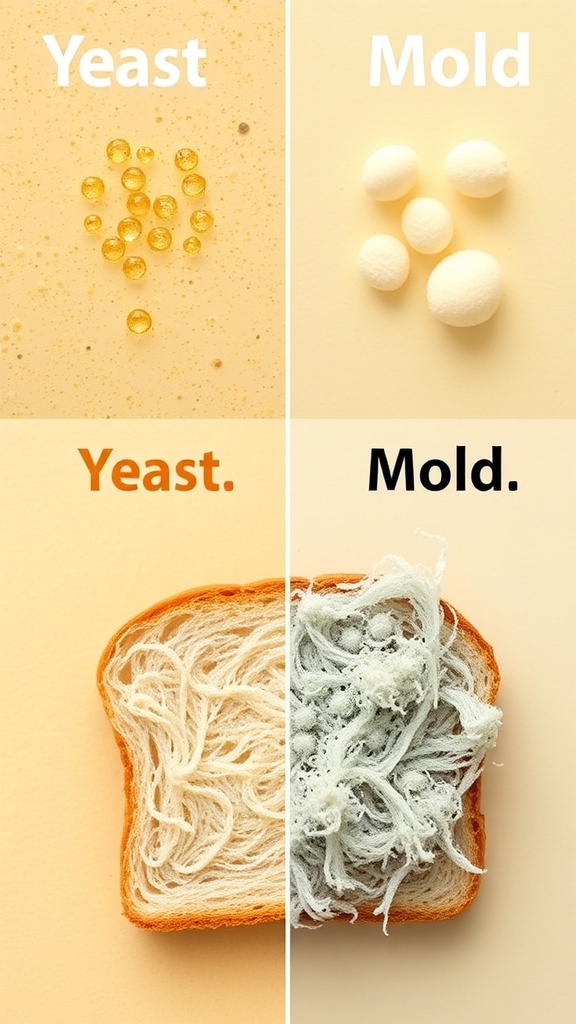
Yeast is commonly used in baking and brewing due to its ability to ferment sugars, producing carbon dioxide and alcohol. Mold, on the other hand, can be beneficial in food production, such as in cheese making, but can also cause food spoilage and health issues if ingested.