Yeast and sourdough are two popular leavening agents used in baking, each offering unique flavors and textures to bread. Yeast is a single-celled fungus that ferments sugars, producing carbon dioxide and alcohol, which helps dough rise. Sourdough, on the other hand, is a naturally fermented dough made with wild yeast and lactic acid bacteria, giving it a distinct tangy flavor.
Understanding the differences between yeast and sourdough can help bakers choose the right method for their bread-making needs. While yeast provides a quicker rise, sourdough requires more time and patience but rewards with complex flavors.
Understanding Yeast Bread
Yeast bread is known for its soft and fluffy texture, making it a favorite for sandwiches and toast. The light golden crust is a hallmark of this type of bread, achieved through a relatively quick fermentation process.
The use of commercial yeast allows for a rapid rise, resulting in a tender crumb that is airy and light. This bread is often enriched with ingredients like sugar and fat, contributing to its softness and flavor.
The Characteristics of Sourdough Bread
Sourdough bread stands in contrast with its rustic, crusty exterior and complex flavor profile. The fermentation process involves wild yeast and lactic acid bacteria, which not only leavens the dough but also imparts a tangy taste that is unique to sourdough.
The crust of sourdough is typically darker and thicker, providing a satisfying crunch when bitten into. The visible air pockets within the loaf are a result of longer fermentation, which allows for more gas to be trapped in the dough.
Texture Comparison
When comparing the textures of yeast bread and sourdough, the differences are striking. Yeast bread offers a soft, pillowy bite that is easy to chew, making it ideal for those who prefer a milder flavor.
On the other hand, sourdough’s chewy texture and complex mouthfeel provide a more robust eating experience. The combination of the crusty exterior and the airy interior creates a delightful contrast that many bread enthusiasts appreciate.
Crust Differences
The crust of yeast bread is often thin and lightly browned, providing a gentle barrier that encases the soft interior. This delicate crust is perfect for those who enjoy a less pronounced crunch.
Sourdough, conversely, boasts a thicker, more textured crust that is both crunchy and chewy. This crust not only adds to the bread’s flavor but also enhances its overall rustic appeal.
Choosing Between Yeast and Sourdough
The choice between yeast bread and sourdough often comes down to personal preference and the time available for baking. Yeast bread is quicker to prepare, making it suitable for those who want fresh bread in a shorter timeframe.
Sourdough requires more time and patience, but the reward is a loaf with depth of flavor and a satisfying texture. Bakers who enjoy the process of fermentation may find sourdough to be a more fulfilling option.
Visual Appeal and Presentation
When presented side by side, the visual differences between yeast bread and sourdough are captivating. The soft, golden loaf of yeast bread contrasts sharply with the rustic, darker sourdough, showcasing their unique characteristics.
Serving both types on a wooden cutting board highlights their textures and crusts, making for an appealing display that invites tasting. Each slice reveals the distinct crumb structure, further emphasizing the individuality of these beloved breads.
Key Differences Between Yeast and Sourdough
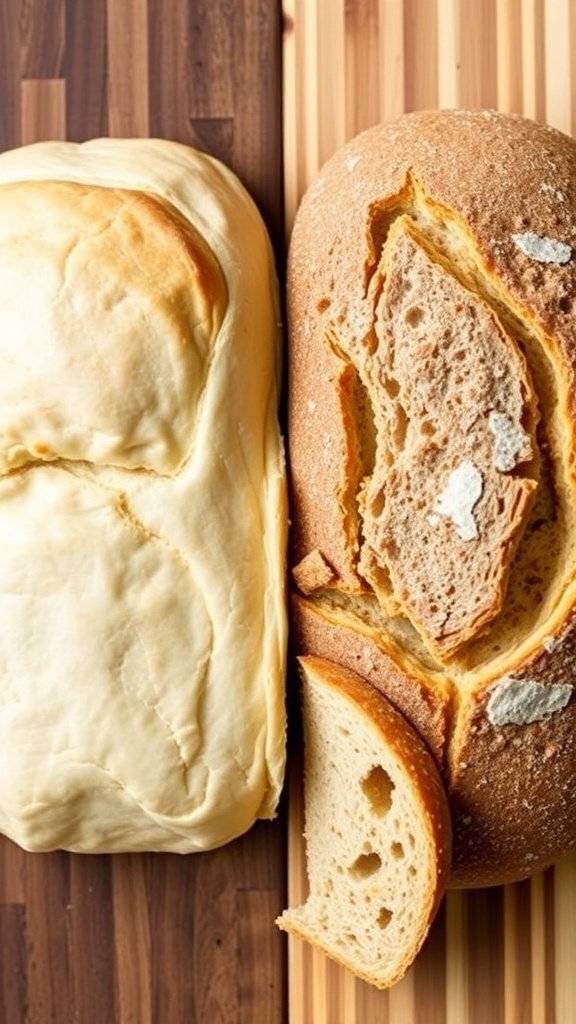
Yeast-based breads typically rise faster and have a lighter texture, while sourdough breads develop a chewy crust and a robust flavor profile due to the fermentation process. The choice between the two depends on the desired outcome and the time available for baking.