Sunsets are one of nature’s most captivating displays, bringing a sense of wonder and awe as the sun dips below the horizon, painting the sky with a stunning array of colors. While sunsets can vary greatly depending on factors such as location, weather conditions, and time of year, there are generally three main types of sunsets: clear sky sunsets, cloudy sky sunsets, and hazy sky sunsets.
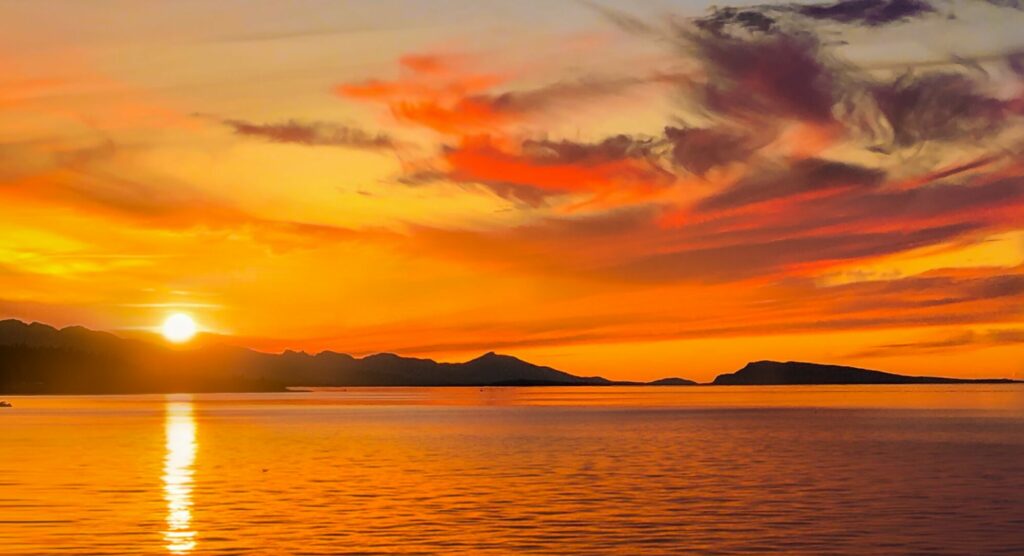
- Clear sky sunsets:
Clear sky sunsets occur when the sky is relatively cloud-free, allowing the sun’s rays to pass through unobstructed. During a clear sky sunset, the colors of the sunset tend to be more vibrant and intense. As the sun descends towards the horizon, it passes through different layers of the Earth’s atmosphere, which scatter the sunlight and create a range of colors. The first color that appears is usually yellow or orange, followed by red and sometimes pink or purple hues.
Clear sky sunsets are typically characterized by sharp, well-defined edges between the colors, creating a striking contrast against the blue sky. The lack of clouds also means that the sun can be visible until it sets completely, often resulting in a dramatic and visually stunning display as it disappears below the horizon.
Clear sky sunsets are commonly associated with dry, high-pressure weather systems, where the air is relatively stable and free of moisture. These types of sunsets are often seen in desert regions or during dry seasons, where there is less atmospheric humidity to scatter the sunlight and create diffused colors.
- Cloudy sky sunsets:
Cloudy sky sunsets occur when there are clouds in the sky during sunset, which can dramatically alter the appearance of the sunset. Clouds can scatter and diffuse the sunlight, creating softer, more muted colors compared to clear sky sunsets. However, the presence of clouds can also add an element of drama and texture to the sunset, with the clouds catching the light and casting shadows that can enhance the visual impact of the sunset.
The colors during a cloudy sky sunset can vary depending on the type, altitude, and thickness of the clouds. Low, thick clouds can create a blanket-like effect, diffusing the sunlight and often resulting in muted, pastel colors such as pink, peach, and lavender. Higher, thinner clouds can create a more intricate interplay of colors, with the sunlight filtering through the clouds and creating a mix of warm and cool tones.
Cloudy sky sunsets are commonly associated with weather systems such as frontal boundaries, where warm and cold air masses meet and create clouds. They can also occur during the rainy season or in regions with higher humidity, where there is more moisture in the air to form clouds. Cloudy sky sunsets can be moody and atmospheric, with the changing patterns and movement of the clouds adding depth and complexity to the sunset.
- Hazy sky sunsets:
Hazy sky sunsets occur when there is a presence of dust, pollution, or other airborne particles in the atmosphere that scatter the sunlight and create a hazy or smoky appearance. Hazy skies can filter out some of the sunlight, resulting in a more diffuse and muted sunset compared to clear sky sunsets. The colors during a hazy sky sunset can appear softer and more subdued, with a hazy or smoky veil cast over the sun.
Hazy sky sunsets are often associated with urban areas or regions with poor air quality, where pollution or dust particles in the air scatter the sunlight and create a hazy or smoky appearance. These particles can scatter shorter wavelengths of light, such as blue and green, more strongly, resulting in warmer colors such as yellow, orange, and red dominating the sunset.
Despite the muted colors, hazy sky sunsets can still be visually appealing and have a unique atmospheric quality.