Alligators are a species of large reptiles that are commonly found in freshwater and brackish habitats in the southeastern United States. These animals are well adapted to survive in harsh conditions, including hurricanes. In this article, we will explore what alligators do during a hurricane and how they manage to survive these powerful storms.
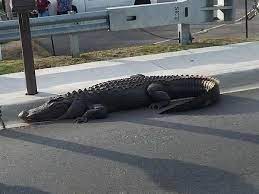
Alligators are semi-aquatic animals that spend most of their time in or near the water. During a hurricane, they will typically seek refuge in bodies of water that are deep enough to protect them from the strong winds and heavy rain. These may include rivers, lakes, and ponds.
While alligators are strong swimmers, they can be negatively affected by the storm surge that is often associated with hurricanes. Storm surges occur when water is pushed towards the shore by the strong winds of a hurricane, leading to flooding and destruction of coastal habitats. Alligators may be displaced by these surges, and their habitats may be damaged or destroyed.
Alligators are also capable of detecting changes in barometric pressure, which can indicate the approach of a hurricane. As the storm approaches, alligators may become more active and move to higher ground in anticipation of flooding. They may also become more aggressive during this time, as they may feel threatened by the approaching storm.
One of the unique features of alligators is their ability to regulate their body temperature. During colder weather, they will bask in the sun to warm themselves up. During a hurricane, however, they may move to deeper waters to avoid being exposed to the strong winds and rain. This can help them to conserve energy and maintain their body temperature.
Alligators are also able to hold their breath for long periods of time, which can be an important survival mechanism during a hurricane. If their habitat is flooded, they may be forced to stay underwater for extended periods of time until the water recedes. This can be particularly challenging for smaller alligators, as they may have less energy reserves than their larger counterparts.
During a hurricane, alligators may also take advantage of the chaos and destruction to hunt for food. The storm can cause fish and other prey to become disoriented and easier to catch, providing an opportunity for alligators to stock up on food.
In addition to these adaptations, alligators also have a number of physical characteristics that help them to survive hurricanes. Their tough skin provides protection from debris and flying objects, and their powerful tails can be used to anchor themselves to a solid object during strong winds. Alligators also have strong muscles that allow them to move quickly and efficiently through the water, even in turbulent conditions.
While alligators are well adapted to survive hurricanes, they are not invincible. The destruction of their habitats, pollution, and other human activities can all have a negative impact on their populations. As such, it is important for humans to take steps to protect these important species and their habitats.
In conclusion, alligators are remarkable creatures that are well adapted to survive hurricanes. They are capable of detecting changes in barometric pressure, regulating their body temperature, holding their breath for extended periods, and using their physical characteristics