Gnats are tiny flying insects that are often found in homes and gardens. These pests lay their eggs in moist soil, where they hatch into larvae and feed on organic matter. If you are curious about what gnat eggs look like in soil, this article will provide you with a comprehensive answer.
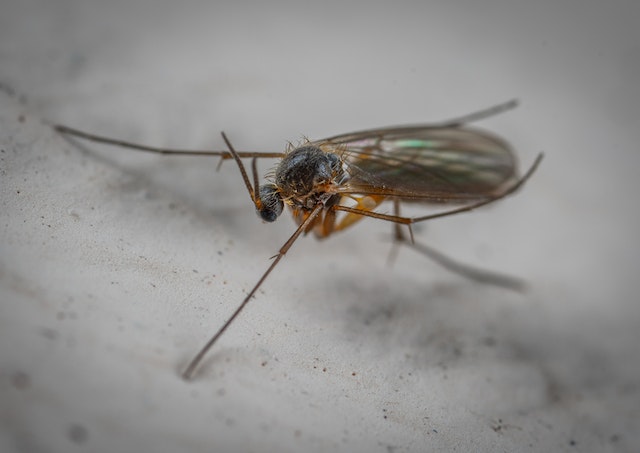
Gnat eggs are typically very small, measuring only about 0.5 millimeters in length. They are often white or transparent, and have a round or oval shape. Gnats lay their eggs in moist soil that is rich in organic matter, such as houseplants, outdoor gardens, and compost piles. The eggs are usually laid in clusters that can contain anywhere from 10 to 200 eggs. These clusters are often attached to the surface of the soil or organic matter, and can be quite difficult to remove.
To identify gnat eggs in soil, you may need to use a magnifying glass or microscope. The eggs are often hidden within the soil or organic matter, making them difficult to spot with the naked eye. However, by examining the surface of the soil for small, white or transparent dots, you can be fairly certain that they are gnat eggs. These dots will be clustered together and may appear to be slightly raised from the surface of the soil. Additionally, digging into the soil to look for small, white or transparent spheres that are about the size of a pinhead and clustered together may also help in identifying gnat eggs. These spheres may also be attached to the roots of your plants, so be sure to check carefully.
If you see a cluster of gnat eggs in your soil, it is a good indication that you have a gnat infestation. Gnats can be a nuisance and can cause damage to your plants. Fortunately, there are several ways to get rid of gnats and their eggs in soil.
One effective method is to use a commercial insecticide that is specifically designed to target gnats. These insecticides can be applied directly to the soil or sprayed onto the leaves of your plants. However, it is important to follow the instructions carefully, as some insecticides can be harmful to humans and pets.
Another way to control gnat eggs in soil is to reduce the moisture content of the soil. Gnats thrive in moist environments, so by drying out the soil, you can make it less hospitable for them. This can be done by watering your plants less frequently or by using a fan to circulate the air around your plants.
You can also try adding a layer of sand or gravel to the surface of your soil. This will create a barrier that will prevent gnats from laying their eggs in the soil. Additionally, you can try adding nematodes to your soil. These tiny worms are natural predators of gnats and can help to control their population.
In conclusion, gnat eggs in soil are tiny, white or transparent clusters that are often attached to the surface of the soil or organic matter. Although they are difficult to spot with the naked eye, they can be identified with a magnifying glass or microscope. If you find gnat eggs in your soil, it is important to take steps to control the infestation, as gnats can be a nuisance and can cause damage to your plants. Methods to control gnat eggs in soil include using commercial insecticides, reducing the moisture content of the soil, adding a layer of sand or gravel to the surface of the soil, or adding natural predators like nematodes. By taking these steps, you can effectively control the gnat population in your soil and keep your plants healthy.