The largest wolf species that ever existed is the extinct Canis dirus, commonly known as the dire wolf. These prehistoric animals lived during the Late Pleistocene era, around 125,000 to 9,500 years ago, and were widespread in North and South America.
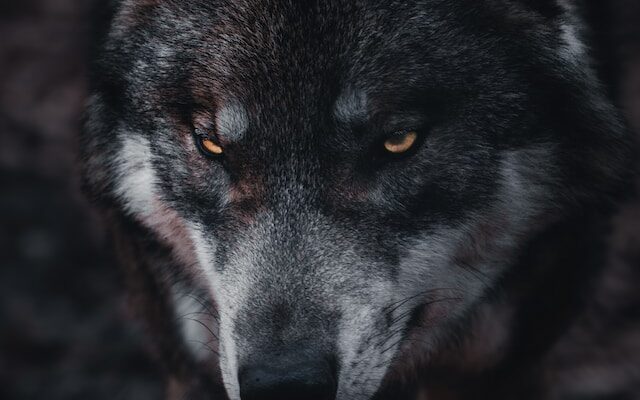
The dire wolf was much larger than the modern gray wolf, with an average weight of 150-200 pounds and standing 2.5-3 feet tall at the shoulder. Its massive skull and jaw were adapted for hunting large prey, such as bison, elk, and other large herbivores.
Unlike modern wolves, dire wolves were built to be solitary hunters and had robust and strong jaws that were capable of crushing bones. Their teeth were also proportionally larger than those of modern wolves, with premolars and molars that were adapted for shearing meat. They had a more pronounced sagittal crest, a bony ridge running along the top of their skulls that allowed for powerful jaw muscles.
The dire wolf was also notable for its short, stocky legs and muscular build, which gave it a distinct appearance compared to modern wolves. Their fur was thick and shaggy, similar to that of modern Arctic wolves, and came in a variety of colors ranging from gray to black.
The extinction of the dire wolf is still debated among scientists, but it is believed to have been caused by a combination of factors, including climate change, competition with other predators, and the decline of their large prey animals. Some evidence also suggests that human hunting may have played a role in their extinction.
Despite being extinct for thousands of years, the dire wolf has remained a popular subject in popular culture, especially in the fantasy genre. It is depicted in various forms of media, including books, movies, and TV shows, such as Game of Thrones. However, it is important to note that these depictions are purely fictional and often take artistic liberties with the animal’s appearance and behavior.
In conclusion, the largest wolf that ever existed was the dire wolf, a prehistoric species that lived during the Late Pleistocene era. They were much larger and stronger than modern wolves and had a distinct appearance and hunting strategy. Despite their extinction, the dire wolf remains a popular and fascinating animal that continues to capture the imagination of people all around the world.