Throughout the year, the length of daylight hours varies due to the Earth’s orbit around the sun and its axial tilt. As the northern hemisphere tilts away from the sun during the winter months, the days become shorter, and the nights become longer. This phenomenon is known as the winter solstice and occurs on or around December 21st each year. Conversely, during the summer months, the northern hemisphere tilts towards the sun, resulting in longer days and shorter nights.
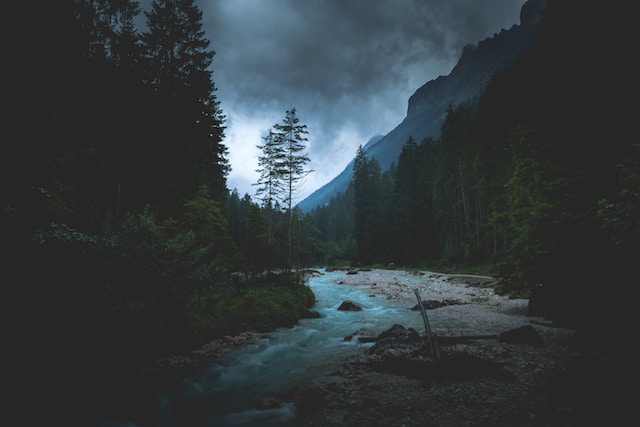
As we approach the winter solstice, the angle at which the sun’s rays hit the Earth becomes more oblique. This means that the same amount of energy is spread over a larger area, resulting in less heat and light reaching the ground. As a result, the days become shorter, and the nights become longer. This process continues until the winter solstice, when the northern hemisphere is tilted furthest away from the sun.
The length of daylight hours is also affected by the latitude at which you are located. Areas closer to the equator experience relatively consistent daylight hours throughout the year, while areas closer to the poles experience more extreme variations in daylight hours. For example, in Anchorage, Alaska, which is located at a latitude of 61 degrees north, the sun sets around 4 pm in the winter, while in the summer, it sets around 11 pm.
Another factor that contributes to the early onset of darkness in the winter is the weather. As the days become shorter, the temperatures also begin to drop, and cloud cover becomes more prevalent. Clouds can reflect and scatter sunlight, further reducing the amount of light that reaches the ground. This can result in a phenomenon known as “twilight,” where the sky remains partially illuminated even after the sun has set. However, when there is a lot of cloud cover, the sky may remain dark even during daylight hours.
The early onset of darkness in the winter can also have an impact on our physical and mental health. The reduction in daylight hours can disrupt our circadian rhythm, which regulates our sleep-wake cycle. This can lead to feelings of fatigue, lethargy, and even depression, particularly for those who suffer from seasonal affective disorder (SAD). SAD is a type of depression that typically occurs during the winter months when there is less daylight. Treatment for SAD may include light therapy, medication, and psychotherapy.
It is important to note that the early onset of darkness in the winter is not solely a modern phenomenon. The changing of the seasons has been observed and studied for centuries by civilizations all around the world. In fact, many cultures have developed rituals and celebrations to mark the changing of the seasons, including the winter solstice.
One example of such a celebration is Yule, a pagan festival that is celebrated on or around the winter solstice. Yule is a time to honor the rebirth of the sun and the return of longer days. Many of the traditions associated with Yule, such as the lighting of candles and the decoration of evergreen trees, have been incorporated into modern-day Christmas celebrations.
In conclusion, the early onset of darkness in the winter is a natural part of the Earth’s yearly cycle. While it may be inconvenient for some, understanding the science behind the changing of the seasons can help us appreciate the beauty of nature and adapt to the changes that occur throughout the year. It is also important to recognize the impact that the reduction in daylight hours can have on our physical and mental health and to seek treatment if necessary. Finally, by exploring the traditions and celebrations associated with the changing of the seasons, we can gain a deeper appreciation for the cultural significance of these events and the role they play in our shared human experience.