In the history of baseball, the fastest pitch ever recorded was thrown by Aroldis Chapman, a Cuban-born pitcher who played for the Cincinnati Reds at the time. On September 24, 2010, in a game against the San Diego Padres, Chapman threw a pitch that was clocked at an incredible speed of 105.1 miles per hour (169.1 kilometers per hour). This pitch broke the previous record for the fastest pitch ever thrown, which was set by Joel Zumaya in 2006 when he threw a pitch that was clocked at 104.8 miles per hour (168.8 kilometers per hour).
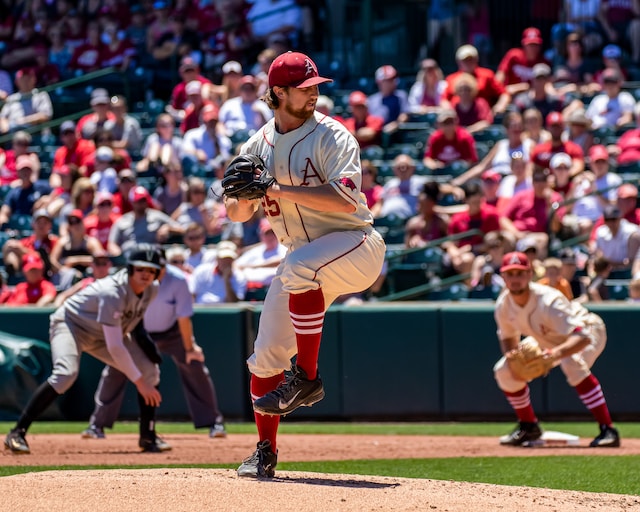
While Chapman’s pitch is the official record for the fastest pitch ever thrown, it is important to note that there have been many accounts of pitchers who may have thrown faster pitches than the technology of the time was able to measure. Nevertheless, Chapman’s achievement is still an incredible feat that highlights the athleticism and dedication of baseball’s top athletes.
Chapman’s ability to throw a pitch at such an incredible speed is a result of a combination of natural ability and training. Physical traits like height, build, and leg strength are essential for hard-throwing pitchers like Chapman. He stands at 6’4″ and has a lanky build, which allows him to generate more torque and whip-like action in his delivery. He also has incredibly strong legs, which help him generate power and momentum as he strides toward home plate.
However, physical traits alone are not enough to throw a pitch at 105 miles per hour. Chapman also had to work tirelessly on his mechanics and training regimen to maximize his potential. For example, Chapman has an incredibly quick arm action, which allows him to generate more speed with less effort. He also has a smooth and efficient delivery, which helps him maintain his velocity over the course of a game.
In terms of training, Chapman has worked extensively on building strength and improving his flexibility. He also uses a weighted ball program to help him develop his arm speed and power. These training techniques have helped Chapman maximize his natural abilities and become one of the top pitchers in baseball.
It is also worth noting that there is an element of luck involved in throwing a pitch at such a high speed. Pitchers have to be in the right mindset and have the right conditions in order to achieve their maximum velocity. For example, on the day that Chapman threw his record-breaking pitch, the weather was warm and the wind was blowing out toward center field. These factors likely helped to boost his velocity slightly.
While Chapman’s achievement is certainly impressive, it is also important to note that throwing a pitch at such a high velocity comes with some risks. Many hard-throwing pitchers suffer from arm problems over the course of their careers, as the strain of throwing at such high speeds can take a toll on the body. In fact, the emphasis on velocity is one of the reasons that many coaches and analysts caution against putting too much pressure on pitchers to throw at their maximum speed.
In conclusion, the story of the fastest pitch ever thrown is a fascinating one that highlights the incredible abilities of baseball’s top athletes. While Chapman’s record may one day be broken, it will always stand as a testament to the dedication and hard work required to achieve greatness in the sport of baseball. It is a combination of natural ability, training, and luck that allows top athletes like Chapman to achieve their maximum potential and push the boundaries of what is possible. However, it is important to remember that the pursuit of velocity should not come at the cost of the health and well-being of the athletes, and that a balanced approach to training and performance is essential for long-term success in the sport.