The largest prehistoric centipede known to date was the Arthropleura, which lived during the late Carboniferous period, around 300 million years ago. Arthropleura is believed to have been the largest land invertebrate of all time, with some specimens reaching lengths of up to 2.6 meters (8.5 feet).
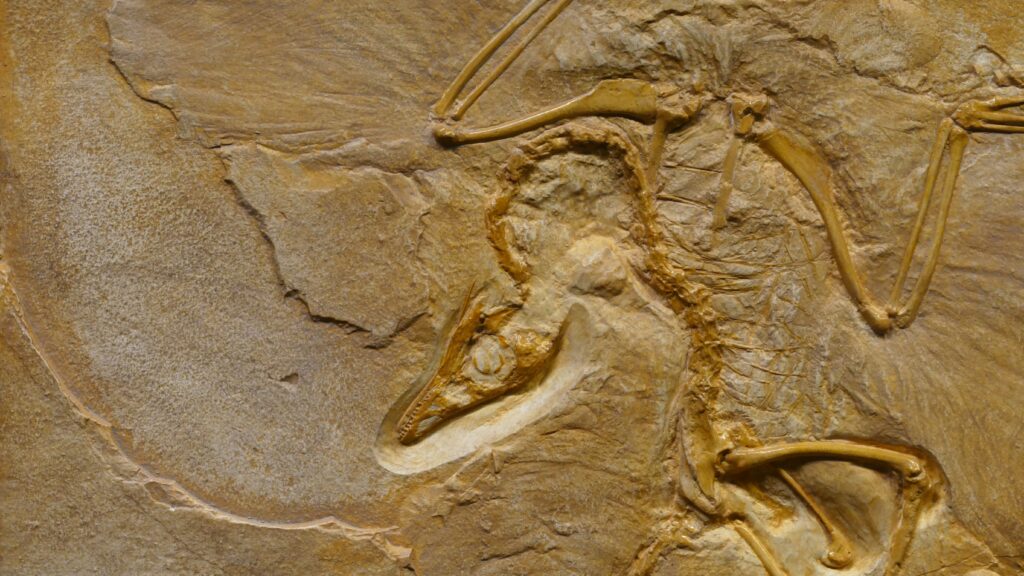
Arthropleura was a giant millipede-like creature, with a long, segmented body that was covered in hard, armored plates. It had numerous legs along the length of its body, with estimates ranging from 30 to over 400 legs depending on its size. The legs were jointed and capable of supporting the animal’s considerable weight, allowing it to move across the forest floor with relative ease.
Despite its size, Arthropleura was an herbivore, feeding on ferns and other vegetation that was abundant during the Carboniferous period. Its massive size would have provided it with a significant advantage in terms of accessing food, as it would have been able to reach vegetation that smaller herbivores could not.
The fossil record shows that Arthropleura lived in what is now Europe and North America, and its fossils have been found in numerous locations across these continents. The discovery of multiple fossils suggests that Arthropleura was a successful species, and that it likely played an important role in the ecosystems in which it lived.
It is believed that Arthropleura was able to achieve such a large size due to the high oxygen levels present in the atmosphere during the Carboniferous period. At that time, the atmosphere contained approximately 35% oxygen, compared to the current level of around 21%. This increased oxygen concentration allowed Arthropleura to grow larger and support a larger body mass than would be possible with current oxygen levels.
Despite its impressive size and fearsome appearance, Arthropleura was likely not a particularly aggressive or dangerous creature. Its massive size would have made it a formidable opponent, but it lacked any kind of natural weapons or defenses. Instead, it likely relied on its size and strength to deter potential predators and defend itself if necessary.
In addition to its impressive size, Arthropleura is also notable for its role in the evolution of arthropods. Arthropleura is part of a group of extinct arthropods known as the Arthropleurida, which were some of the earliest terrestrial animals to have a segmented body. The evolution of segmented body plans was a significant development in the evolution of arthropods, and it paved the way for the evolution of other important groups, such as insects and crustaceans.
Overall, Arthropleura was an impressive and important creature that played a significant role in the ecosystems of the Carboniferous period. While it may have been intimidating to encounter a creature of its size, it was likely not a particularly dangerous or aggressive animal, and its massive size was primarily an adaptation for feeding and movement. Today, we can learn a great deal about the evolution of arthropods and the history of life on Earth by studying the fossil record of creatures like Arthropleura.